Join the discussion
Write your take first — we'll ask for email only when you're ready to publish.
- Hacker News
- It looks from the public writeup that the thing programming the DNS servers didn't acquire a lease on the server to prevent concurrent access to the same record set. I'd love to see the internal details on that COE.
I think when there is an extended outage it exposes the shortcuts. If you have 100 systems, and one or two can't start fast from zero, and they're required to get back to running smoothly, well you're going to have a longer outage. How would you deal with that, you'd uniformly across your teams subject them to start from zero testing. I suspect though that many teams are staring down a scaling bottleneck, or at least were for much of Amazon's life and so scaling issues (how do we handle 10x usage growth in the next year and half, which are the soft spots that will break) trump cold start testing. Then you get a cold start event with that last one being 5 years ago and 1 or 2 out of your 100 teams falls over and it takes multiple hours all hands on deck to get it to start.
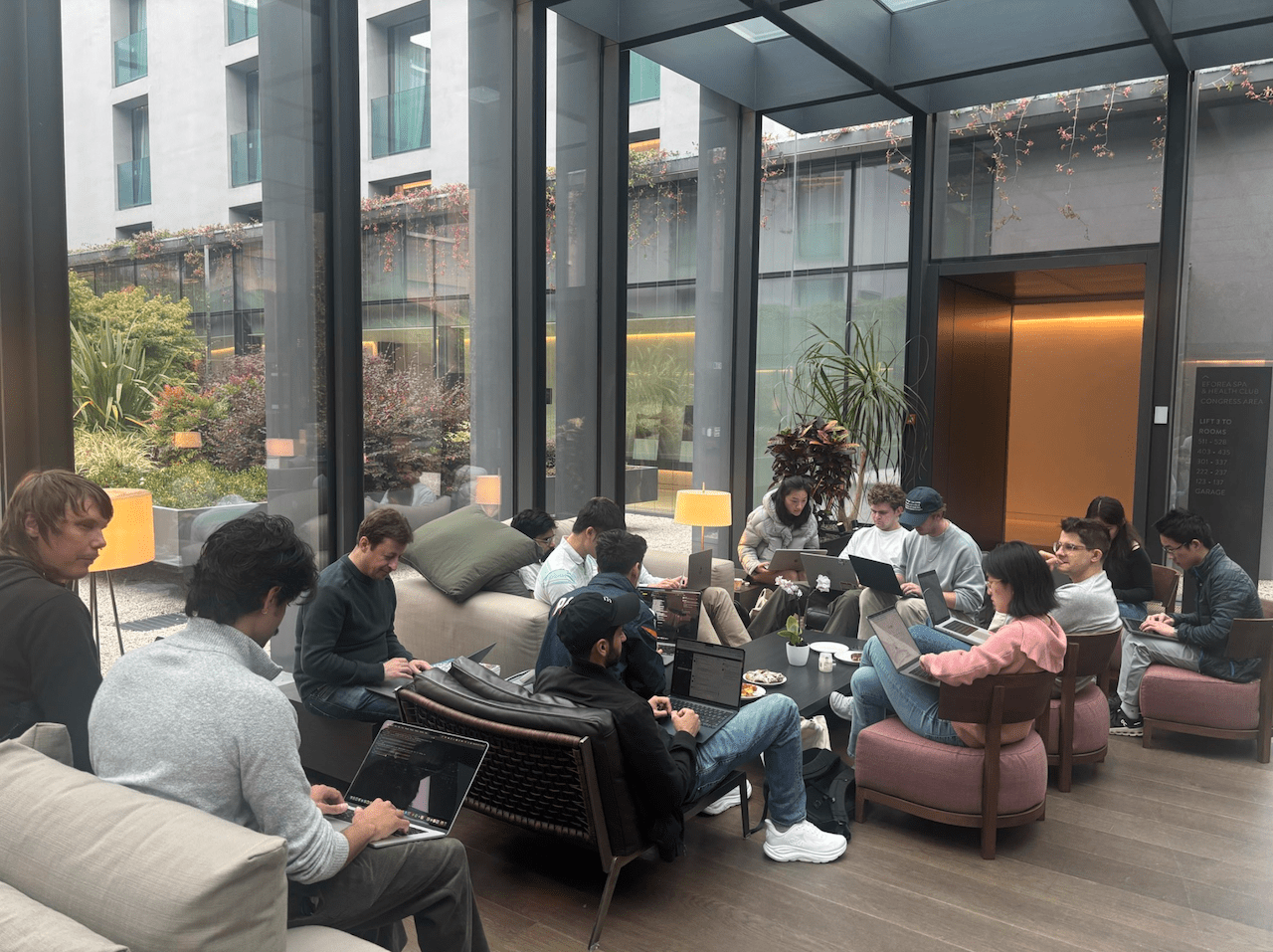
by fizlebit - I can't imagine a more uncomfortable place to try and troubleshoot all this than in a hotel lobby surrounded by a dozen coworkers.
- > Most obviously, RCA has an infinite regress problem
Root cause analysis is just like any other tool. Failure to precisely define the nature of the problem is what usually turns RCA into a wild goose chase. Consider the following problem statements:
"The system feels yucky to use. I don't like it >:("
"POST /reports?option=A is slow around 3pm on Tuesdays"
One of these is more likely to provide a useful RCA that proceeds and halts in a reasonable way.
"AWS went down"
Is not a good starting point for a useful RCA session. "AWS" and "down" being the most volatile terms in this context. What parts of AWS? To what extent were they down? Is the outage intrinsic to each service or due to external factors like DNS?
"EC2 instances in region X became inaccessible to public internet users between Y & Z"
This is the kind of grain I would be doing my PPTX along if I was working at AWS. You can determine that there was a common thread after the fact. Put it in your conclusion / next-steps slide. Starting hyper-specific means that you are less likely to get distracted and can arrive at a good answer much faster. Aggregating the conclusions of many reports, you could then prioritize the strategy for preventing this in the future.
by bob1029 - > In normal operation of EC2, the DWFM maintains a large number (~10^6) of active leases against physical servers and a very small number (~10^2) of broken leases, the latter of which the manager is actively attempting to reestablish.
It sounds like fixing broken leases takes a lot more work than renewing functional leases? Funnily enough, there is already an AWS blog post about specifically preventing these types of issues: https://aws.amazon.com/builders-library/reliability-and-cons...
- Legitimate question on if the talent exodus from AWS is starting to take its toll. I’m talking about all the senior long-turned folks jumping ship for greener pastures, not the layoffs this week which mostly didn’t touch AWS (folks saying that will happen in future rounds).
The fact that there was an outage is not unexpected… it happens… but all the stumbling and length to get things under control was concerning.
by JCM9 - > What is surprising is that a classic Time-of-check-time-of-use (TOCTOU) bug was latent in their system until Monday. Call me naive, but I thought AWS, an organization running a service that averages 100 million RPS, would have flushed out TOCTOU bugs from their critical services.
Yeah, right. I'm surprised how anyone involved with software engineering can be surprised by this. I would argue that there many, if not infinitely many, similar bugs out there. It's just that the right conditions for them to show up haven't been met yet.
by bboozzoo - Good to see an analysis emphasizing the metastable failure mode in EC2, rather than getting bogged down by the DNS/Dynamo issue. The Dynamo issue, from their timeline, looks like it got fixed relatively quickly, unlike EC2, which needed a fairly elaborate SCRAM and recovery process that took many hours to execute.
A faster, better-tested "restart all the droplet managers from a known reasonable state" process is probably more important than finding all the Dynamo race conditions.
by tptacek - Aside from not dogfooding, what would have reduced the impact? Because "don't have a bug" is .. well it's the difference between desire and reality.
Not dogfooding is the software and hardware equivalent of the electricity network "black start" -you never want to be there, but somewhere in the system you need a honda petrol generator, which is enough to excite the electromagnets on a bigger generator, which you spin up to start the turbine spinning until the steam takes up load and the real generator is able to get volts onto the wire.
Pumped Hydro is inside the machine. It's often held out as the black-start mechanism because it's gravity, there's less to go wrong, but if we are in 'line up the holes in the cheese grater' space, you can always have 'want of a nail' issues with any mechanism. The honda generator can have a hole in the petrol tank, the turbine at the pumped hydro can be out for maintenance.
by ggm