Join the discussion
Write your take first — we'll ask for email only when you're ready to publish.
- Hacker News
- I am surprised that nobody has mentioned yet the (seemingly) functional Linux mobile OS/device: the FLX1s from furilabs (https://furilabs.com/).
User reviews seem very compelling, does anybody here have experience with it (especially if you can compare with unofficial Android ROMs, Sailfish OS, or Postmarket OS)?
by lejalv - I have been using SailfishOS phones as my main driver for ten years now. Some random, personal, possibly uninformed thoughts:
- It is not for everyone. Some Linux experience and willingness to tinker with it is helpful.
- Despite the many limitations, I love the UI, the spirit, the platform, and the community. I fear the day where I have to switch to a different OS.
- Many Android apps can be run via the AlienDalvik/AppSupport middleware. However, raw BLE is not supported. Thus, most e-scooter apps won't work. My banking app runs okay-ish.
- Google Play Store and Google Play Services can be installed by following non-trivial tutorials. I don't use them.
- The hardware abstraction layer that makes proprietary Android drivers work with SailfishOS is cool.
- QML and C++/Python/JS allow for easy, rapid app development. The custom widgets have a unique, consistent, simple style.
- As most of the UI is written in QML, it is possible to adjust and extend most of the UI shell and the base applications just by editing these resource files on the phone. For example, one can add additional widgets to the lock screen or change animation speeds.
- A nice tool, Patch Manager allows transparently and reversibly applying such modifications. This is so cool, even though the patches often have to be adapted for each major OS version.
- Jolla, the Finnish company behind SailfishOS is tiny and had to let go a lot of engineers and supporting staff a few years ago. Development has slowed down significantly.
- There are about two dozen very active developers in the community who write awesome apps. There are native clients for Discord (no voice/video), Signal, Telegram, Slack, Mastodon, Hacker News, etc.
- Unfortunately, the browser is stuck with outdated Gecko (despite heroic efforts by a developer who upgraded it from ESR 78 to ESR 91 [1]).
- Only a few smartphones are supported by SailfishOS - either officially supported by Jolla (e.g., some Sony phones and some Jolla-branded ones) or supported via community ports. Often the hardware support is a little bit buggy.
EDIT: of course, if you visit the forums, you will see quite some criticism of Jolla - and some of it is well deserved. It would be great if there were better hardware, fewer bugs, better support for Android apps, etc. Personally, I feel that Jolla is really trying to make SailfishOS better but that they lack really stable sources of income and have made some less-than-ideal decisions in hindsight. The best solution would be to get EU funding for stabilizing the platform and finding a business model that generates recurring income from large organizations. Selling to private customers without being able to extract recurring income and being dependent on badly-documented hardware is not going to work.
[1] https://www.flypig.co.uk/?to=gecko&list_id=975&list=gecko
by raphman - I am not a fan anymore I used it for over a year on a XPERIA XA2. It's usable but barely so. The Android layer usually craps out with heavier apps or crawls to a halt. Most of the native apps are really basic I would compare them to early Windows Phone apps in functionality and UX. The UX itself is an odd mix of really intuitive and absolute horrible. It seems like they are missing focus and the felt development stalled for some years now. I hope plasma or gnome get more momentum because this isn't a viable alternative for 90% of smartphone users. Meego was better and I don't understand why they pivoted in the direction they are going now. It's certainly opinionated.
- Mhm, this is a proprietary OS developed by a dilapidated company… Here is another OS sharing the Nokia/MeeGo heritage, except fully open source and actively developed (not ready for general use either, AFAICT [yet]): https://nemomobile.net/by remix2000
- SailfishOS and the Jolla One were good (awesome usability) But the integration of Android was a horribly failure. It is like WINE, half working applications preventing native ports of quality. I left the boat.
After that Jolla failed with the tablet. Then they didn’t deliver a successor device for Jolla One and provided SailfishOS only as aftermarket OS. You remember the Android problem from above? The hardware of others, without official support? That is calling for problems.
And to make everything worse Jolla started a cooperation with Russia in 2015. According to Wikipedia they quit it in 2021.
Hint about compatibility and APIs
Never try to be compatible to an environment which doesn’t want to maintain interoperability with you.
by ho_schi - This is a mobile OS, right?
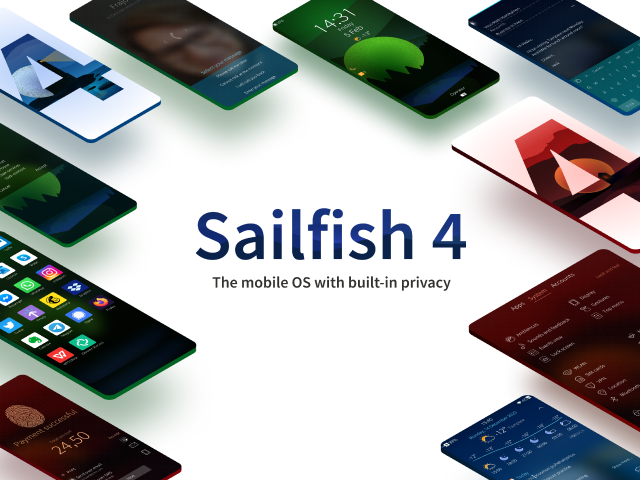
I go to the homepage. Zero screenshots. I go to the User Experience page. Zero screenshots. I even go to Design Principles under the UX page. Zero screenshots.
Talking about mobile phone design is like dancing about architecture. Show the thing or bust.
by laserbeam - I would seriously consider SailfishOS if it shipped on decent (recent) hardware that was available in the US. The last good experience I had with it was on the Xperia XA2, but that hardware was turned into ewaste by the VoLTE requirements of US carriers. Although they claim to run on more recent Xperia phones, they don't have full hardware support, and aren't on the most recent models. If I'm going to pay for a phone OS and hardware to support it, I want some assurance it won't be total jank.by MrDrMcCoy
- I've been using SailfishOS since 2014. Jolla 1, Xperia X, Xperia XA2 and currently Xperia 10III. I also have used Android phones and iPhones at work.
For some people the downsides are lack of apps. The few Android apps I use work just fine with the current hardware. Sadly I still have to use WhatsApp for a while, but for Signal there is a native app, WhisperFish.
The main thing to me is that SailfishOS is a Linux on your pocket. You can ssh into it, sync stuff with rsync or syncthing, edit your stuff with vim, have cron do stuff, or what ever you like. My old phones I use as remote sensors now.
There was a point that I tried to switch to iPhone. I struggled for a long time to get on par with the usability that I had with SFOS. I came pretty close, but the card house of different apps I had to build was pretty unreliable.
My phone is also my wifi hotspot. If I turn on vpn on my phone, then all the traffic from every connected device goes via vpn. I couldn't get iPhone to do this.
The team behind SailfishOS is pretty small, and regrettably shows in many areas. But still for me the clear winner of these three. It's not for everyone, but if you know your way around Linux it's great :)
So, not an Android or iPhone killer, but a good solid platform. The newest version 5.0.0.71 came out just a few days ago.