
Join the discussion
Write your take first — we'll ask for email only when you're ready to publish.
- Hacker News
- The article seems well researched, has some good data, and is generally interesting. It's completely irrelevant to the reality of the situation we are currently in with LLMs.
It's falling into the trap of assuming we're going to get to the science fiction abilities of AI with the current software architectures, and within a few years, as long as enough money is thrown at the problem.
All I can say for certain is that all the previous financial instruments that have been jumped on to drive economic growth have eventually crashed. The dot com bubble, credit instruments leading to the global financial crisis, the crypto boom, the current housing markets.
The current investments around AI that we're all agog at are just another large scale instrument for wealth generation. It's not about the technology. Just like VR and BioTech wasn't about the technology.
That isn't to say the technology outcomes aren't useful and amazing, they are just independant of the money. Yes, there are Trillions (a number so large I can't quite comprehend it to be honest) being focused into AI. No, that doesn't mean we will get incomprehensible advancements out the other end.
AGI isn't happening this round folks. Can hallucinations even be solved this round? Trillions of dollars to stop computers lying to us. Most people where I work don't even realise hallucinations are a thing. How about a Trillion dollars so Karen or John stop dismissing different viewpoints because a chat bot says something contradictory, and actually listen? Now that would be worth a Trillion dollars.
Imagine a world where people could listen to others outside of their bubble. Instead they're being given tools that re-inforce the bubble.
by hi_hi - Indeed, this could be AI's fusion energy era, or AI's VR era, or even AI's FTL travel era.by DanHulton
- I recall the unit economics making sense for all these other industries and bubbles (short of maybe tulips, which you could plant…) . Sure there were over-valuation bubbles because of speculatory demand, but right now the assumption seems to be “first to AGI wins” but that… may not happen.
The key variable for me in this house of cards is how long folks will wait before they need to see their money again, and whether these companies will go in the right direction long enough given these valuations to get to AGI. Not guaranteed and in the meantime society will need to play ball (also not a guarantee)
by sailfast - It's more like the Segway era when people with huge stakes in Segway tried to convince the world we were about to rebuild entire cities around the new model.by mvdtnz
- Great analysis but one thing overlooked is that current gen advanced AI could in five or ten years (or less) be run from the smartphone or desktop, which could negate all the capex from the hyperscalers and also Nvidia, which presents a massive target for competitors right now. The self same AI revolution we’re seeing created right now could take itself down if AI tooling becomes widespread.by gizajob
- If this happen, everyone's computer will contain one Nvidia GPU.by melagonster
- While I mostly agree with the article's premise (that AI will cause more software development to happen, not less) I disagree with two parts:
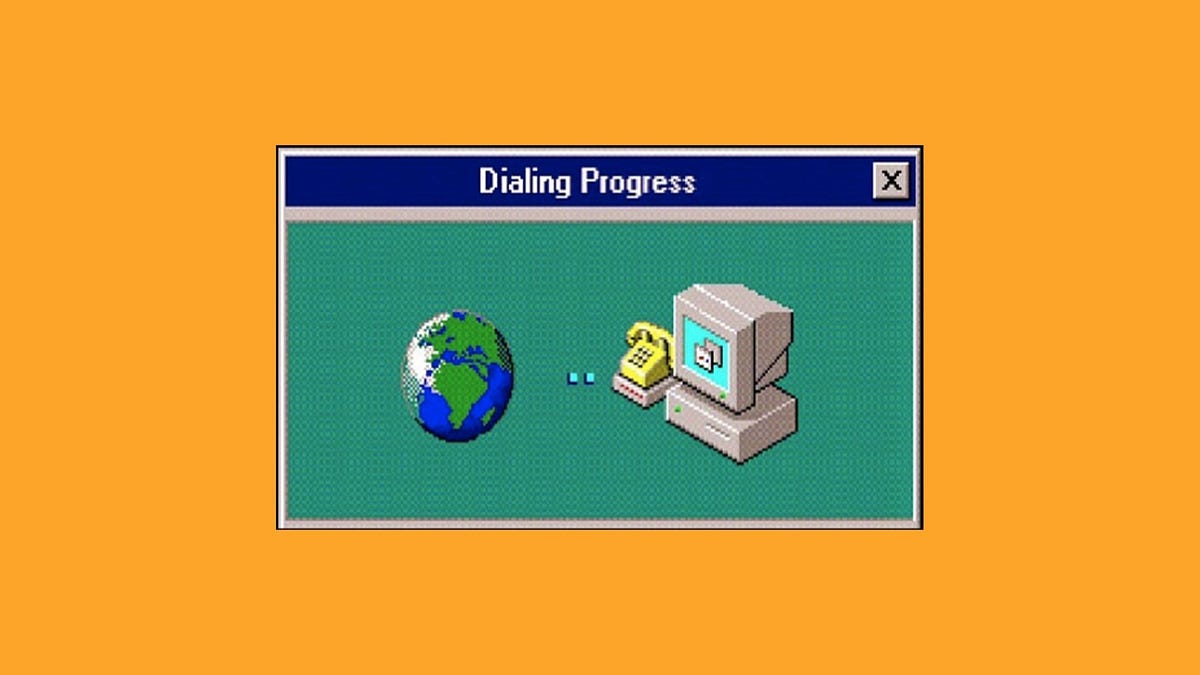
1. the opening premise comparing AI to dial-up internet; basically everyone knew the internet would be revolutionary long before 1995. Being able to talk to people halfway across the world on a BBS? Sending a message to your family on the other side of the country and them receiving it instantly? Yeah, it was pretty obvious this was transformative. The Krugman quote is an extreme, notable outlier, and it gets thrown out around literally every new technology, from blockchain to VR headsets to 3DTVs, so just like, don't use it please.
2. the closing thesis of
> Consider the restaurant owner from earlier who uses AI to create custom inventory software that is useful only for them. They won’t call themselves a software engineer.
The idea that restaurant owners will be writing inventory software might make sense if the only challenge of creating custom inventory software, or any custom software, was writing the code... but it isn't. Software projects don't fail because people didn't write enough code.
by mjr00 - >> Consider the restaurant owner from earlier who uses AI to create custom inventory software that is useful only for them. They won’t call themselves a software engineer.
I have a suspicion this is LLM text, sounds corny. There are dozens open source solutions, just look one up.
by visarga - > basically everyone knew the internet would be revolutionary long before 1995. Being able to talk to people halfway across the world on a BBS? Sending a message to your family on the other side of the country and them receiving it instantly? Yeah, it was pretty obvious this was transformative.
That sounds pretty similar to long-distance phone calls? (which I'm sure was transformative in its own way, but not on nearly the same scale as the internet)
Do we actually know how transformative the general population of 1995 thought the internet would or wouldn't be?
by alecbz - I don't think his quote is that extreme and it was definitely not obvious to most people. A common thing you heard even around 95 was "I've tried internet but it was nothing special".by Kiro
- Before I got my first full time software engineering gig (I had worked part time briefly years prior) I was working full time as a carpenter. We were paying for an expensive online work order system. Having some previous experience writing software for music in college and a couple /brief/ LAMP stack freelance jobs after college I decided to try to write my own work order system. It took me like a month and it would never have never scaled, was really ugly, and had the absolute minimum number of features. I could never had accepted money from someone to use it but it did what we needed and we ran with it for several years after that.
I was only able to do this because I had some prior programming experience but I would imagine that if AI coding tools get a bit better they would enable a larger cohort of people to build a personal tool like I did.
by solomonb - “But the fact that some geniuses were laughed at does not imply that all who are laughed at are geniuses. They laughed at Columbus, they laughed at Fulton, they laughed at the Wright brothers. But they also laughed at Bozo the Clown.”
Because some notable people dismissed things that wound up having profound effect on the world, it does not mean that everything dismissed will have a profound effect.
We could just as easily be "peak Laserdisc" as "dial-up internet".
by bena - I was happy to come into this thread and see I was not the first person for whom that quote came to mind. The dial-up Internet comparison implicitly argues for a particular outcome of current AI as a technology, but doesn't actually support that argument.
There's another presumably unintended aspect of the comparison that seems worth considering. The Internet in 2025 is certainly vastly more successful and impactful than the Internet in the mid-90s. But dial-up itself as a technology for accessing the Internet was as much of a dead-end as Laserdisc was for watching movies at home.
Whether or not AI has a similar trajectory as the Internet is separate from the question of whether the current implementation has an actual future. It seems reasonable to me that in the future we're enjoying the benefits of AI while laughing thinking back to the 2025 approach of just throwing more GPUs at the problem in the same way we look back now and get a chuckle out of the idea of "shotgun modems" as the future.
by rainsford - I'm getting ai fatigue. It's ok to rewrite quick emails that i'm having brain farts on but anything deep it just sucks. I certainly can't see paying for it.by ecommerceguy
- As an LLM-skeptic who got a Claude subscription, the free models are both much dumber and configured for low latency and short dumb replies.
No it won’t replace my job this year or the next, but what Sonnet 4.5 and GPT 5 can do compared to e.g. Gemini Flash 2.5 is incredible. They for sure have their limits and do hallucinate quite a bit once the context they are holding gets messy enough but with careful guidance and context resets you can get some very serious work done with them.
I will give you an example of what it can’t do and what it can: I am working on a complicated financial library in Python that requires understanding nuanced parts of tax law. Best in class LLM cannot correctly write the library code because the core algorithm is just not intuitive. But it can:
1. Update all invocations of the library when I add non-optional parameters that in most cases have static values. This includes updating over 100 lengthy automated tests.
2. Refactor the library to be more streamlined and robust to use. In my case I was using dataclasses as the base interface into and out of it and it helped me split one set of classes into three: input, intermediate, and output while fully preserving functionality. This was a pattern it suggested after a changing requirement made the original interface not make nearly as much sense.
3. Point me to where the root cause of failing unit tests was after I changed the code.
4. Suggest and implement a suite of new automated tests (though its performance tests were useless enough for me to toss out in the end).
5. Create a mock external API for me to use based on available documentation from a vendor so I could work against something while the vendor contract is being negotiated.
6. Create comprehensive documentation on library use with examples of edge cases based on code and comments in the code. Also generate solid docstrings for every function and method where I didn’t have one.
7. Research thorny edge cases and compare my solutions to commercial ones.
8. Act as a rubber ducky when I had to make architectural decisions to help me choose the best option.
It did all of the above without errors or hallucinations. And it’s not that I am incapable of doing any of it, but it would have taken me longer and would have tested my patience when it comes to most of it. Manipulating boilerplate or documenting the semantic meaning between a dozen new parameters that control edge case behavior only relevant to very specific situations is not my favorite thing to do but an LLM does a great job of it.
I do wish LLMs were better than they are because for as much as the above worked well for me, I have also seen it do some really dumb stuff. But they already are way too good compared to what they should be able to do. Here is a short list of other things I had tried with them that isn’t code related that has worked incredibly well:
- explaining pop culture phenomenon. For example I had never understood why Dr Who fans take a goofy campy show aimed in my opinion at 12 year olds as seriously as if it was War and Peace. An LLM let me ask all the dumb questions I had about it in a way that explained it well.
- have a theological discussion on the problem of good and evil as well as the underpinnings of Christian and Judaic mythology.
- analyze in depth my music tastes in rock and roll and help fill in the gaps in terms of its evolution. It actually helped me identify why I like the music I like despite my tastes spanning a ton of genres, and specifically when it comes to rock, created one of the best and most well curated playlists I had ever seen. This is high praise for me since I pride myself on creating really good thematic playlists.
- help answer my questions about woodworking and vintage tool identification and restoration. This stuff would have taken ages to research on forums and the answers would still be filled with purism and biased opinions. The LLM was able to cut through the bullshit with some clever prompting (asking it to act as two competing master craftsmen).
- act as a writing critic. I occasionally like to write essays on random subjects. I would never trust an LLM to write an original essay for me but I do trust it to tell me when I am using repetitive language, when pacing and transitions are off, and crucially how to improve my writing style to take it from B level college student to what I consider to be close to professional writer in a variety of styles.
Again I want to emphasize that I am still very much on the side of there being a marketing and investment bubble and that what LLMs can do being way overhyped. But at the same time over the last few months I have been able to do all of the above just out of curiosity (the first coding example aside). These are things I would have never had the time or energy to get into otherwise.
by IgorPartola - Well deep/hard is different I guess; I use it, day and night, for things I find boring. Boilerplate coding (which now is basically everything that's not pure business logic / logic / etc), corporate docs, reports etc. Everything I don't want to do is done by AI now. It's great. Outside work I use it for absolutely nothing though; I am writing a book, framework and database; that's all manual work (and I don't AI is good at any of those (yet)).by anonzzzies
- Weird because AI has been solving hard problems for me. Even finding solutions that I couldn’t find myself. Ie. sometimes my brain cant wrap around a problem, I throw it to AI and it perfectly solves it.
I pay for chatgpt plus and github copilot.
by aurareturn - The vast majority of the dot-com comparison that I personally see are economic, not technological. People (or at least the ones I see) are claiming that the bubble mechanics of e.g. circular trading and over-investments are similar to the dot-com bubble, not that the AI technology is somehow similar the internet (it obviously isn’t). And to that extent we are in the year 1999 not 1995.
When this article are claiming both sides of the debate, I believe only one of them are real (the ones hyping up the technology). While there are people like me who are pessimistic about the technology, we are not in any position of power, and our opinion on the matter is basically a side noise. I think a much more common (among people with any say in the future of this technology) is the believe that this technology is not yet at a point which warrants all this investment. There were people who said that about the internet in 1999, and they were proven 100% correct in the months that followed.
by runarberg - Agreed. It would probably be better to keep improving AI before investing that much into infrastructure.by vjvjvjvjghv
- > If you told someone in 1995 that within 25 years [...] most people would find that hard to believe.
That's not how I remember it (but I was just a kid so I might be misremembering?)
As I remember (and what I gather from media from the era) late 80s/early 90s were hyper optimistic about tech. So much so that I distinctly remember a ¿german? TV show when I was a kid where they had what amounts to modern smartphones, and we all assumed that was right around the corner. If anything, it took too damn long.
Were adults outside my household not as optimistic about tech progress?
by kaoD - Still waiting on my flying car.by 0xbadcafebee
- That’s how I remember it too. The video is from 1999, during the height of the dot-com bubble. These experts are predicting that within 10 years the internet will be on your phone, and that people will be using their phones as credit cards and the phone company would manage the transaction, the prediction actually comes pretty close to the prediction made by bitcoin enthusiasts.
https://bsky.app/profile/ruv.is/post/3liyszqszds22
Note that this is the state TV broadcasting this in their main news program. The most popular daily show in Iceland.
by runarberg - Indeed, AI now is what people in the 1980s thought computers would be doing in 2000.by Razengan
- To your point, AT&T's "You Will" commercials started airing in 1993 and present both an optimistic and fairly accurate view of what the future would look like.
- The LLM architectures we have now have reached their full potential already, so going further would require something completely different. It isn’t a matter of refining the existing tech, whereas the internet of 1997 is virtually technologically identical to what we have today. The real change has been sociological, not technological.
To make a car analogy; the current LLMs are not the early cars, but the most refined horse drawn carriages. No matter how much money is poured into them, you won’t find the future there.
by geon - You could see some potential modifications. Already some are multimodal. You'd probably want something to change the weights as time goes on so they can learn. It might be more steam engines needing to be converted to petrol engines.by tim333
- > The LLM architectures we have now have reached their full potential already.
How do we know that?
by ozgung - Dial-up modems reached their full 56kbps potential in 1997, and going further required something completely different. It happened naturally to satisfy demand, and was done by many of the same companies and people; the change was technological, not sociological.
I think we're probably still far from the full potential of LLMs, but I don't see any obstacles to developing and switching to something better.
by mkl - The current generation of LLM's have convinced me that we already have the compute and the data needed for AGI, we just likely need a new architecture. But I really think such an architecture could be right around the corner. It appears to me like the building blocks are there for it, it would just take someone with the right luck and genius to make it happen.by Enginerrrd
- Funny how this guy thinks he knows exactly what's up with AI, and how "others" are "partly right and wrong." Takes a bit of hubris to be so confident. I certainly don't have the hubris to think I know exactly how it's all going to go down.by indigodaddy