Join the discussion

Write your take first — we'll ask for email only when you're ready to publish.

  • Hacker News
  • If these were esims they would be much harder to detect or remove?

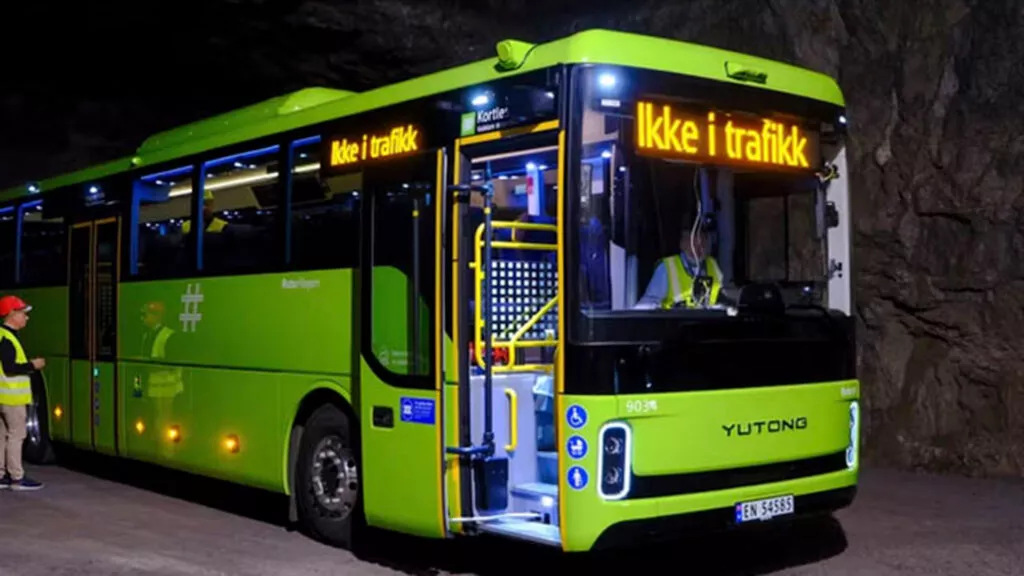
    BYD electric busses have recently rolled out where I live in Sweden.

  • > If these were esims they would be much harder to detect or remove?

    It's not clear in the article how exactly they discovered it, but by the text that mentions it, I do get the impression they just came across the SIM ports/cards themselves:

    > internal tests at a secure facility found Romanian SIM cards inside the buses

    But it could also have been that they put the entire bus in a giant Faraday cage (or similar) and tried to see if it emits anything. If they did that, then eSIM or SIM wouldn't have matter, nor where on the bus it was, they'd eventually see it. But if they just physically came across it, then maybe eSIMs would allow them to place them in less accessible areas. But then maybe that wouldn't matter anyways, if the SIM cards are permanently attached anyways.

    Bottom line, hopefully wouldn't have made a difference.

  • It should be required that all software running on vehicles should have its source code submitted to the regulators along with the tooling to create reproducible builds, with the expectation that the regulators can audit it for back doors. This should apply to cars, buses trains and planes.
  • Should've been made a thing even since Volkswagen's dieselgate
  • >The transport operator stressed there is no evidence of misuse but said the discovery moves concerns “from suspicion to concrete knowledge”. (...) The case comes as Chinese electric buses are increasingly adopted across global markets,

    If a state wants to hide strategic "war/espionage" control, they don't use eSims and open mobile communications, trivially discoverable and traceable. Sounds like some bs "IoT" / telemetry shit manufactures are shoving down our throats for over a decade.

    The other side is feigning shock at common industry practices (don't all Tesla's require a net connection for example), to paint it as some unique issue, and kill their sales. In other words , just another episode in the trade war.

    Not unlike the DJI drones, which added all kinds of shit because the regulators demanded it, and then they act surprised that it has that shit...

    https://uavcoach.com/dji-ban/#7

  • All I can say is that shivers go down my spine what could happen if one of those OEM's that have remote updates possible would get their keys compromised. You could brick hundreds of thousands of vehicles. I would be scared shitless to store those things.
  • Forget bricking them. How about driving their batteries to overheat? An entire fleet across a city enflamed...
  • Ah, and they never review iPhones/Android phones after Israeli companies demonstrated they can backdoor any cellphone on this planet, and especially after they demonstrated they can explode consumer devices and maim 3000+ people overnight.

    They don’t review Windows machines either after the Snowden revelations.

    How many wars did the Chinese start in the past century?

  • Glad you asked

    1929 – Sino-Soviet Conflict (Chinese Eastern Railway) — ROC authorities moved to seize the CER in Manchuria; the USSR responded militarily. (Initiation: ROC seizure.) 1954–1955 – First Taiwan Strait Crisis — PRC began large-scale shelling of Kinmen/Matsu and amphibious operations (e.g., Yijiangshan). (Initiation: PRC artillery/offensives.) 1958 – Second Taiwan Strait Crisis — PRC opened intense bombardment of Kinmen/Matsu. (Initiation: PRC artillery.) 1962 – Sino-Indian War — PRC launched major offensives in October after a series of frontier incidents. (Initiation: PRC large-scale attack; India calls it unprovoked, PRC says “counter-attack.”) 1967 – Nathu La & Cho La clashes (India border) — Firefights erupted while India was fencing the pass; Chinese forces are generally assessed to have fired first at Nathu La. (Initiation: PRC fire in initial clash.) 1969 – Sino-Soviet Border Conflict — PLA ambushed Soviet troops on Zhenbao/Damansky Island in March; further clashes followed. (Initiation: PRC ambush.) 1974 – Battle of the Paracel Islands (vs South Vietnam) — PLAN/PLA forces expelled RVN units and took full control of the Paracels. (Initiation: PRC naval attack in contested area.) 1979 – Sino-Vietnamese War — PRC invaded northern Vietnam in February. (Initiation: PRC cross-border invasion.) 1984–1989 – Sino-Vietnamese Border War (post-1979 phase) — PRC mounted periodic offensives and artillery duels (e.g., Laoshan/Johnson Mountain). (Initiation: multiple PRC attacks in a protracted conflict.) 1988 – Johnson South Reef Skirmish (Spratlys, vs Vietnam) — PLAN engaged Vietnamese forces and seized the reef. (Initiation: PRC assault during standoff.)

    Internal (civil/unification campaigns) 1926–1928 – Northern Expedition — ROC (KMT) launched a national unification war against warlords. (Initiation: ROC campaign.) 1930–1934 – Encirclement Campaigns against the Chinese Soviet — ROC initiated successive large operations against CCP base areas. (Initiation: ROC offensives.) 1949–1950 – Hainan & Zhoushan/Coastal-Islands Campaigns — PRC amphibious operations against ROC-held islands during the civil war endgame. (Initiation: PRC landings.) 1950–1951 – Tibet (Chamdo campaign → occupation) — PLA entered eastern Tibet and compelled the Seventeen-Point Agreement. (Initiation: PRC invasion; PRC frames as “peaceful liberation.”)

  • If your transport is accessible remotely, it can be hacked remotely. This reminds me of that story about Polish Trains. In that case GPS was used to execute a kill code. https://social.hackerspace.pl/@q3k/111528162462505087
  • When the next petya-class worm hits, IOT is going to be so very painful.

    Personally, I'd like to skip over all of the buildup and go straight to hoverboard mafia pizza delivery.

  • This 10 year old article may be of interest if you are into stuff like that: https://illmatics.com/Remote%20Car%20Hacking.pdf
  • Surprisingly Norway choose this brand, never had a good ride in one, feels like sitting in a water boiler.
  • Maybe not so surprising as Norway summer temp averages get into mid 60s F (18C) at the warmest.
  • Related out of Denmark:

    Danish authorities in rush to close security loophole in Chinese electric buses

    https://www.theguardian.com/world/2025/nov/05/danish-authori...

  • Whatever happened with the Polish trains that had all the backdoors that were discovered?
  • It doesn't matter, the point was to get the scare story out.
  • Ah, but you see, domestic enshittification and anti-consumer actions are different from the foreign influence boogeyman. \s
  • Whats sad is Norway sits right next to the country which manufactures Scania and Volvo Busses, but instead buys busses from thousands of km away. I suppose cost is all that maters these days, even for national infrastructure which must remain in control and secure.
  • I know for a fact that at least one of those companies also installs SIM cards in all their busses.

    The only difference is who could potentially use the backdoor, and yes Sweden seems slightly less poised to attack Norway than China. At least these days. Because, let's face it, the Swedes owned Norway back in the day and them wanting their oil-rich lucky cousin back at home is deranged but not as much as the Chinese wanting the fjords....

  • Tide will receive Scania buses next summer (according to plan); https://kommunikasjon.ntb.no/pressemelding/18623524/elektris...
  • China is a decade ahead of Scania/Volvo in electric busses. Likely neither had a suitable product on the market when the busses were purchased.
  • Surprised to learn that Volvo manufactures buses in Sweden considering they're 78% owned by a Chinese conglomerate..
  • What is even more sad is that not even Swedish regions buy Scania or Volvo busses. Where I live the region just replaced all local busses with BYD.
  • So... did the Chinese company put Romanian SIMs in the busses? Or was it an importer that installed those? Are there fleet management features enabled by that connectivity or are they actually secret?

    Also, why would they purchase busses that they thought couldn't be remotely monitored or controlled?! That seems like a very valuable feature for public transport.

    by t-3
  • Good questions!
  • If the Chinese wanted to hide anything they'd put SIM chips without markings or eSIMs inside, as opposed to marked SIM cards. What they did is probably obtain a good quote on Romanian SIM subscriptions that work across the EEA. This is clearly FUD, but yes, they should have been more careful as to equip half of their fleet with Chinese buses that call home.
  • To me this smells of rather basic economic/political propaganda to scare people. The collective west is clearly getting orders from high above to apply pressure on China and it may just be that this is part of it, spreading an air of concern and fear to dissuade other people who pay attention to this kind of thing in municipalities to avoid Chinese manufacturers. It's rather basic social engineering that has the ham fist of "intelligence" all over it.
  • The fleet management features that lead to the review are documented and were easily disabled.