Join the discussion
Write your take first — we'll ask for email only when you're ready to publish.
- Hacker News
- So many characters worthy of an epic story. The last one would be the Good Samaritan, or some sort of elderly sage...
> Before leaving, I asked him whether he even knew what was inside the package.
> He answered very casually that he had no idea and that he did not need to know.
> I then asked whether he at least knew which company had entrusted him with the delivery. He replied that it was simply "a friend" who had asked him to temporarily keep the box until someone came to collect it.
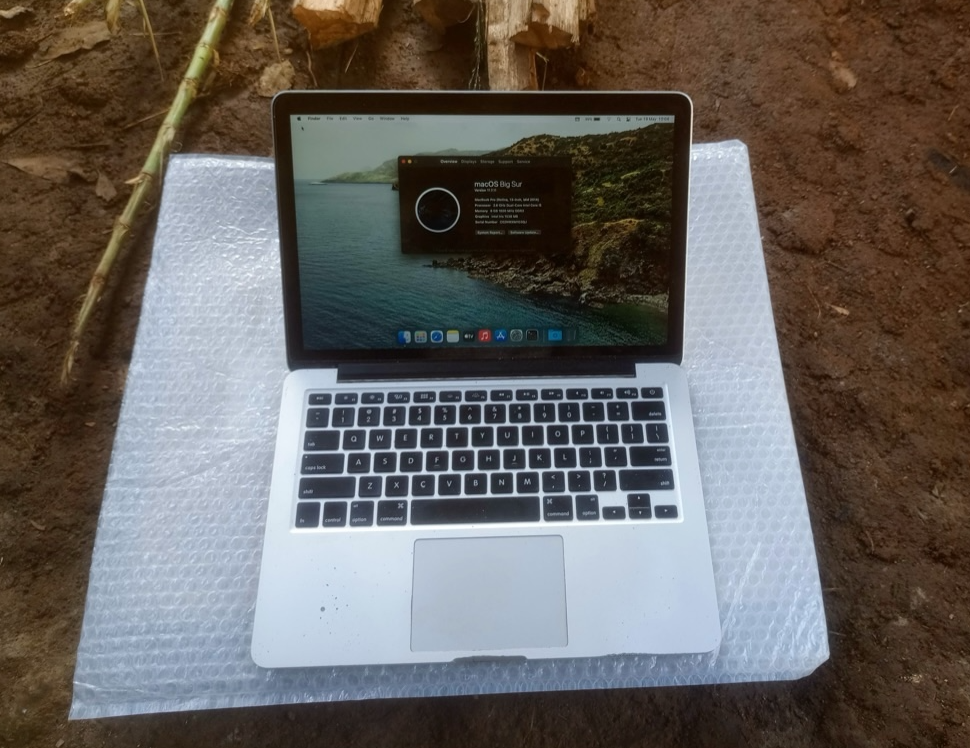
> I switched it on briefly, and that was actually the moment when the hardware shop owner himself suddenly became excited[...] Seeing the Apple logo appear on the screen, he immediately smiled and said something along the lines of, "Ah… a MacBook is a MacBook. Apple is still Apple."
by nxobject - Long-distance shipping is even a pain in the (so-called) developed world, for instance from Europe to the US. As soon as your shipping value exceeds a treshold (IIRC about 1000€), you have to electronically declare the customs. There are agencies specialized to do this for sth like 20€ per shipping just because it is not reasonable to get all the accounts if you do it only once in a while.
However, in my experience, "ordinary" parcel shipping (like DHL) won't do this shipping either any more: You have to switch to the express ones (like DHL express, UPS, FedEx) even if you don't intend to do any express. The difference is easily 40€ vs 400€ for shipping a shoe box!
If you ship anything slightly larger then a shoe box and slightly more expensive then a notebook, think twice whether you don't want to accompany the freight with a seat in the commodity class in some airplane. It can easily be cheaper.
by ktpsns - The most amazing thing about my travels in Africa, specifically Uganda, is that things I would never expect to work, work. The people are so innovative and resourceful that I think things that would be scams (handing a laptop to a stranger to hold) are pretty common and work.
Also makes me grateful to live in a developed nation where we can take shipping for granted.
by prepend - My question, does Uganda not have used laptops available for sale? At the point where you're about to spend $200 on shipping, why not consider just doing a money order so the guy can find one locally.
Shipping things overseas is such a convoluted process. My wife wanted to send a company Christmas gift bundle (literally just company merch and some candy) to two Filipino employees. One of the workers says that only DHL reliability delivers to her so I help my wife with getting a shipping label. Holy shit, I'm just sending a tshirt, mug, and some pens. Why do I need to list out the contents and their international categories like I'm trying to send a shipping container full of rifles? Also addresses for people living in villages in PI are weird, the address was relative to the town hall. Luckily the other person lived in a gated community with a more familiar address formatting. Finally I figure everything out and she buys the label and pays the tariffs (more expensive than the gifts but it's too late now). Luckily there's a DHL near my work so I go to drop off the two very carefully wrapped packages. Of course she wraps both like an actual gift with cute tissue paper and of course the DHL agent has to open it and inspect it, ruining the care my wife put into the wrapping. Overall the experience was mind boggling bureaucratic. Sending via USPS would likely have been a bit easier but the warning of unreliable local mail was concerning. The next year, she just had the CEO send them an extra bonus instead.
by wildzzz - I help a good friend run a small business in Africa, and this story is exactly why, every time I go visit, I fill my luggage with stuff she needs. Laptops, car engine turbos, espresso machines, fryers, bottles of shampoo, printers, anything. The cheapest and most reliable way to deliver things there is to take a plane yourself and carry the things with you. This whole mess is why, despite being a poor continent, the price of goods is actually much higher than in rich developed countries, which puts a huge brake on the development of the countries.
It is also quite sad that the western NGOs, which all have their own very functional and heavily subsidised delivery channels, keep it to themselves, instead of making it available to the general public and businesses of the countries. Their monopolies on efficient import is weird and counter productive.
by fvdessen - This is not how it works. My partner is Ugandan, we live in France - I'm used to ship to various countries in Africa. Never use the "regular" post - it is just as OP described. Don't use high-end couriers (DHL, Fedex etc.) either - very expensive for scant value added. Do what every local does: use one of the innumerable grey market freight forwarders. One way or the other (for a typical "line haul" example, they entrust extra carry-on luggage to airline passengers remunerated for the service), they get packages to their destination, and they are not even expensive.
They know the thicket of rules and petty fiefdoms, what rules apply and which don't, what to pay and to whom... Regular post just acts as if everything works by the book - and that doesn't fly. Use word-of-mouth to find the good couriers, trawl through your local community of people from the destination country - it is a very common service, so you'll soon find a good provider. Test it with a couple of low-stakes deliveries and you'll have a solid channel.
Meet your guy in a metro station, or find the shop in Barbès that smells like a marketplace across the Mediterranean, hand over your package with the recipient's name, destination city (Addresses ? Where we're going we don't need addresses !), your phone number and the recipient's phone number scrawled on it with a felt-tip marker (make sure they are Whatsapp numbers), pay in cash, don't get a receipt (lol) - and there you go !
Operating in Africa will soon tire you if you attempt to force European ways. Going with the flow (with appropriate caution - a nose for issues, borne from experience, is invaluable) works and makes the experience enjoyable !
by liotier - Two main takeaways:
1. Never underestimate developing countries' governments' willingness to absolutely bend their people over to extract tax revenue (and then their corrupt representatives extract bribes on top of it)
2. Django's gratitude and positivity in the face of all of it is an inspiration. I suspect I and most everyone I know would be in tears and would have given up in exasperation halfway through his quest. We are so spoiled in the West.
by xp84 - I am Ugandan.
I've shipped electronics and Laptops for Work quite a bit, and OP is right, the system is broken, it stays this way because a lot of corrupt individuals benefit from this mess. However, OP showed a degree of Hubris here, a mistake lots of us make when dealing with foreign countries, just because it works this way here, so it should work that way in XYZ.
OP would have saved themselves lots of time and money if they'd asked Django what the best way to get that laptop shipped to them was. Lots of Ugandans in Austria ship things back daily; they just do it differently, simply hand it to someone travelling back home, there are people travelling back daily, willing to help or just pay a shipping agency a small amount and they'll handle everything.
This is a good act of charity and I applaud OP for that; however, the first mistake they made was Google "How to send a laptop overseas" , a message to Django, asking the best way to get them the laptop would have saved them time and money.
We all fall into this trap of giving people in need what we think they need instead of asking them how best we can help. Local knowledge goes a long way.
All in all, I applaud OP, not many of us would have done this.
by madradavid