Join the discussion

Write your take first — we'll ask for email only when you're ready to publish.

  • Hacker News
  • Not sure why author doesn’t like to openly share his thoughts on the exact model used and book titles - one book is named, but the rest are blurred?
    by blks
  • This has been bothering me too. When I borrow a new kid's book from the library I now wonder if the illustration or text were computer generated.
  • The concept of consuming AI generated content for children has always baffled me.

    We collectively have a virtually infinite collection of already existing hand crafted quality content filtered over the years in the form of children stories and tales that we can pick and chose from to read to our children. We love telling stories especially to our children.

    Why would ANYONE be enticed by the idea of using AI to generate tales when there are so many out there to tap from is really beyond my comprehension.

  • > We love telling stories especially to our children.

    And, for a large number of parents, "we" love sitting our children down in front a screen and letting it be their primary source of entertainment before they can even utter one word.

    I'd bet that the majority of parents feeding their children AI slop don't even know it's AI slop because they couldn't identify it as such...even if they even cared to, which most of them don't.

  • Some of the older quality content uses language which is now considered inappropriate. Of course, it wouldn't be hard to replace those words and there are plenty of books that do, but we can't just use the older books as they were.
  • You could say that about pretty much any form of media, people just like new stuff more than old stuff. There's more 9 and 10/10 movies than most people would watch in their lifetime already but people will go see some forgettable trash movie in the theater instead.
  • https://www.theatlantic.com/past/unbound/classrev/kipling.ht...

    I think the history of children's literature may be shorter than you think.

  • By your logic, humans shouldn't write new children's books either, because there is already enough high-quality content already.
  • While I agree with your main point, this isn't exactly true.

    The quality content in children's media does NOT survive through the ages. There are so many other incentives in children's publishing that quality for children is but one signal among many. Like how a parent will buy a book that teaches a 'good lesson' as a proxy for a good book, which is harder to determine.

    On top of that, there are systems at play that limit the impact of curators who really put the work in to identify good children's books. For example, a children's librarian has to buy books through the city or county procurement process. Only certain vendors will have registered as a valid supplier to the procurement team, and then they have a chokehold on what can be bought for the library, so they can offer their shovelware with larger margin, along with a few compromises about the inclusion of known-good books.

    And then to add to this, the rights to publish good books are more expensive, and require more work and negotiation.

    Any parents who want an example of this should check out the works of Tomi Ungerer. Really some of the best picture books ever made, and often not available to be purchased at all. Phaidon, a niche and fancy publisher finally secured some rights, and is releasing some nice editions, but you won't find them in most public libraries. And even then, some of the his best work isn't available due to complications (like The Hat, only available in anthology or used books from the 70s)

    This is so apparent as a parent that loves to read. It feels like things are even worse than Sturgeon's law would make you think.

  • Just like Vibe coding, I think this article is trying to convey that, when children’s books important not to rely solely on AI, but to consciously strive to create high-quality works.
  • Slop aimed towards children has practically _always_ existed. The "100,000 whys" naming reminds me of an old "700000 games" CD

    AI slop is just a more complete reimplementation of the "shovelware" from the 90s

    https://en.wikipedia.org/wiki/Shovelware

  • The category of thing is not new. The level of industrialization and quantity is new.

    Slop on social media also predates AI but at least back then someone had to make it… usually people in poorer countries using it to game algorithms for monetization.

    by api
  • In case you're not aware, 100,000 whys is a well-established name.

    https://en.wikipedia.org/wiki/One_Hundred_Thousand_Whys

  • If only I could get some NFT's of this wonderful art.
  • The lack of real effort bothers me more than the content itself. We can't be bothered to even proofread children's books anymore?
  • Alternate theory: It's a best seller because it's so goofy. Much like brainrot and Dr Seuss.
  • I assume these aren't being published by major publishing houses but rather microbrands and print-on-demand services. They're, like, bypassing gatekeepers and democratizing knowledge, man. Why do you hate freedom so much?
  • The lack of effort is the point. This is the equivalent of SEO spam, meant to extract money from the ecosystem by crowding out books that earned their position in the marketplace.

    The difference is that multimodal generative AI lets you can crank you SEO spam-style content across all types of media, at almost any scale.

  • The lack of effort is the point. The intent is to automate the entire pipeline and churn out huge numbers of these for whatever the top selling topic of the week is.
  • As the other commenter here says, I suspect whoever did skim through found it amusing. Besides, it's not like this genre was particularly accurate anyway --- I have some old purely-manual-human examples of "how things work" books which distort, exaggerate, or grossly simplify for illustrative purposes.
  • These are not made by people who care. It’s a scam basically. Spamming Amazon with slop is a current hustle culture thing. There’s guides, probably AI generated and not proofread, explaining how to do it. They obviously have tricks to game the rankings since these books get recommended like mad in every category.

    It’s today’s hot successor to the big drop shipping craze, which is also still happening, and has destroyed Etsy. That was another hustle culture thing. I remember hearing something about it being one of the get rich scams Andrew Tate was teaching at his thing.

    You could use AI to help make a good book like this, but you would proofread and fact check it and sit there and converse with the AI and tell it all the stuff to fix… just like vibe coding.

    by api
  • Because openai and other ai companies spend billions convincing people that they dont need to put in effort as long as they use AI. They literally think they are interacting with a hyperintelligence that is so smart it will destroy the planet eventually. Why would you spellcheck a digital god? Why not just push straight to publish and "automate" everything.

    Over time, i hope the chickens come to roost.

  • the lack of effort has been the main thing for me since this all started. you give people a tool to do something easier and instead of doing more WITH the tool they do this instead. is anyone out there using AI to make more higher quality children's books than were possible before?
  • This just seems like laziness vs AI = bad. It's not like publishers are putting out masterpieces with human writing. They're cranking out minimum viable content as well.

    I've found that by putting meaningful effort into AI storytelling, I can create bespoke stories that my kids love night after night.

    My workflow is below: Caveat that it costs about $0.25-$0.50 to weave a book like this with Claude Sonnet and Gemini Nano Banana Pro. But to me the cost is worth it for the quality.

    - Use Claude structured output and ask for page1, page2 ... pageN instead of an array of pages or wall of text.

    - Pass a story arc as a set of values to the prompt. I.e. say each page has an emotional beat between 0.0 and 1.0. For a "man in hole" type of story: page1 starts at 0.6, page2 = 0.5, page5 = 0.25, page10 = 0.85. This ensures page 5 lands the "crisis" and page10 resolves higher than the start.

    - For illustrations, have Claude generate the story text and an illustration prompt per page. i.e. page1: { "text": "...", "illustration": "..." }.

    - For art consistency, add an "Art Direction" key to the structured output. Feed this into Gemini/OpenAI and ask for an art board visual guide & character reference sheet.

    - Feed the page text, illustration prompt, and the art board to Gemini/ChatGPT images. I'm constantly surprised at the quality of the output.

    Here's an example set of pages from a magic school bus style story about the immune system

    [image] https://media.discordapp.net/attachments/839188039229112353/...

  • Great workflow and a fantastic illustrations! Well done :)
  • It's not laziness. It's a shift of burden (bullshit checks) to the consumer. That burden is not trivial. It takes time and energy, so it's much better for the society when people don't have to do it often. LLMs (will) increase that burden by orders of magnitude as we're going to experience bullshittification of pretty much everything - entertainment, services, software, gadgets, science & research, healthcare, lawmaking, etc.
  • There is something unsettling knowing that AI takes over literal parenting. I mean, I'm not trying to argue with your particular use case of AI, but the general idea that AI might be better at raising children than humans. Imagine knowing that if you give your child a tablet with AI and never speak to it, it'll turn out as a better human being than anything you could reasonably do manually.

    Of course your current method requires quite a few steps, but it's not hard to imagine a tablet where you just prompt "hey Claude, please take care of my child" and Claude automatically generates things that are engaging for the child while teaching it things. Things you'd never ever be able to do yourself. Your role is to just feed the child. You don't even need to be present - Claude automatically reacts in case of an emergency. Claude even taught the child how to maintain cleanliness so you don't need to do that, how convenient.

  • I really think that a genAI picture book is like a microwave dinner. You can try to pick out a good one, but a corporation has done most of the deciding for you. Ultimately, it will not be as wholesome as something homemade, or as good as something made by an expert, and it will always taste like plastic.
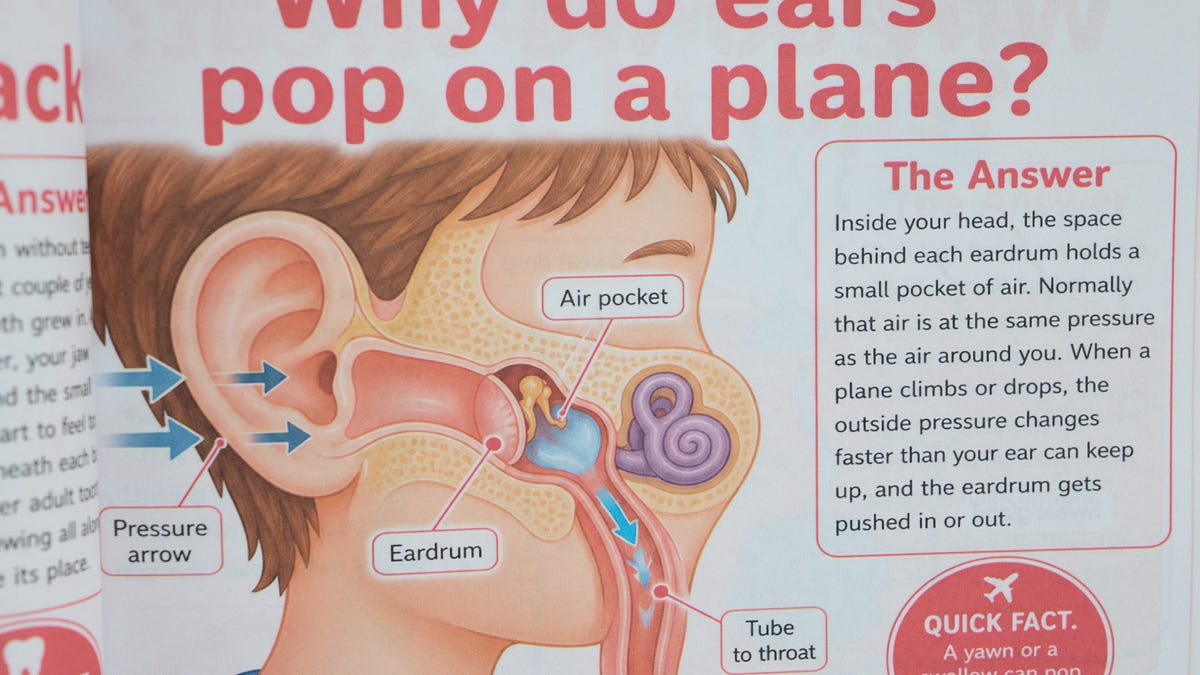
  • How does a 120 page book contain 100,000 Whys? That's 833 Whys per page.