Discussion summary
HackerRank open sourced its ATS, and users shared their experiences with resume scoring and AI tools. Scores varied widely, and opinions on ATS and AI reliability were mixed.
What the discussion says
- Users express skepticism about ATS and AI scoring accuracy.
- Some consider applying with multiple accounts to improve chances.
- Concerns about AI-generated resume reviews and their trustworthiness.
“The demands of ritual are always stronger than those of reason.”
“Using gemma3:12b I ran it once over Andrew Ng's CV and got 48/100.”
Join the discussion
Write your take first — we'll ask for email only when you're ready to publish.
- Hacker News
- This word (determinism) has a magical effect of warping any online posts it touches. Once you hear it you can almost guarantee it's going to be misguided. At least this time it's actual determinism (same input = same output), not arbitrary unrelated things.
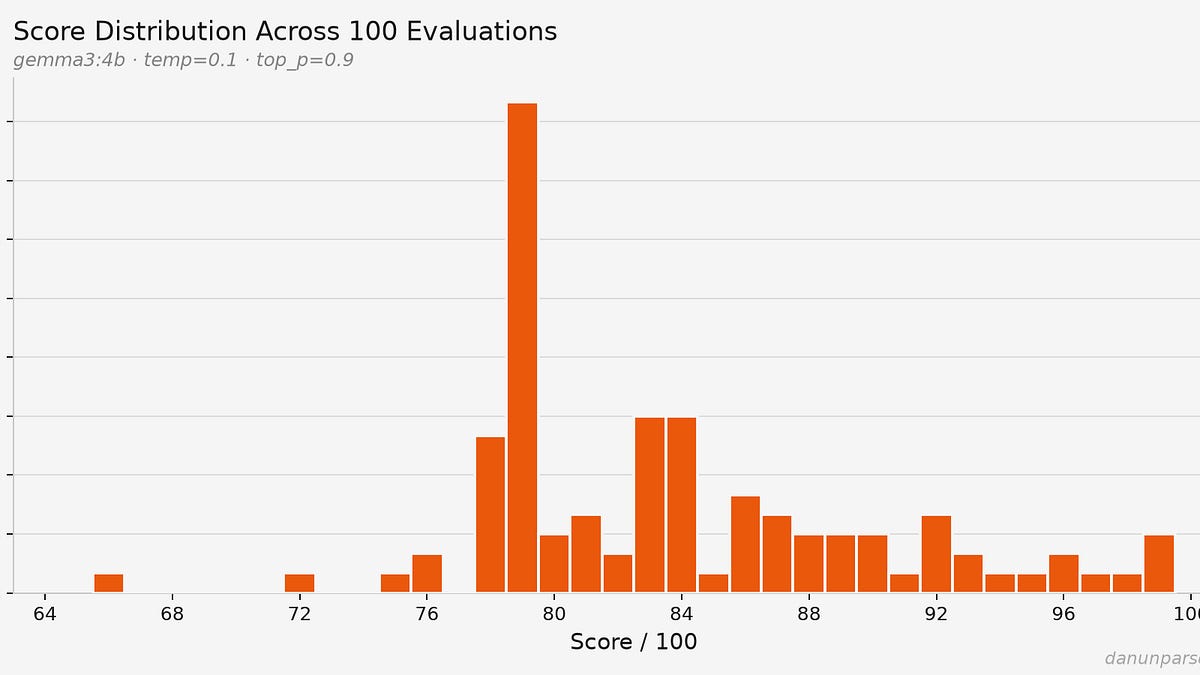
Determinism matters for reproducibility, but do you really want these outputs to be reproducible in this particular case? Making LLM outputs deterministic is relatively trivial, you have to use batch-invariant kernels (if you use batching) and either set the temperature to 0 (don't do that, randomized sampling is here for a reason) or fix the seed (better). It's readily available in a few systems. But this won't make the result more useful, it will just obscure the fact that the agent is genuinely not sure about it - look at the range of the scores it gives! It still won't predict anything but the score will stay the same each time. Do you really want that?
What happens here is they're supplying too little information (just a resume, which is almost at the noise level) and expecting a reply with too broad implications. This is a basic design mistake regardless of whether it uses LLMs. All surveys, tests, laws, and voting systems are extremely sensitive to framing because they work off too little information. But they also don't exist in vacuum, unlike this thing.
- It's always amazed me that a tech company will pay $300,000+ for a good engineer, because talent is so hard hard to find... meanwhile their recruiter operates unsupported, has a very different idea about what good looks like. Their ATS black-holes >50% the resumes because it's filtering heuristics are garbage because recruiting selected the ATS system because it has a google Gmail integration or something, and the ATS's filtering technology was not reviewed by anyone in the engineering or data teams.by seanieb
- > The default model is gemma3:4b
That’s a tiny model. No LLM is going to be a perfect and repeatable judge, but a tiny 4B model is like plugging an RNG into this system.
This whole exercise feels like someone vibe coded an ATS and got it to the point where the tests were passing because they decided they should have an open source ATS project.
by Aurornis - I think what's more worrying to me (if other systems work like this ATS) is that it seems to judge based on a bunch of factors that will probably disqualify a ton of decent to good participants.
For example, 65 points are given for a mix of personal projects and open source contributions. Which is great if your one and only interest is in tech, and you don't have a family, dependents or a second/third job. If you have any of those other things, well the odds seem like they're incredibly stacked against you.
And it makes me wonder how many of these systems are stacked in favour of wealthy people with a near special interest level of obsession with tech and no worries outside of going to college/working a single job in their industry of choice.
by CM30 - > I fail 65% of the time. Same exact resume, different luck.
As someone who’s run hiring pipelines for technical roles in the past few years, that’s actually a fantastic number. I objectively hate saying that, but it’s true.
35% chance of elevating a technical individual to the next stage with no effort? I’ve seen as many as 100+ applicants an hour even when including a domain specific screener question. That’s 35 “screened” applicants in an hour. Were valid candidates screened out? Yes. Does you still have a candidate pool 35x larger than you need? Unfortunately, also yes.
The volume of applicants is SO HIGH such that your chances of getting moved to the next stage are actually markedly worse if AI isn’t involved. If you didn’t apply immediately (using an AI bot) there’s 50+ people ahead of you, and an exhausted technical leader if they ever make it to your resume.
Referral bonuses exist for a reason.
- At this point we might as well adopt that joke where you blindly throw away half the resumes because you don't want to hire unlucky people.by ryukoposting
- And this + the tendency for AI to "prefer" AI produced code + some other AI biased is why *this is most likely highly illegal to use in the EU due to violating anti discrimination laws in multiple ways.
To be clear:
- randomly filtering "too many" resumes is pretty much allowed (I think)
- but must be actual random independent of the resume (and can be in multiple layers, i.e. random filter > pre-select > random filter > select)
- this isn't the case for AI as the random aspect isn't done as the random aspect is not independent of the actual resume evaluation
- in general you can't make sure the AI doesn't apply systematic biases, and there is high indication that it does do so
- for humans you can train them and order them to ignore their biases, this won't work reliable either _but now you delegated the responsibility of illegal biases to the hiring personal violating the order_. But for AI usage you are responsibility no matter what you tell it. Lastly you can technically "show/proof" a specific used AI is highly biased in a specific contexts, which for human employees is technical possible but practical not really practical. So this moves "specific mostly deniable" cases, into "systematic proven bias" teritory. Or in other word legal risk goes from "limited/no issue" to "people can systematically f-you over if they know you use AI for hiring".
by dathinab - An alarming number of people don't understand that LLMs work via purely stochastic processes, so I'm happy to see in-depth pieces like this. I'm looking for a job and maybe this is why it's so hard to get a callback these days: resumes are just dumped in some LLM black hole and no one really knows how it works. The author says:
> temperature 0.1 — low, supposedly nudging the model toward deterministic outputs
This is not correct (and is briefly touched on later in the piece when he sets temperature to 0), temperature is not some kind of "deterministic" switch, but rather it affects the sampling distribution (which becomes more "spiky"—but is still very much a distribution).
by dvt