Discussion summary
Qwen 3.6 27B is considered a good option for local development on 36GB RAM Macs, with some users recommending open-source tools like llama.cpp. Opinions vary on the practicality of local models for development due to hardware costs.
What the discussion says
- Some users praise Qwen 3.6 27B for local use.
- Critics argue high hardware costs make local models impractical.
- llama.cpp is recommended as a hardware-efficient alternative.
- There's debate on whether models should be treated as coworkers or tools.
“Qwen 3.6 27B is a good model for local development.”
“Llama.cpp allows running models on various devices without extra costs.”
Join the discussion
Write your take first — we'll ask for email only when you're ready to publish.
- Hacker News
- I'm having a decently good time time with `qwen3.6-35b-a3b-mtp` (unsloth's multi-token prediction version) and and `qwen-agentworld-35b-a3b`.
On a 2021 M1 Pro (32GB RAM) I can get either of them as `IQ4_NL` quantized models (the first with reduced context, around 160k; the second can do the whole 264k with RAM left over), running something like 30tokens/s.
On a Framework 13 AMD AI HX370 it can use the same, but both on Q8_0 quantization, full context window, parallelism. Speed is just ~15tokens/s so slower, but definitely smarter than the lower quantized siblings.
Both of them are good developer partners for an engineer who wants more of a second pair of eyes and a rubber duck, rather than a model to just do everything for them. Pretty good for my brain dumping, some commit reviews, sanity checks, just always assume that every claim has to be checked and re-checked.
The only problem is really the context loading, that's pretty slow (starts off around 300token/s on empty context, by the time we get to something like 70-80k which is just a bit of repo discovery, it can run around 80 prompt token/s or less, so there's always a lot more waiting around. Local tools need to bump all of their timeouts, and have to be mindful that there's unlikely to be really meaningful parallelism on these machines with local models.
I'm still figuring out how to approach these things, though. Definitely better than glorified autocomplete or search tool (and too slow for the former, pretty decent for the latter). Their limited skill and performance make it more in line with other tools like my IDE or editors, that they are still in the "tools" compartment of my thinking, rather than "independent, cognitively active entities". Which feels like a good thing.
by imrehg - Before you run and go purchase a unified memory computer (e.g., DGX Spark, Mac, Ryzen AI Max 395 / Strix Halo), be aware dense models generally run slow on these machines. Dedicated GPUs run dense models significantly better. Look for benchmarks for your prospective machine. If you really want one of these, you'll be better off running Qwen 3.6 35B or another sparse MoE model.by cpburns2009
- It's fun to run a model locally, but I don't think the economics make sense for anyone just trying to use models atm. It's absurdly cheap to use the same model via openrouter in comparison.
Seriously, just put $10 into openrouter and play with models that are cheap but bigger than what you'd reasonably be able to run locally like deepseek v4 flash (unquantized). You'll be surprised by how far that $10 goes for a model better than what you'd be able to run. Even further on the model you would be able to run locally. Then think of how many long it would take to match the cost of spend + power on doing it locally...
by mashygpig - I see a lot of people writing about how expensive the hardware to run these local models is - but see no mentions of the Intel Arc Pro B50/B60/B70 which seem like decent value if you're not interested in Apple kit (as much as anything can be decent value in the current status quo).
I just got a B70 with 32GB RAM for the equivalent of $1200 (incl. sales tax and import duties to my non-US location, so presumably it could be cheaper elsewhere). The memory bandwidth is 608 GB/s. For M5 Max (32-core GPU) it's 460 GB/s and for M5 Max (40-core GPU) it's 614 GB/s. A 3090 is still faster at ~900 GB/s but you're getting 32GB VRAM for a lot less than equivalent Nvidia cards. It's about 1/3 the bandwidth of a 5090 for 1/3 the cost, but with the same 32GB VRAM. If you're interested in being able to run bigger quants with some context and stay on a lower budget then it's an appealing trade off.
I'm still exploring using these local models so don't want to spend the equivalent of $5 000 - $10 000 just to test it out. I don't mind slightly slower perf to do some experimentation more affordably.
I actually got an B50 16GB (with meager 70w TDP!) first to test an Intel card with my stack - it worked easily with Ubuntu & Vulkan. I'd read a lot about hassles and people writing them off as unusable but it seems like these are often with SYCL which doesn't even seem to outperform vulkan and so why bother? (The B50 was just $370 inclusive tax and duties). Literally `apt install` the vulkan libraries and it worked with default xe driver in 26.04 and the vulkan build of llama.cpp. The SR-IOV PF/VF also just works with qemu/kvm, no tricks required. Since I got it fwupdmgr has updated the firmware twice so Intel is presumably actually trying to support these products.
by zx76 - I feel like I'm going insane seeing people buy these 128gb MBP for thousands of dollars to run models that are objectively much worse than SOTA and spending so much more. The amount spent on a 128gb M5 MAX can buy you a damned new car here. What the hell am I missing? Are developers in other countries living in such different worlds?
(I'm aware the price is, in absolute terms, more expensive where I live compared to the USA. That reinforces what I think, because anyone sane that would've bought one of those in another country would sell them as soon as they landed here and save that money.)
by doodlesdev - None of the examples reflect 'real work', at least not what I'd consider real work. Being able to nail a zero-shot greenfield project is relatively easy even for a small model. There's not much context to build up and it can fall back to similar examples in the training data easily. So long as you're not asking it to invent something wholly new it'll probably manage.
The real test is whether or not it can work with your existing codebases. In my limited experiments Qwen 3.5 (maybe 3.6 is loads better) does OK on a Rust+React app, and less well on a C# monolith. Not to the point of being unusable but definitely poorly enough that I went back to Claude after 20 minutes. If I lost access to a cloud model and had to use Qwen instead I'd be visibly sad.
by onion2k - The article is based on running Qwen 3.6 on a 128GB MacBook Pro. For reference, a 128GB MBP currently starts at $6699 USD [0]
Some people will be happy to pay that premium for privacy, but at roughly 10X the cost of a MacBook Neo, that money could also buy a lot of credits on OpenRouter or frontier labs.
[0]: https://www.apple.com/shop/buy-mac/macbook-pro/14-inch-space...
by bensyverson - I love my MacBook Pro M5 128GB RAM and I love qwen3.6.
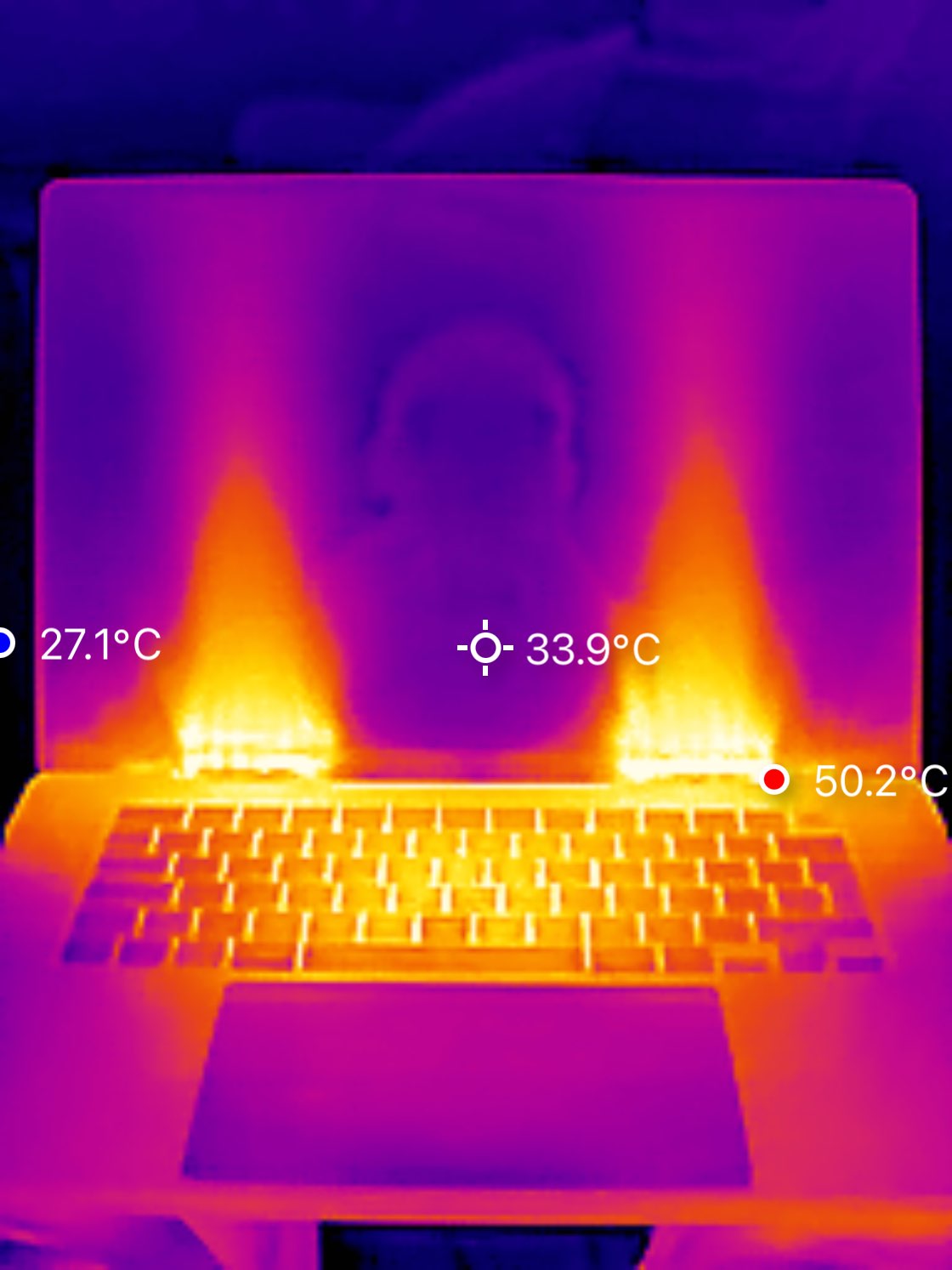
BUT DO NOT buy this MacBook if you plan on doing serious coding using local LLMs with it. The reason is simple: your fingers will burn and your head will explode from the noise.
Running any kind of sophisticated job on the very laptop you are using is just not viable. Sure you can use it in clamshell mode, but forget touching it while working with AI coding or agents.
If you want to run Qwen3.6 27B / 35B at its best, get a MacMini M4 with 64GB of RAM and put it in the basement - or at least a few meters from your desk. Connect to it over LAN or Tailscale. The MacMini will also cost you almost 1/3 of the MacBook Pro.
Thank me later.
by iagooar