Discussion summary
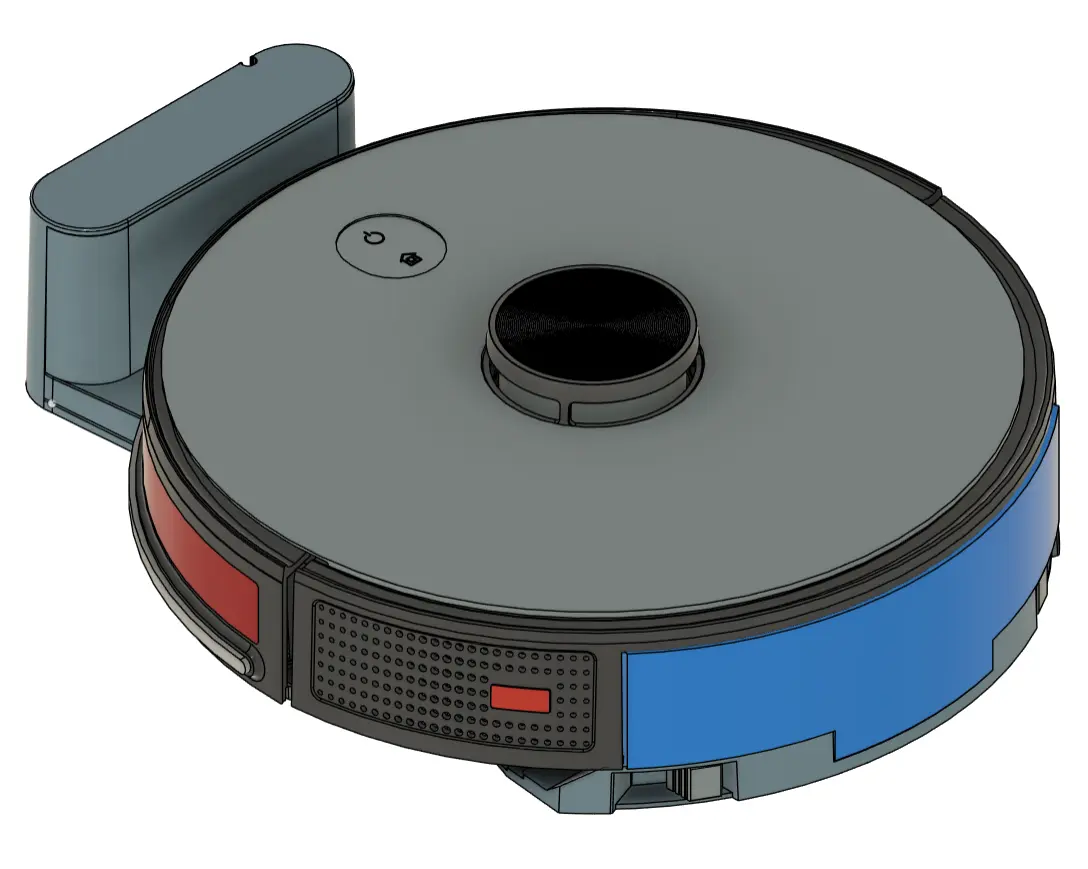
Oomwoo is an open-source robot vacuum project that users can build themselves, with some interest in alternative control options like Valetudo. The project is relatively new, with mixed opinions on its documentation and community. Some users suggest similar projects like OpenMower for lawn mowing.
What the discussion says
- Users are interested in DIY robot vacuums like Oomwoo.
- Concerns about project documentation and community support.
- Debate over using Valetudo for control, with some clarifying its role.
“Great, now do a lawn mower!”
“This project is 20 days old, but description is written like it's Linux.”
Join the discussion
Write your take first — we'll ask for email only when you're ready to publish.
- Hacker News
- I wonder if there's a project like there's OpenWRT for routers, just for vacuum robots? Where you just can buy some device form a normal online shop, then flash your custom firmware, and off you go with a privacy respecting fellow that doesn't film you and doesn't send everything to some US or Chinese cloud. :)
(I still use a traditional vacuum here, because all the privacy and snooping aspects of those robot thingies.)
by binaryturtle - I just can't say how much I want to see the growth of open hardware.by holistio
- The name is exciting to me. I've been a multiple time robot vacuum owner and it does have an appeal to be able to see a fresh build dissected like this. Why not contribute to this project instead of having a go all on my own, except of course with my AI helpers. I could pick the vacuum control board for the motors and sensors. I have some thoughts on brushes too.
It's a good point, vibe coding does lend itself to fast splitting among developers with the intent of recombining quickly too into a larger project.
by skyberrys - Personally, I find open hardware to be the selling point for devices that are supposedly running open source. If I can't change the parts/components, there's really no point.by sqdiaz
- Even though it’s vibe coded, I like the idea of an open source repairable robot vacuum. The current generation of them are notoriously not built to last / be repairable.by shaunkoh
- > oomwoo is organized so the community can build it in parallel. The robot and its software are split into self-contained modules. You pick whatever module interests you, work on it whenever you want, and submit your work as a pull request. Multiple people can tackle the same module — the best solution surfaces over time.
I think one major advantage of open source over commercial alternatives, is the possibility of endless improvements. Similarly, 3d printing as a manufacturing method allows for a short iterative cycle, high degree of design freedom, customisation as a product feature, local production, and an high degree of repairability.
It’s going to be interesting to see how well git(hub) and discord serves as collaborative tools in this case. Hardware files are often binary, hardware components have complex interfaces between them, and hence depends more on human communication and collaboration.
I really hope this project succeeds. I’d love a cloud free robot vacuum that I can trust.
by lovlar - The hardware is an issue, not because it's bad but because it's massively expensive to buy the components piecemeal.
You can purchase a lidar vac for £70-80 now. Even if you only replaced the brains, that's a quarter of the price of a Oomwoo. The only upgrade I'd want is self-emptying. You'd probably have to relocate the charging contacts but it seems highly achievable.
Or you could break up an existing vac for the parts. You'd get the lidar, bumper, ToF, cliff sensors, motors and wheels, perhaps even some seals for your printed parts. Again, much cheaper, especially if you shop on the used market (I can get a whole working vac for the price of new wheels). All these robots use common parts so the risk of getting it wrong is very small.
My point is perhaps they could coalesce around a common white label option unit or set of parts currently sold as a vacuum.
by oliwarner