Discussion summary
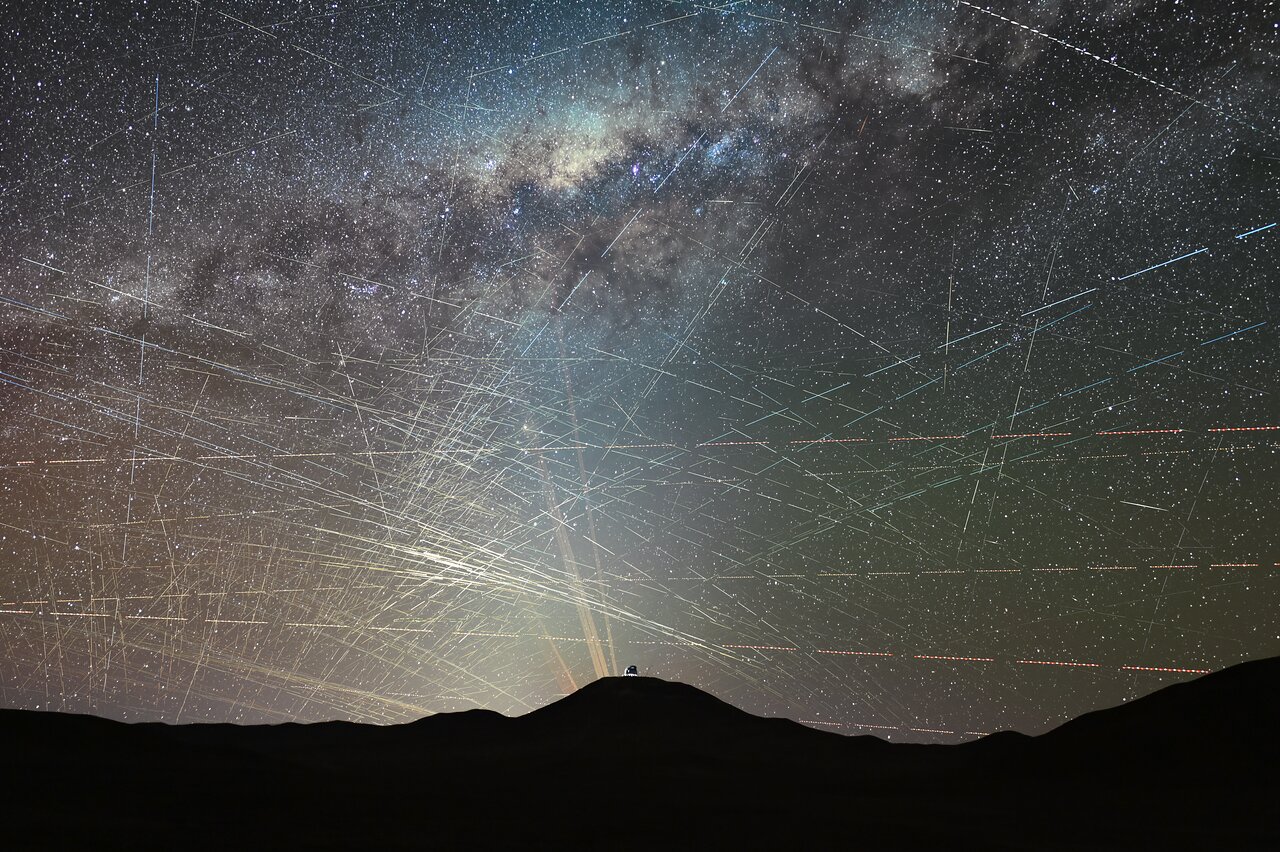
Discussions focus on the impact of satellite constellations like SpaceX's Starlink on astronomy and the night sky, with concerns about light pollution and space ownership. Some see space as a shared resource, while others criticize regulatory approaches.
What the discussion says
- Satellite fleets improve communication but threaten astronomical observations.
- Concerns about space being exploited for spying and infrastructure.
- Debate over space ownership and regulation, especially in Europe.
- Environmental and cultural impacts of satellite and mirror deployments.
“Satellite communication is impressive but impacts the night sky.”
“Starlink's main selling point is spying, not utility.”
Join the discussion
Write your take first — we'll ask for email only when you're ready to publish.
- Hacker News
- If we can launch 1M satellites, how many telescopes can we launch?by 0-_-0
- Ugh the part about Munich is depressing. Finding a dark clear sky spot is one of the worlds greatest joys and most awesome experiences.by tapland
- Worrying for sure. But I doubt the current USA, along with Israel and Russia are going to be bothered about this. Everyone is launching satellites and other gear into orbit for war.by michelb
- >SpaceX plans to send one million more satellites into orbit, for space-based data centres, ...
I think we should wait to see how the first satellite data centre works out. It seems fairly unlikely that it could be practical. It seems kind of nuts...
>Reflect Orbital, a US start-up, aims to launch a constellation of very large mirror-like satellites to provide sunlight at night, with reflected beams that span at least five kilometres on Earth's surface.
Straight up nuts with no practical value, even if it did work out.
by upofadown - I'm not sure how exactly they are making these calculations but I just don't see it. Both Reflect and SpaceX are targeting SSO orbits where they are only reflecting for an hour or two at sunset. That isn't true of Starlink, but that constellation is already up there and if its fine right now, I don't see it getting much worse as the materials on it get refined to be less problematic.
More regulations would just have the result of cementing a monopoly for Spacex.
- We don’t take our cities sound and light pollution seriously.
I bet it plays important role in all the anxiety and other popular health issues rising.
by aristofun - This is a tradeoff we have to make with infrastructure and development in general. How do you balance human needs with pristine nature?
Do we put up long-distance power lines and wind farms even though they ruin the views? Do you tear down a forest to put up farmlands and suburbs? Do you build a dam to provide water for irrigation, even though it kills the fish and floods a valley?
Satellites are actually easier than most of those tradeoffs, because nothing lives in space and there's no nature to destroy. It only affects us.
by Legend2440 - I am a science and astronomy fan, but I am sorry, in this case progress is more important. If we regret our decision, the LEOs will fall out of the sky by themselves in a few years and it will be ok.by xadhominemx