Discussion summary
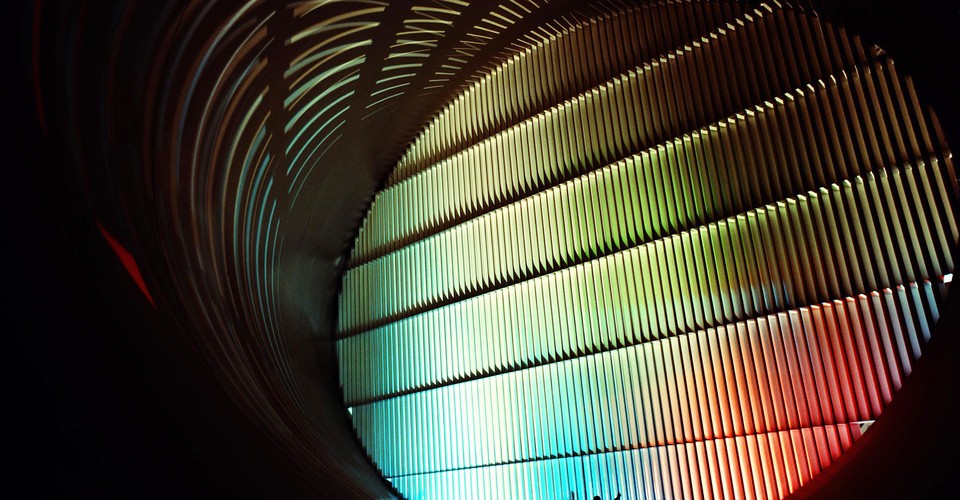
Historic photos showcase NASA's wind tunnels, highlighting engineering progress since the 1920s. Modern standards and safety measures have increased project complexity.
What the discussion says
- Early wind tunnels were simpler compared to today's standards.
- Modern engineering emphasizes simulation and safety.
- Construction speed has increased, but standards are higher.
“Reminds me of old nuclear reactor construction photos.”
“Modern projects take longer due to higher standards.”
Join the discussion
Write your take first — we'll ask for email only when you're ready to publish.
- Hacker News
- When I was a kid, my friend's dad was an engineer at Grumman, and he took us to see a test in their supersonic wind tunnel. The most prominent memory, is how unbelievably loud it was, and the next most prominent memory was that all the engineers were jealous of Lockheed, who had a much better wind tunnel that could run for much longer tests.by JackFr
- More from Langley:
https://www.cnet.com/pictures/photos-langley-test-tunnel-get...
https://www.nasa.gov/wp-content/uploads/2023/03/328830main_E...
https://www.nasa.gov/wp-content/uploads/2017/07/hl-10-el-199...
https://www.nasa.gov/wp-content/uploads/2023/03/146749main_i...
by JKCalhoun - The 1937 construction picture with the horses is a great contrast of technologies.by trebligdivad
- > In 1920, the National Advisory Committee for Aeronautics (NACA) completed its first wind-tunnel facility, a copy of an existing British tunnel.
This is a reminder that nobody starts at the top. They usually start by copying a lot of what those at the top do, as a shortcut to getting there.
by close04 - I discovered a few years ago that a such a wind tunnel facility existed in my area (France), but at a smaller scale. I had the opportunity to visit it. The facility is about 100 years old. What amazed me is not just the facilities (they have various tunnels for different measurements), but how it adapted to customer usages through time as engineering needs evolve. One building was initially designed for seaplanes but has long ago been refurbished for other uses. Another one is used by the French cycling team which has headquarters nearby.by dolmen
- The NASA Langley stability wind tunnel [0] is now part of Randolph Hall at Virginia Tech. You can visit it in Blacksburg, VA. Beautiful campus, btw. The stability tunnel is the biggest, they also have smaller hypersonic tunnels and
I worked there as a work-study student. Part of the job was wiping down the tunnel chamber after their test runs. The smoke you see used in wind tunnel videos is not actually smoke, but a white oil. And for a FWS job the pay wasn't bad, had to put on a bunny suit and crawl around tight spaces, LOL.
[0] https://en.wikipedia.org/wiki/Virginia_Tech_Stability_Wind_T...
by yardie - https://www.theatlantic.com/photo/2018/05/historic-photos-of...
Magnetically levitating the model in the tunnel and measuring the forces by measuring how the magnets need to be driven to keep the model in place is pretty cool.
by echoangle - In 2014 I went to the open house event that NASA Ames had in honor of their 75th anniversary. They had the giant 80 by 120 foot wind tunnel open for viewing from the outside and I had a very hard time comprehending the visual size of it because the only scale references I had were the square lights on the ceiling. It was an experience that stuck with me. A few years prior I lived in Sunnyvale and even several miles away you could tell when it was operating because of the low rumble of sound.by polpo