Discussion summary

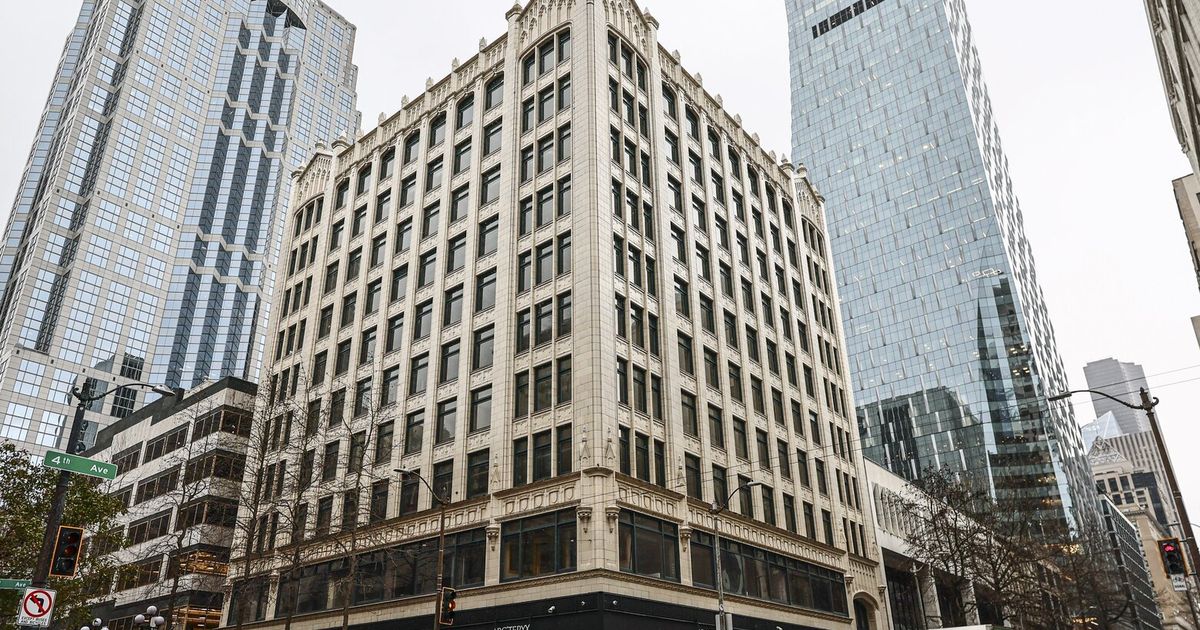
Downtown Seattle faces many vacant office buildings, with some suggesting conversion to residential units. Experts note limited feasibility due to building codes and economic factors.

What the discussion says

  • Some believe converting offices to housing can address vacancies.
  • Others point out legal and structural challenges in conversions.
  • The tech sector's slowdown contributed to office vacancies.
  • Cities like Dallas also face high office vacancy rates.
Turning offices into housing could help, but it's complex.
AvAn12
Conversion feasibility depends on building codes and costs.
forlorn_mammoth

Comments

Hacker News

Convert some to cheap residential. Solves both problems: affordable housing as well as rebalancing supply and demand for office space.

by AvAn12

This was covered in the article, only a small fraction of the office space can be converted to residential.

by ETH_start

As the mayor says, "Bye!"

by xhkkffbf

I believe the quote was:

"the ones that leave, like, bye"

by ajay-b

You’d think that, right, but even cities that welcome businesses are having a hard time. Even Dallas is at like 30% empty office space.

I’m sure the factors are different for every city but I think remote work and companies preferring to build campuses outside of major cities is a big driver.

by felix-the-cat

Turn them in to housing.

by fuckinpuppers

"The bigger culprit, though, is the tech sector. Its astonishing decadelong push for office space, and equally astonishing slowdown, left downtown Seattle with a gap between supply and demand that will be very difficult to bridge."

by 1vuio0pswjnm7

I know that commercial and residential building codes are different, but you would think converting them to residential units would fix this..

by Avicebron

The bipartisan housing bill that Trump has refused to sign included provisions for encouraging this.

by idontwantthis

might depend how different the codes are. could be a really expensive retrofit. Residential and office put different stresses on infrastructure.

by forlorn_mammoth

I live in a converted office building I. Downtown Chicago . But it was built in 1913. Newer office buildings are less practical to convert due to larger floor plates. Older office buildings are smaller or have light wells etc.

by cozzyd

Apparently it's really expensive to convert to meet reasonably sane residential standards.

Add in required shrubbery, section 8 housing set-asides, rent control, etc., it becomes unattractive -- especially if the jobs have moved to business friendly suburbs

by readthenotes1

On top of architectural issues like plumbing and access to windows, cities like NYC have programs where converting economically obsolete offices to residential exempts the building from property taxes if at least some units are for low-income renters.

by kccqzy

On top of the architectural challenges and efficacy of it, you have to contend with the terms of the bank loans that apply. Those are why the buildings "can't" lower rents to attract new business.

If they sign a lease at a new lower rent it basically triggers a re-check of "can they repay the loan based on their rental income?", which comes back as "no". That trigger _doesn't_ occur if you just leave the building empty, with _no one_ paying rent, because your last mark to market rent was high enough.

Fundamentally changing the type of tenant in the building would presumably trigger that check as well.

It's a shell game that eventually leads to the loan defaulting, but both the bank and the building owner are happy to pretend they can't see the train coming down the tracks at them.

For an example of this in Seattle that everyone was calling years ahead of the collision, see the Martin Selig sagas https://deepnewz.com/real-estate/seattle-developer-selig-war...

by hirsin

The article goes into this:

> The city of Seattle estimates that, with aggressive incentives, conversions could generate up to 6,000 housing units over the next seven years. At a rough approximation, that would use around a fifth of the city’s present office surplus.

> But “potential” is doing a lot of work here.

> Newer, larger office buildings, like the U.S. Bank Center, are hugely impractical for conversion, thanks to massive floor plates, centralized plumbing and other utilities and a host of other constraints.

> The preferred candidates are typically smaller, older buildings, especially those with C- or E-shaped floor layouts, which make it easier to create smaller units with adequate windows.

> But these buildings can be prohibitively costly to bring up to seismic and energy building codes, said Jen Pasquier, a Seattle developer who wants to convert the 10-story Liggett Building, at Fourth and Pike, into 93 apartments.

by skybrian

Zoning and other regulations getting the way of it being used. The city "just" needs to incentivize it getting used, and someone's gotta come to terms with losing money.

by fragmede

New York City: Hold my Negroni aperitivo. I have faith in the Big Apple administration's ability to become a leader on this metric.

by delichon

According to the graph in the article, NYC is doing about average, and LA/SF are the other front-runners.

by Terr_

NYC appears to be at least somewhat ahead on converting older office stock to residential stock, and I don’t expect the current administration would attempt to slow that down (it has no particular political valence in the city that I can discern).

by woodruffw

Seattle has a few confounding factors: - Higher taxes that are not present in surrounding cities - A public school system that is hot garbage compared to 20 years ago (Eastside schools are still ok) - Amazon as of almost a decade has been pushing hiring to their Eastside offices, and trying to freeze headcount in the state overall - Lots of the engineers you want to hire live on the Eastside

Short term, Bellevue is a better place to have your office. Mid term, the big winners are Texas, Vancouver (CA) and India. A little longer term, the lower end of all those jobs are gonna anyway in a puff of tokens.

by a34729t

Yet rents won't drop -- the commercial mortgage covenants prevent landlords from dropping rental rates, so they'll just sit there fallow until the market recovers.

by beambot

Or government pushes them to change. Regulators have tremendous power over banks.

by lokar

Or until more rational covenants exist. Markets are largely rational economically.

by calvinmorrison

with all the new taxes the city and the state have piled on, compensation above $1m is going to be taxed (federal + state) at a marginal rate of 56% by 2030, which I believe will be the highest in the country. Not to mention the state is in budgetary deficit, the county is losing population, and the city has extremely business hostile politics. No C-level exec has any economic incentive whatsoever to contract for a large presence there over other places.

by 33MHz-i486

The article notes that the US overall office vacancy rate is 23%. Seattle is 37%.

Have we reached "peak office" at last?

How many people in offices does society really need, anyway?

by Animats

A lot if it wants to do interesting things.

by piker

Could be Seattle tax/revenue policy. Bellevue WA, the only nearby comparable but smaller tech hub city, has 25% vacancy and expected to drop below 20% - according to Fable.

by rhyperior

>Some commentators have blamed the downtown office apocalypse on Seattle’s taxes, antibusiness rhetoric and perceptions of public safety.

That is very hand-wavy of the author, Seattle literally taxes gross receipts of every business that does over $100,000 [recently raised to $2 million], with no deduction for expenses, and on top of an employer paid payroll expense tax.

by hnburnsy

Back in 2019, I was amazed to learn just how many buildings in Seattle's downtown were Amazon offices. IIRC, it was dozens of buildings, some entirely owned by Amazon, some WeWork leases, etc. Downtown isn't very big, so that's a huge presence.

It was also fun to check out the company-city that is Redmond, not far away.

Seattle's a great city, and it's got great tech presence. I'm optimistic for its recovery.

by wxw

Join the discussion

Write your take first — we'll ask for email only when you're ready to publish.

  • Hacker News
  • Convert some to cheap residential. Solves both problems: affordable housing as well as rebalancing supply and demand for office space.
    by AvAn12
  • This was covered in the article, only a small fraction of the office space can be converted to residential.
    by ETH_start
  • As the mayor says, "Bye!"
    by xhkkffbf
  • I believe the quote was:

    "the ones that leave, like, bye"

    by ajay-b
  • You’d think that, right, but even cities that welcome businesses are having a hard time. Even Dallas is at like 30% empty office space.

    I’m sure the factors are different for every city but I think remote work and companies preferring to build campuses outside of major cities is a big driver.

    by felix-the-cat
  • Turn them in to housing.
    by fuckinpuppers
  • "The bigger culprit, though, is the tech sector. Its astonishing decadelong push for office space, and equally astonishing slowdown, left downtown Seattle with a gap between supply and demand that will be very difficult to bridge."
    by 1vuio0pswjnm7
  • I know that commercial and residential building codes are different, but you would think converting them to residential units would fix this..
    by Avicebron
  • The bipartisan housing bill that Trump has refused to sign included provisions for encouraging this.
    by idontwantthis
  • might depend how different the codes are. could be a really expensive retrofit. Residential and office put different stresses on infrastructure.
    by forlorn_mammoth
  • I live in a converted office building I. Downtown Chicago . But it was built in 1913. Newer office buildings are less practical to convert due to larger floor plates. Older office buildings are smaller or have light wells etc.
    by cozzyd
  • Apparently it's really expensive to convert to meet reasonably sane residential standards.

    Add in required shrubbery, section 8 housing set-asides, rent control, etc., it becomes unattractive -- especially if the jobs have moved to business friendly suburbs

    by readthenotes1
  • On top of architectural issues like plumbing and access to windows, cities like NYC have programs where converting economically obsolete offices to residential exempts the building from property taxes if at least some units are for low-income renters.
    by kccqzy
  • It's not easy, but some people are trying it! https://www.npr.org/2026/02/21/g-s1-110595/from-cubicles-to-...
    by cryzinger
  • On top of the architectural challenges and efficacy of it, you have to contend with the terms of the bank loans that apply. Those are why the buildings "can't" lower rents to attract new business.

    If they sign a lease at a new lower rent it basically triggers a re-check of "can they repay the loan based on their rental income?", which comes back as "no". That trigger _doesn't_ occur if you just leave the building empty, with _no one_ paying rent, because your last mark to market rent was high enough.

    Fundamentally changing the type of tenant in the building would presumably trigger that check as well.

    It's a shell game that eventually leads to the loan defaulting, but both the bank and the building owner are happy to pretend they can't see the train coming down the tracks at them.

    For an example of this in Seattle that everyone was calling years ahead of the collision, see the Martin Selig sagas https://deepnewz.com/real-estate/seattle-developer-selig-war...

    by hirsin
  • The article goes into this:

    > The city of Seattle estimates that, with aggressive incentives, conversions could generate up to 6,000 housing units over the next seven years. At a rough approximation, that would use around a fifth of the city’s present office surplus.

    > But “potential” is doing a lot of work here.

    > Newer, larger office buildings, like the U.S. Bank Center, are hugely impractical for conversion, thanks to massive floor plates, centralized plumbing and other utilities and a host of other constraints.

    > The preferred candidates are typically smaller, older buildings, especially those with C- or E-shaped floor layouts, which make it easier to create smaller units with adequate windows.

    > But these buildings can be prohibitively costly to bring up to seismic and energy building codes, said Jen Pasquier, a Seattle developer who wants to convert the 10-story Liggett Building, at Fourth and Pike, into 93 apartments.

    by skybrian
  • Zoning and other regulations getting the way of it being used. The city "just" needs to incentivize it getting used, and someone's gotta come to terms with losing money.
    by fragmede
  • New York City: Hold my Negroni aperitivo. I have faith in the Big Apple administration's ability to become a leader on this metric.
    by delichon
  • According to the graph in the article, NYC is doing about average, and LA/SF are the other front-runners.
    by Terr_
  • NYC appears to be at least somewhat ahead on converting older office stock to residential stock, and I don’t expect the current administration would attempt to slow that down (it has no particular political valence in the city that I can discern).
    by woodruffw
  • Seattle has a few confounding factors: - Higher taxes that are not present in surrounding cities - A public school system that is hot garbage compared to 20 years ago (Eastside schools are still ok) - Amazon as of almost a decade has been pushing hiring to their Eastside offices, and trying to freeze headcount in the state overall - Lots of the engineers you want to hire live on the Eastside

    Short term, Bellevue is a better place to have your office. Mid term, the big winners are Texas, Vancouver (CA) and India. A little longer term, the lower end of all those jobs are gonna anyway in a puff of tokens.

    by a34729t
  • Yet rents won't drop -- the commercial mortgage covenants prevent landlords from dropping rental rates, so they'll just sit there fallow until the market recovers.
    by beambot
  • Or government pushes them to change. Regulators have tremendous power over banks.
    by lokar
  • Or until more rational covenants exist. Markets are largely rational economically.
    by calvinmorrison
  • with all the new taxes the city and the state have piled on, compensation above $1m is going to be taxed (federal + state) at a marginal rate of 56% by 2030, which I believe will be the highest in the country. Not to mention the state is in budgetary deficit, the county is losing population, and the city has extremely business hostile politics. No C-level exec has any economic incentive whatsoever to contract for a large presence there over other places.
    by 33MHz-i486
  • The article notes that the US overall office vacancy rate is 23%. Seattle is 37%.

    Have we reached "peak office" at last?

    How many people in offices does society really need, anyway?

    by Animats
  • A lot if it wants to do interesting things.
    by piker
  • Could be Seattle tax/revenue policy. Bellevue WA, the only nearby comparable but smaller tech hub city, has 25% vacancy and expected to drop below 20% - according to Fable.
    by rhyperior
  • >Some commentators have blamed the downtown office apocalypse on Seattle’s taxes, antibusiness rhetoric and perceptions of public safety.

    That is very hand-wavy of the author, Seattle literally taxes gross receipts of every business that does over $100,000 [recently raised to $2 million], with no deduction for expenses, and on top of an employer paid payroll expense tax.

    by hnburnsy
  • Back in 2019, I was amazed to learn just how many buildings in Seattle's downtown were Amazon offices. IIRC, it was dozens of buildings, some entirely owned by Amazon, some WeWork leases, etc. Downtown isn't very big, so that's a huge presence.

    It was also fun to check out the company-city that is Redmond, not far away.

    Seattle's a great city, and it's got great tech presence. I'm optimistic for its recovery.

    by wxw

Related stories