Join the discussion

Write your take first — we'll ask for email only when you're ready to publish.

  • Hacker News
  • Felt this video I saw this morning was relevant: https://www.youtube.com/watch?v=VV3rpuf8iAk
  • This is all gambling. It should be heavily regulated.
  • It seems CNN fails to put their mouth where their money is.
  • We are reaching a new post-rational or neu-rational stage of our society which i think many HNers and educated people will find deeply uncomfortable

    The difficult truth is that as we've engeineered our society over the last 50 years into more and more deterministic outcomes, and began to assign morality itself TO determinism. Where in we've reached a point where when we must face that life is probablistic (i.e. gambling) we assign that space a moral evil

    As a person who is deeply entrenched in this way of thinking I find gambing uncomforatable, but when we invented the core AI technology of prediction systems at Google that power LLM tech today, 'gambling' on probablistic outcomes at a super short term and long term level is questining the determinism of life itself.

    Gambling is a collective signal on cohort outcomes and wisdom of crowds, which becomes training data itself for long/high dimensional-vectors required to fuel intelligence.

    In other words, it turns out EVERYTHING is gambling, some things just have better odds than others, and most of those better odds choices come from OHTERS gambling to make those odds better for you.

    Humanity moving forward out of this trap of high odds probability gravity wells and growing as a species will involve a lot of gambling i suspect.

  • Wow this is a very weird way to mash a bunch of principles and ideas together to sound smart, but not actually say anything.
  • Personally I see nothing wrong with prediction markets, so it feels weird to see people around here freak about it as if it was the antichrist put in place by <current politicians they don't like>.
  • It's funny, the only place I see Kalshi mentioned is here on HN for articles about how bad Kalshi is. Same for all the sports betting sites.

    I'm sure they are all bad, but damned if I never encounter them outside of HN.

  • they run ads in the current World Cup for example, greatly increasing their exposure I reckon. Although might not matter, I am assuming they do not operate outside of North America
  • It's bad on social media, especially Tik Tok. I don't use it often, but when I do I bet I get 3 Kalshi ads every 10 minutes easy.
  • Reminds me of news articles that are just Twitter screenshots, except now there's money directly involved.

    Btw every ad around the stadium in World Cup is for Kalshi now. Really makes me question the fairness of the games.

  • They blocked gambling ads from in stadium ads for the world cup, but Kalshi was still able to get one in because it's "predictions" and not gambling.
  • I always find it hilarious CNN as the last bastion of democracy will slog Polymarket in their "numbers" segments constantly. Way to jerk off the president still CNN, can't turn down those advertisements.
  • It's amazing how naked it is that laws just don't apply to certain people. Kalshi et al are obviously gambling, and yet somehow all the laws about gambling have been politely forgotten by law enforcement.
    by Pxtl
  • Not defending Kalshi but stock market has been gambling lite for a while now. It is pretty wild how blatant it is now though.
  • Is it obviously gambling? Would it be any different if a large financial institution sold prediction market securities?
  • Here at least I believe the gambling laws have changed.

    Most gas stations I go into now have "gaming" machines and there's always some soul sitting at them at any time of day.

    I'm mostly on team let-people-do-what-they-want-even-if-it's-bad-for-them but it's disheartening to watch a dad sitting there totally sucked into it and just ignoring their kid in a stroller behind them.

  • Same thing happened in the early days of Uber, with taxi licenses
  • Some states are trying to fight against Kalshi. One of the problems is the President's family has a financial interest in these markets and so the Republican party does their best to say "hey, these are clearly "swaps" and not bets!!!1!"

    https://www.yogonet.com/international/news/2026/06/29/125136...

  • Over the last 2+ decades gambling has increased massively. By "gambling" I include sports betting, prediction markets, online casinos and crypto (including NFTs). Yes, I'm including crypto under gambling. When ordinary people buy crypto it's mostly because they saw the stratospheric rise of Bitcoin, don't really understand why and don't want to miss out on the next Bitcoin.. Straight up. That's gambling.

    But why? Ease of access (ie the Intenret and particularly smartphones) are obviously a factor. There was a time when if you wanted to gamble you had to do it illegally or you had to go to a physical casino in Las Vegas or Atlantic City (and then riverboats, etc). You can look across to see how ease of access to gambling absolutely increases the amount of gambling and thus gambling addiction. A good example are the poker machines that are available in some states in Australia but not all.

    But there's something deeper than that (IMHO). And I think that thing is the increasing inequality [1] and the affordability crisis. People may be talking about affordability a lot now but it's not a new issue. It was a key issue in the 2016 election, for example.

    The thesis is that as people become increasingly desperate to have enough money (and espeically if they fall below that level) then gambling increases because people see this as the only way they can get ahead (eg [2]).

    I believe gambling is a symptomo and indicator of a deeply broken societ and a deteriorating society.

    The sad reality is that gambling is an excellent way of extracting what little wealth poor people have and it makes everything worse on a macro scale. Gambling should be relatively inaccessible. Yet we have the Federal government suing to stop states to ban prediction markets [3].

    [1]: https://wir2026.wid.world/

    [2]: https://pmc.ncbi.nlm.nih.gov/articles/PMC8643406/

    [3]: https://www.cnbc.com/2026/05/21/where-the-feds-are-fighting-...

  • There's 3 kinds of crypto buyers: The investor, the criminal, and your weird libertarian uncle
  • > The thesis is that as people become increasingly desperate to have enough money (and espeically if they fall below that level) then gambling increases because people see this as the only way they can get ahead

    I have plenty of cash (let's just say over a half-mil), so well ahead of the poverty level. I find myself nearly falling into this trap often. I used to work in FAANG as a developer making big bucks and earning far more than I spend. I left FAANG a couple of years ago and now I feel like I'm just breaking even with the lower salary. Quality of life has improved, but I miss having that "cushion" in each paycheck, so I look to things like the stock market to determine if I can get ahead again somehow. The fact that the tech market is absolute trash right now makes me fear for my future which in turn drives this "gotta find a way to get ahead" line of thinking even more aggressively. It's definitely not just impacting the poor.

  • It's complicated. If you go put some dollars down on a prediction, the median person you're in it with doesn't have much evidence to support their position and is basically gambling. The median dollar you're up against is coming from some rich guy with knowledge somewhere between "airmchair expert in this topic" and "outright insider trading." And so it's a situation where for some people it isn't gambling at all; it even generates some useful info accessible to everyone; and it's easy not to notice that only a handful of rich people really benefit, because it feels like anyone "can win." The truth is kind of counterintuitive.

    Also, having expert knowledge and then making money off of other people thinking they might have it and being wrong... is a choice.

  • The "best" part of this is all the trading algos that scrape the news act on it. They 1) can't vet sources all that well and 2) absolutely cannot discern lies (eg, anything coming out of the official admin channels) from facts. You can see this for example in the absurd discrepancy between paper and physical crude prices.
  • > discrepancy between paper and physical crude prices

    If you see mispricing, trade the hell out of it and pocket the cash before some hedge fund does. The system is rigged against us normal folk and given any opportunity to take money legally from the system, I absolutely would.

    (Now sometimes, there are good reasons for paper and physical to differ, most particularly if the paper is structured in a high-risk way, and you need to be aware of that.)

  • >You can see this for example in the absurd discrepancy between paper and physical crude prices.

    This was a temporary discrepancy that has gone away now that physical prices have fallen.

    This means the future traders were right; the $150+ prices for a physical barrel of oil were a short-term situation that would resolve in a few months. It was correct for futures to be priced substantially lower.

    What's absurd is internet commentators thinking the market is broken because they see something they don't immediately understand.

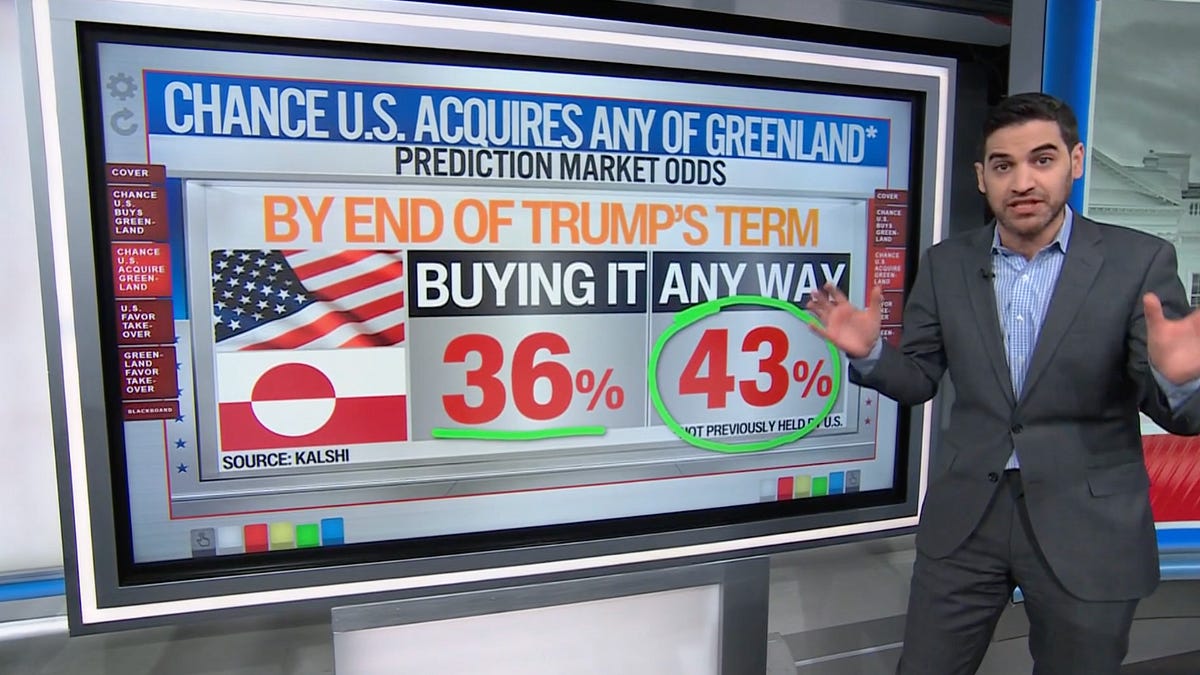
  • Did anyone else think it was strange how fast legitimate news orgs (cnn for example) integrated prediction markets into their businesses?
  • Not really? It's an interesting proxy for public opinion that requires zero investment from the news org. They don't have to pay a polling agency or wait for someone else to.

    Of course that suffers some likely substantial bias from oversampling a specific domain/sub-population

  • I mean, it only feels weird if you missed Kalshi becoming a CNN partner 6 months ago. Media is entirely captured by capital, so I wasn't even surprised when they did that.

    https://news.kalshi.com/p/kalshi-cnn-prediction-market-partn...

  • It's no stranger than how fake news organizations like CNN started using random tweets as legitimate sources.
  • Not really. It's easy "content"for them and adds a veneer of quantitative rigor to what would otherwise be pure vibes.