Discussion summary
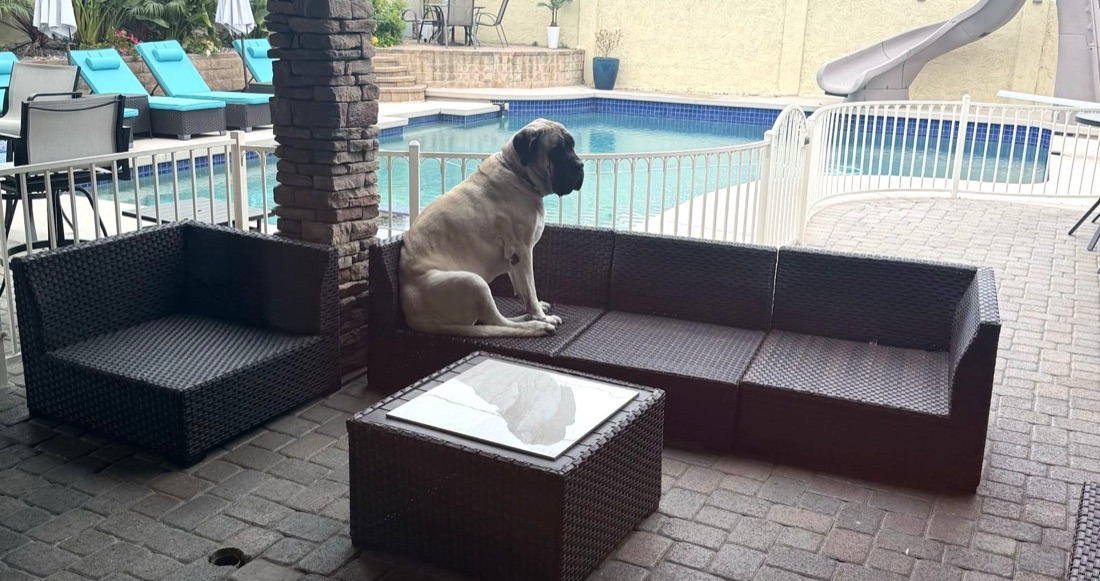
A writing contest challenged participants to craft 1,000 words based on an uninteresting picture, sparking varied opinions on creativity and contest logistics.
What the discussion says
- Some see it as a fun, creative challenge to write about uninteresting images.
- Others question the cost and practicality of reviewing thousands of submissions.
“Anyone can write about interesting pictures, but can you make an uninteresting one interesting?”
“It's just someone having fun and creating a challenge for others.”
Join the discussion
Write your take first — we'll ask for email only when you're ready to publish.
- Hacker News
- > Does it have to be 1,000 words?
> Yes. That’s what a picture is worth, after all.
Not to be pedantic but does this mean "1,000 words or fewer," "at least 1,000 words," or "exactly 1,000 words?"
I'm asking because with school assignments the number is usually a lower bound, but with writing contests it's often an upper bound (sometimes even a fuzzy limit).
by kmoser - Looking forward to some writing assignments. Like in school. Sometimes I miss that in my day to day job. Using just human intelligence. Or maybe "dog intelligence" ;-)by tom1337890
- It really depends on what a word is...
If a WORD is 16-32 bits, you could pack in quite a lot. If a word is a Unicode word, that's even more bytes. Or you could do this in German and go nuts.
by avaer - they say "a picture" is worth thousand words....not every picture....certainly not this one. fun idea but the choice of picture is dubious, but hey its not my money on the line.
- Curious if allowing AI-based submissions was because there is no reliable way of filtering this out 100%? Would have loved to read these submissions in search of some stellar non-ai writing.by ingvay7
- Here's mine: https://gist.github.com/nvlled/45b60884523cb48029686c50d0719...
It ended up kind of weird, but it was fun writing it. The organizer should suggest what programs to use for word counting, since different programs slightly give different counts. I used vim to write but used google docs to check word count and spellings.
by nvlled - For all the people asking whether or not it is exactly a thousand words or only more or less than that, I think it is very plain from the content. For example:
> "Write 1,000 words about it"
> "you are writing the definitive 1,000 words for this photo. Make them count."
> "Does it have to be 1,000 words? Yes...Your entry must be exactly 1,000 words"
It also says that the prize is $1,000, and there's 1 picture - but I haven't seen anyone asking whether each of those is an upper or lower bound!
- Very fun!
I submitted this more 'nonfiction-y' entry:
https://gist.githubusercontent.com/gregsadetsky/08b6cdd56902...
It looks like it's only one entry per person, so I'm playing fair and not submitting this second entry, which encodes a compressed version of the image using a 128 word dictionary (ie each word encodes 7 bits).
The explanation + the dictionary + the encoded image result in 1000 words.
https://gist.github.com/gregsadetsky/97ac9c8efe9c2a9f08c9cfe...
by gregsadetsky