Discussion summary

A Reddit discussion about US government homes under $100k highlights potential hidden costs and risks, with some users skeptical about the value and transparency of such properties.

What the discussion says

  • Some users warn about hidden debts and costs associated with these homes.
  • Others criticize the post for clickbait and misleading information.
  • Several comments suggest the properties may be suitable for building or renovation.
  • A few users emphasize the difficulty in valuing real estate sight unseen.
Buying these homes can come with massive debt attached, making it a ripoff.
deadbabe
The post might promote misunderstandings among casual readers.
odyssey7

Comments

Hacker News

A lot of these houses probably come with massive debt attached, so really buying any of these homes is a ripoff, even if you just wanted them for the land. You will owe way more than what you paid. This website would be more interesting if it actually showed you the true cost. As it stands, it’s clickbait.

by deadbabe

Downvoted for breaking this guideline: "Don't be curmudgeonly. Thoughtful criticism is fine, but please don't be rigidly or generically negative."

The "It's clickbait" comment at the end made me feel pain for the site buider, and I didn't even put any work into the website. They made a thing and put it out in the world. Some people like it: as evidenced by other comments here.

That they mention the top of the price range instead of the bottom lends a lot of credibility to my mind.

by ademup

I’m not sure this is clickbait in a literal sense, but given the factors you point out, it could promote misunderstandings among casual readers.

by odyssey7

>As it stands, it’s clickbait.

check the big "What you need to know before you buy" section.

by john_strinlai

Let us count the excuses in the thread:

>back taxes

>asbestos

>shit hole places

>something wrong with it

>needs work

>jobs

>demand better of yourself

Love the last one. I'm reminded of an article I read yesterday, where the author complains about how all the affordable housing was built in low income areas! "Oh no! They built the affordable housing where the people who need it are at!! NOOO!"

https://citylimits.org/where-the-most-affordable-apartments-...

by panny

To paint a picture in your mind, this is the digital equivalent of being a rag & bone man scraping by to find a place to live somewhere, anywhere, across the country. Demand better of yourself if you're going to attempt to go to such lengths.

by bellowsgulch

> Search all government auctions in one place, *know what they're worth before you bid*

So the blog post contradicts the entire premise of the site.

This is just an ad for their valuation service.

by gowld

Real estate specifically is very hard to "value" sight unseen from a bidding perspective. The post I shared - with the information on what to look out for as well as possible additional costs - is part of helping people to understand what to bid.

by player_piano

Tempting if looking to build a new workshop or garage. Tear it down, and build from scratch.

by nodesocket

The crazy thing about residential property in 21st-century USA is that it's always a money pit.

A few hundred years ago, it was commonplace for the middle- and upper-classes to own large estates, and these estates were expected to be assets that earn money. You would hire staff, and tenant farmers, or have slaves or whatever cadres of workers to work the land, be shepherds, and basically produce revenue for the lords or owners of the estates. This was not only a UK phenomenon but continued in the USA.

Unfortunately, in modern times, there are zoning laws, business licensing, insurance, and many things to militate against homeowners using their homes as businesses or assets or generators of revenue. You can't exactly have a public entrance and signage in a HOA neighborhood and your neighbors gonna be pissed if random stranger-customers are pulling up in their cars all day and walking up to your front door to buy merchandise or to use a service that you offer from your private residence.

But nevertheless, this commercialization happens all the time. I didn't realize how crazy widespread it is until I started paying attention in Google Maps. There are dozens of "cottage industries" in every neighborhood. It's probably exactly the reason why "McMansions" and excessively large homes are popular, even as fertility shrinks and people aren't having kids, they still want room at home for their entrepreneurship and home office, doing whatever business they go into for themselves.

I have seen little family farms that sell "raw milk" and mutton and fresh eggs, basically on the DL for your Venmo or Cashapp payments. Across the valley there is literally an arms dealer who sells out of his garage, and only a few blocks from a school. There are people fighting their HOA, tooth and nail, because the HOA is enforcing their rules about signage, or giveaways, or something, and these people are even featured on the evening news and portrayed as "innocent HOA victim" when in fact, they're trying to illicitly run a business out of their garage and gin-up foot traffic for that business from passers-by in a SFH residential-zoned neighborhood.

So yeah, a home that your family lives in, that's in a residential-zoned area, of the United States, that's guaranteed to have "negative value" because you'll always be pouring money into its taxes, upkeep, and maintenance. And that's exactly why most homeowners decide to actually start a business and use that property, in a grey area, to earn money rather than throwing it all away.

by ButlerianJihad

I watched the show Bridgerton, and I was shocked when the main characters just dilly-dallied all day. Turns out they had estates that made money for them.

by brcmthrowaway

There's so much wrong with this comment. First, middle class _by definition_ did not have large estates that earned incomes for them.

Second, it's weird to throw in an "unfortunately" after pointing out that the only thing that enabled this was exploitative labor practices (including slavery!)

Third, most homeowners do not actually start a business and use their property to earn money.

Fourth, the home doesn't have a negative value. It has a resale value often quite substantial, and you are living in it while you're paying all those maintainence costs.

by empath75

> There are people fighting their HOA, tooth and nail, because the HOA is enforcing their rules about signage, or giveaways, or something, and these people are even featured on the evening news and portrayed as "innocent HOA victim" when in fact, they're trying to illicitly run a business out of their garage and gin-up foot traffic for that business from passers-by in a SFH residential-zoned neighborhood.

Isn't this just taking the perspective of the HOA? Mixed use zoning is a completely reasonable policy. The status quo shouldn't be used for normative determinations. At which point you have busybody HOAs lobbying for restrictive residence-only zoning and then harassing sympathetic small business owners who are just trying to make a living.

by AnthonyMouse

> little family farms that sell "raw milk" and mutton and fresh eggs, basically on the DL

There's a decent amount of that going on in my neighborhood (Dallas TX). The reason it's on the DL is because nothing is pasteurized let alone inspected by the local health department. Some people prefer raw milk as being more natural but pasteurization was invented for a reason. I stay away from it.

by chasd00

AKA where not to buy a home.

by IAmGraydon

Thanks for this. Tip jar?

by toomuchtodo

Appreciate it, but no need - happy you found it interesting. If you end up buying one of these, let me know!

by player_piano

Haha, not a single dot in my state. Guess I'm moving to Illinois!

Edit: "Time Left NaNm", guess I should be quick.

by snypher

How does this work?

I hover the mouse over a dot and a pop-up appears nearby, but when move the mouse away from the dot to click the bubble, the bubble closes.

by bobmcnamara

Apologies, clicking on the dot should also take you to the listing.

by player_piano

I'm guessing since the map is price limited there are likely many more properties out west except they are higher priced? $800 for a small chunk of vacant land behind something industrial near what looks like a lonely highway exit somewhere inland California. Then the East half has lots of reasonable looking homes. I hope the people left behind and homeless are getting by.

by skyberrys

The data are from HUD, Fannie Mae HomePath, and Freddie Mac HomeSteps. There's a methodology section towards the bottom of the page.

by player_piano

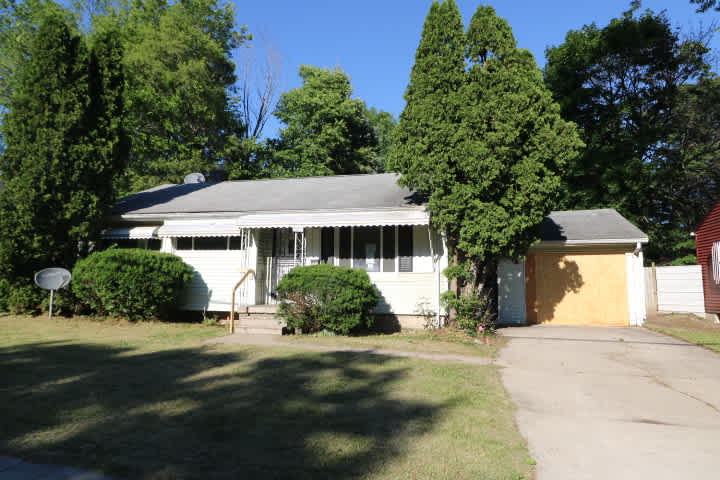
Over the weekend, I pulled some data from my website to find the cheapest homes you can buy from the US federal government. The outliers (a $3,000 house in Flint, MI) are often in quite a state of disrepair, but there are lots of...lots...which are in reasonable condition across many US states.

by player_piano

Well, yes, I have in fact always dreamed of owning an abandoned house in Flint, MI

by airstrike

A few years ago an apartment in my building was up for a foreclosure sale. Price looked good but turned out it was literally impossible to figure out (1) how much or the original dead beat's mortgage i would be on the hook for (2) tax burden and (3) unpaid coop fees i would owe.

So even as finance save person already in the building, it was impossible to figure out what I'd be getting/owing. Really ruined my taste for these things.

by xyzelement

It's crazy how this isn't simple. Surely all they have to do is to tally up the debts secured by the apartment, then sell the apartment and use the money to pay as much of the debts as possible. Any remaining debt is the lender's loss, that's the risk they take when giving out loans.

If any debt does need to be tied to the apartment rather than the person, then it simply needs to be registered in a publicly (easily) accessible way. If someone fails to register their debt in a timely manner then it should be forfeit. It should be registered at the time it takes effect. Lender should be responsible for making sure the registration is complete before giving out the debt, if someone takes out a loan then sells it before the debt has been registered that's the lender's problem. They can't retroactively add a lien to my property because the previous owner took a loan when it was their property. That's not reasonable. If the lien is not registered then it doesn't exist, it should be that simple.

by sfn42

Years ago when I was thinking of moving, I started looking at houses with my real estate agent. I started asking about foreclosure sales and he said the same thing. Seller and seller's agent will try and obfuscate the numbers to make it look attractive and essentially "stick" the buyer with something that costs way more than its worth.

by burningChrome

Join the discussion

Write your take first — we'll ask for email only when you're ready to publish.

  • Hacker News
  • A lot of these houses probably come with massive debt attached, so really buying any of these homes is a ripoff, even if you just wanted them for the land. You will owe way more than what you paid. This website would be more interesting if it actually showed you the true cost. As it stands, it’s clickbait.
    by deadbabe
  • Downvoted for breaking this guideline: "Don't be curmudgeonly. Thoughtful criticism is fine, but please don't be rigidly or generically negative."

    The "It's clickbait" comment at the end made me feel pain for the site buider, and I didn't even put any work into the website. They made a thing and put it out in the world. Some people like it: as evidenced by other comments here.

    That they mention the top of the price range instead of the bottom lends a lot of credibility to my mind.

    by ademup
  • I’m not sure this is clickbait in a literal sense, but given the factors you point out, it could promote misunderstandings among casual readers.
    by odyssey7
  • >As it stands, it’s clickbait.

    check the big "What you need to know before you buy" section.

    by john_strinlai
  • Let us count the excuses in the thread:

    >back taxes

    >asbestos

    >shit hole places

    >something wrong with it

    >needs work

    >jobs

    >demand better of yourself

    Love the last one. I'm reminded of an article I read yesterday, where the author complains about how all the affordable housing was built in low income areas! "Oh no! They built the affordable housing where the people who need it are at!! NOOO!"

    https://citylimits.org/where-the-most-affordable-apartments-...

    by panny
  • To paint a picture in your mind, this is the digital equivalent of being a rag & bone man scraping by to find a place to live somewhere, anywhere, across the country. Demand better of yourself if you're going to attempt to go to such lengths.
    by bellowsgulch
  • > Search all government auctions in one place, *know what they're worth before you bid*

    So the blog post contradicts the entire premise of the site.

    This is just an ad for their valuation service.

    by gowld
  • Real estate specifically is very hard to "value" sight unseen from a bidding perspective. The post I shared - with the information on what to look out for as well as possible additional costs - is part of helping people to understand what to bid.
    by player_piano
  • Tempting if looking to build a new workshop or garage. Tear it down, and build from scratch.
    by nodesocket
  • The crazy thing about residential property in 21st-century USA is that it's always a money pit.

    A few hundred years ago, it was commonplace for the middle- and upper-classes to own large estates, and these estates were expected to be assets that earn money. You would hire staff, and tenant farmers, or have slaves or whatever cadres of workers to work the land, be shepherds, and basically produce revenue for the lords or owners of the estates. This was not only a UK phenomenon but continued in the USA.

    Unfortunately, in modern times, there are zoning laws, business licensing, insurance, and many things to militate against homeowners using their homes as businesses or assets or generators of revenue. You can't exactly have a public entrance and signage in a HOA neighborhood and your neighbors gonna be pissed if random stranger-customers are pulling up in their cars all day and walking up to your front door to buy merchandise or to use a service that you offer from your private residence.

    But nevertheless, this commercialization happens all the time. I didn't realize how crazy widespread it is until I started paying attention in Google Maps. There are dozens of "cottage industries" in every neighborhood. It's probably exactly the reason why "McMansions" and excessively large homes are popular, even as fertility shrinks and people aren't having kids, they still want room at home for their entrepreneurship and home office, doing whatever business they go into for themselves.

    I have seen little family farms that sell "raw milk" and mutton and fresh eggs, basically on the DL for your Venmo or Cashapp payments. Across the valley there is literally an arms dealer who sells out of his garage, and only a few blocks from a school. There are people fighting their HOA, tooth and nail, because the HOA is enforcing their rules about signage, or giveaways, or something, and these people are even featured on the evening news and portrayed as "innocent HOA victim" when in fact, they're trying to illicitly run a business out of their garage and gin-up foot traffic for that business from passers-by in a SFH residential-zoned neighborhood.

    So yeah, a home that your family lives in, that's in a residential-zoned area, of the United States, that's guaranteed to have "negative value" because you'll always be pouring money into its taxes, upkeep, and maintenance. And that's exactly why most homeowners decide to actually start a business and use that property, in a grey area, to earn money rather than throwing it all away.

    by ButlerianJihad
  • I watched the show Bridgerton, and I was shocked when the main characters just dilly-dallied all day. Turns out they had estates that made money for them.
    by brcmthrowaway
  • There's so much wrong with this comment. First, middle class _by definition_ did not have large estates that earned incomes for them.

    Second, it's weird to throw in an "unfortunately" after pointing out that the only thing that enabled this was exploitative labor practices (including slavery!)

    Third, most homeowners do not actually start a business and use their property to earn money.

    Fourth, the home doesn't have a negative value. It has a resale value often quite substantial, and you are living in it while you're paying all those maintainence costs.

    by empath75
  • > There are people fighting their HOA, tooth and nail, because the HOA is enforcing their rules about signage, or giveaways, or something, and these people are even featured on the evening news and portrayed as "innocent HOA victim" when in fact, they're trying to illicitly run a business out of their garage and gin-up foot traffic for that business from passers-by in a SFH residential-zoned neighborhood.

    Isn't this just taking the perspective of the HOA? Mixed use zoning is a completely reasonable policy. The status quo shouldn't be used for normative determinations. At which point you have busybody HOAs lobbying for restrictive residence-only zoning and then harassing sympathetic small business owners who are just trying to make a living.

    by AnthonyMouse
  • > little family farms that sell "raw milk" and mutton and fresh eggs, basically on the DL

    There's a decent amount of that going on in my neighborhood (Dallas TX). The reason it's on the DL is because nothing is pasteurized let alone inspected by the local health department. Some people prefer raw milk as being more natural but pasteurization was invented for a reason. I stay away from it.

    by chasd00
  • AKA where not to buy a home.
    by IAmGraydon
  • Thanks for this. Tip jar?
    by toomuchtodo
  • Appreciate it, but no need - happy you found it interesting. If you end up buying one of these, let me know!
    by player_piano
  • Haha, not a single dot in my state. Guess I'm moving to Illinois!

    Edit: "Time Left NaNm", guess I should be quick.

    by snypher
  • How does this work?

    I hover the mouse over a dot and a pop-up appears nearby, but when move the mouse away from the dot to click the bubble, the bubble closes.

    by bobmcnamara
  • Apologies, clicking on the dot should also take you to the listing.
    by player_piano
  • I'm guessing since the map is price limited there are likely many more properties out west except they are higher priced? $800 for a small chunk of vacant land behind something industrial near what looks like a lonely highway exit somewhere inland California. Then the East half has lots of reasonable looking homes. I hope the people left behind and homeless are getting by.
    by skyberrys
  • Correct, there are about 3,000 real estate listings right now on the main site: https://govauctions.app/feed?category=real-estate
    by player_piano
  • Do you pull data from non-HUD sources too?

    https://www.realestatesales.gov/

    by DarkContinent
  • The data are from HUD, Fannie Mae HomePath, and Freddie Mac HomeSteps. There's a methodology section towards the bottom of the page.
    by player_piano
  • Why go to all this trouble? Just go to realtor.com (no relationship) and enter your desired parameters thusly: https://www.realtor.com/realestateandhomes-search/Oakland_CA...
    by mlmonkey
  • Over the weekend, I pulled some data from my website to find the cheapest homes you can buy from the US federal government. The outliers (a $3,000 house in Flint, MI) are often in quite a state of disrepair, but there are lots of...lots...which are in reasonable condition across many US states.
    by player_piano
  • Well, yes, I have in fact always dreamed of owning an abandoned house in Flint, MI
    by airstrike
  • A few years ago an apartment in my building was up for a foreclosure sale. Price looked good but turned out it was literally impossible to figure out (1) how much or the original dead beat's mortgage i would be on the hook for (2) tax burden and (3) unpaid coop fees i would owe.

    So even as finance save person already in the building, it was impossible to figure out what I'd be getting/owing. Really ruined my taste for these things.

    by xyzelement
  • It's crazy how this isn't simple. Surely all they have to do is to tally up the debts secured by the apartment, then sell the apartment and use the money to pay as much of the debts as possible. Any remaining debt is the lender's loss, that's the risk they take when giving out loans.

    If any debt does need to be tied to the apartment rather than the person, then it simply needs to be registered in a publicly (easily) accessible way. If someone fails to register their debt in a timely manner then it should be forfeit. It should be registered at the time it takes effect. Lender should be responsible for making sure the registration is complete before giving out the debt, if someone takes out a loan then sells it before the debt has been registered that's the lender's problem. They can't retroactively add a lien to my property because the previous owner took a loan when it was their property. That's not reasonable. If the lien is not registered then it doesn't exist, it should be that simple.

    by sfn42
  • Years ago when I was thinking of moving, I started looking at houses with my real estate agent. I started asking about foreclosure sales and he said the same thing. Seller and seller's agent will try and obfuscate the numbers to make it look attractive and essentially "stick" the buyer with something that costs way more than its worth.
    by burningChrome

Related stories