Join the discussion
Write your take first — we'll ask for email only when you're ready to publish.
- Hacker News
- WWII? Fabius did this to Hannibal more than a thousand years ago. The core of his strategy was to dunk on supplies, stall, and have the Carthaginians run out of food.
I imagine Iran, Ukraine, and Russia all know about Fabian strategy.
by 0x59 - Change is not going to happen until it's forced. The US military was born as a force required to rebuff existential threats. Since the fall of the Soviet Union, the gravitational center of the US military has been the profit margins of defense contractors. What creates the greatest profit? Centralization. Why have a dozen logistics centers when you can have one big one? A trillion dollar fighter program more efficiently absorbs tax dollars than half a dozen specialized vehicle programs from mid-sized companies. Why get congress to pay you to make cheap drones when you can get them to pay you to build $4M Patriot missiles? The MBAs have been riding the US military into the dirt for forty years and I don't think it's going to stop any time soon.by causality0
- Yep, how long does it take to replace an F-35 or one Reaper drone? In WW2 we probably could have buried Germany in the amount of tanks we could produce. We are like Germany from WW2 now, with hand stitched upholstery in our Tiger Tanks.by vondur
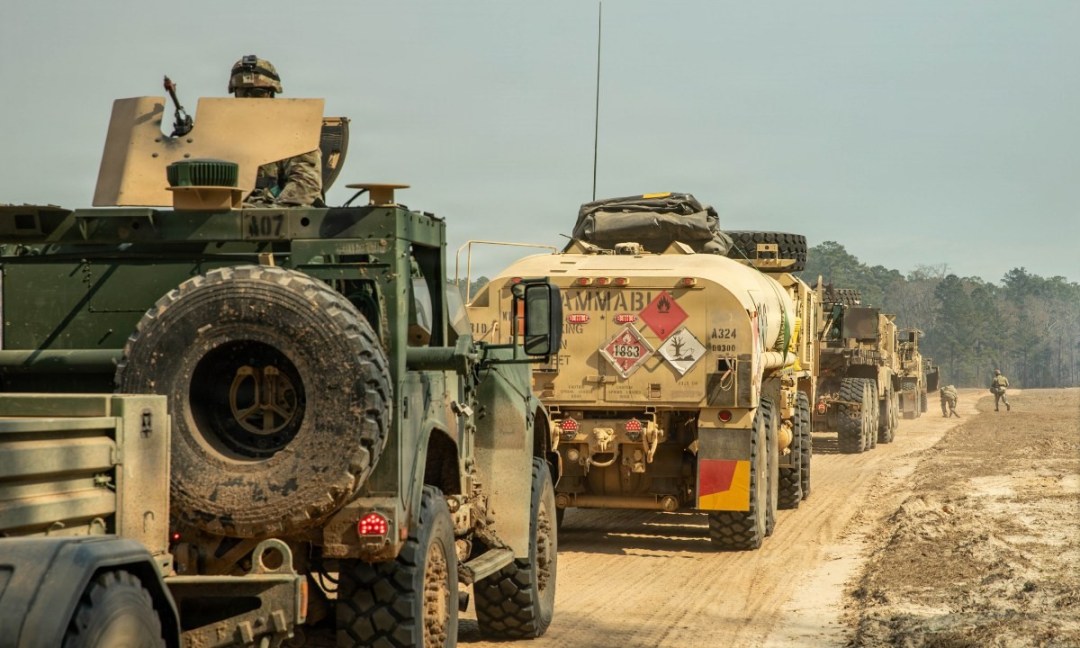
- > If history provides the theory, the ongoing war in Ukraine offers a brutal contemporary lesson: Modern armies collapse when they run out of logistics, not when they run out of weapons.
Is this really a new lesson? I thought that was common knowlegede since WW2 especially with the events of the Eastern Front.
by haunter - These systems are antifragile. Just like what was exposed by the supply chain shock during covid. You optimize like crazy to squeeze every bit of efficiency (I know it's the military, so this is relative) out of a system when times are good / easy. Then the game changes a little and the entire thing comes apart. The US military has been operating in an uncontested space for far too long and there is major weakness in all the unprotected assets away from the front. Think about all the aircraft that are unprotected and near civilians. A project spiderweb in the US would be relatively easy and devastating. The US military needs to get their butt in gear and take action to close those vulnerabilities.by briandw
- This is a pendulum I've now seen fully swing twice since I enlisted 30 years ago.
"We need more integrated logistics because the teeth can't fight without the tail!"
Some years pass
"Why do we have all these non-combat roles in the military? Shrink everything down and focus on warfighting!"
More years pass
"Why can't we do any support internally? We need stronger and more integrated logistics!"
Lather, rinse, repeat.
by bandrami - When Russia invaded Ukraine, nobody (even the Ukranians) imagined that 5 years later they would have their own missiles hammering Russia 2500kms in the rear. Americans need to start accepting that a) the Iran war will also probably still be going on in 5 years and b) Iran will probably in a better place than they are now, strategically speaking.
- A very insightful, and correct, piece.
I'll quote in full the following, which I think gets to the heart of the matter. If you have no push, you can't apply pressure to the point.
> The notion that amateurs talk tactics and professionals talk logistics is frequently discussed in military academies and war colleges, yet it is rarely reflected in the Army’s budget requests or modernization priorities. The outdated concept of the tooth-to-tail ratio, which implies the logistical tail is a bureaucratic waste that must be minimized to support the combat teeth, must be fundamentally reexamined. In modern warfare, the tail is the primary target. If the tail is severed, the teeth are rendered useless.