
Join the discussion
Write your take first — we'll ask for email only when you're ready to publish.
- Hacker News
- This is how economy should work, based on physical tangible assets that owned/existed, not some imaginary value based on whatever speculation, that what ruined housing market, what inflated stocks and allowed cons to get wealthier, it’s also why a lot of companies make fake job posting or pr stunts, it’s all to inflate that imaginary market currency then use it to get a real cash, that should be illegal and is a form of Ponzi scheme fraud, if a house as-built cost is 70k, it shouldn’t be sold for 800k, and the owner shouldn’t be able to use that speculative value to get a 600k loan.by tamimio
- You should probably read up on why humans initially switched to the currencies or the gold standard later.
Personally I found this one quite interesting. https://www.lynalden.com/broken-money/
by dewey - It sounds like you're suggesting a barter economy. It works like this:
1. Bob grows oranges, and wants shoes
2. Ted hunts for meat, and wants oranges
3. Sam makes shoes, and wants meat
The only way this can work is to have a 3-way transaction. But with a money system, the money is traded without needing a 3-way transaction. It's much more efficient.
by WalterBright - coindesk only promotes ztrash
- Wait - is this finally crypto’s mass adoption event we’ve all been waiting for?by jnyst1985
- finally, economics explained by cows, so i can finally understand it
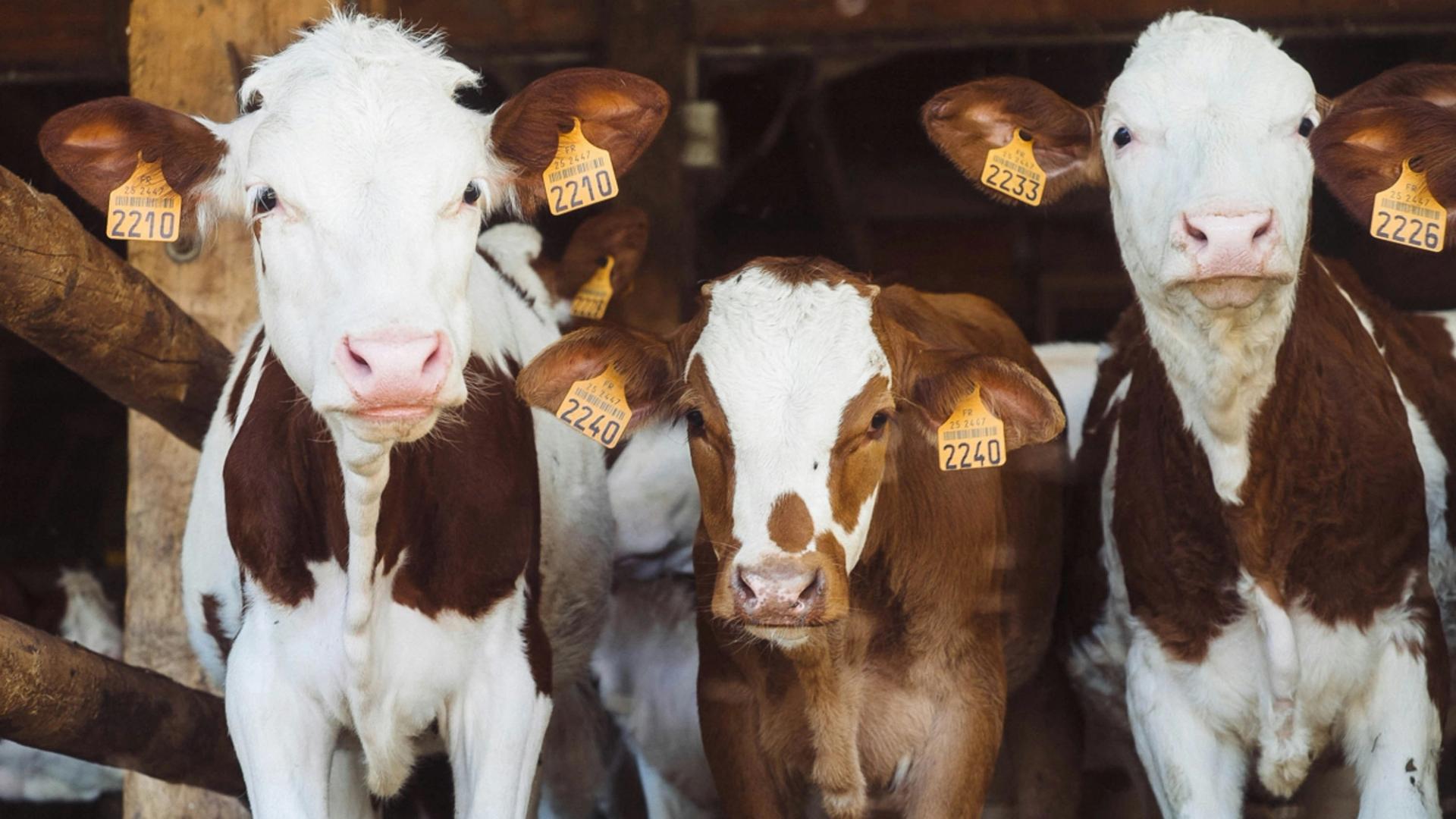
- > We take the cow, which is a real and tangible asset, and transform it into a digital asset
Fine... if you don't need the cow too.
by chrisjj - Tokenizing physical things is kind of dumb for one reason: it's not trustless and it relies on there being a big mean cop somewhere in the transaction. Say i tokenize my couch and then sell you the the token. Suppose you show up to my house to claim your couch. I can tell you no. You can then sue me and try to get the state to send a big mean cop to get it, or it's equivalent in cash.
I've yet to see a scheme that makes this trustless somehow. If you don't have that you don't have anything.
by idiotsecant - "It also includes built-in safeguards that allow the farmer to swap one dead cow for a live one."
Is that backwards? If you own the token for a cow, and it dies, what happens?
by Animats - There’s a credit agreement that will spell out those details:
> To turn cattle into trusted financial guarantees or collateral without requiring inspectors to visit the property, Cowmed equips cows with an AI-powered Smarty Collar. These collars constantly monitor health, behavior, and location. The raw data is then converted into an encrypted digital identity tied directly to the B3 credit agreement. [Emphasis mine]
by jt2190 - Brilliant idea, but why the crypto? Couldn't you simply do the collar + web connection... without crypto?by bernardom
- With what platform? Stripe, Visa and Banks that arbitrarily ban users?by asxndu
- I would imagine local credit is more expensive to access and doesn't have the pre-existing structure to account for more reliable collateral. Another user here[0] says that using cows as collateral is an old scam there. So either this is an expansion of the scam in the worst case (possible) or it's to compensate for the fact that local lenders are trained by interaction to not lend to what looks like the latest scheme (i.e. this well has been long ago poisoned).
e.g. if you go to suburban Japan and you walk by someone on the street who asks you for help and needs to call someone, you may lend them your phone. If the same thing were to happen in SF, you shouldn't. And so, perhaps, if you were a good guy you go ask a Japanese tourist haha! Okay, well the analogy is a little stretched but hopefully you get something out of it.
by arjie - Using livestock as collateral is one of the oldest ways to obtain a loan.by tiffanyh
- by m3047
- But how do investors collect on this collateral? Do they have any legal leverage? And how does blockchain help them?
Blockchain and tokenization would seem to help with transactions with investors who are far away who don't know the farmers personally. Again, how do they collect?
And if you're local and know the farmer, why do you need blockchain? A spreadsheet, a piece of paper, or just a handshake would do.
by mmooss - It's also one of the most famous recurrent scams in Brazil.by marcosdumay
- Real World Assets (RWA) is the hot stuff these days. While it is still early the mega-banks are starting to pile on.
One of the reasons is that any infrastructure built on blockchain is reusable for free by everybody (minus transaction free). Uniswap and Aave have been chugging along for years and are starting to acquire reputation beyond retail. Privacy is moving along as well where you can tokenize, say, bonds and hide the in/out flows with ZK proofs.
You can track RWA issuance here https://app.rwa.xyz/
by vvpan - How can it be hot? Real means that it has a tangible value, a ceiling and so it cannot be charged up by the psychological hypetrain of the 'new paradigm' and also the financial hypetrain of number going up.
It is a pretty confined upside if anything
I looked into it years ago when I wanted to tokenize small firefighting planes and helicopters hoping that being the person in charge of the entity doing the tokenization I could be staying at the premises of the private companies that lease the planes and helicopters and hold the contracts to do the actual firefighting.
My hope was that being identified as the 'owner of the planes' eventually the crew would allow me to fly the missions as a +1 even though I don't have the licenses.
But never crossed my mind that this could be make me a millionaire
- Free (minus transaction fee) could be used to describe traditional banking and a lot of other services as well. What will happen if/when this (or any) approach gets really popular is some group will figure out how to control the fee and start ratcheting it up in classic rent-seeking style. Capitalism always finds a way to monopoly.
- > Real World Assets (RWA) is the hot stuff these days.
> Uniswap and Aave have been chugging along for years
How hot? I haven't heard of it or them, but that's hardly strong evidence. What do you see?
> One of the reasons is that any infrastructure built on blockchain is reusable for free by everybody
Does that have an impact?
I doubt consumers care about free. They certainly care about high levels of integrity (my money is safe) and availability (I can access my money), as well as profit (interest / gain). I've never heard a consumer say, 'I use Bank Z because their financial operations run on FOSS.'
Mega-banks would seem to dislike FOSS. They want barriers to entry; they will find it inefficient, frustrating, and very limiting - with a significant and direct impact on their bottom lines - to deal with a bunch of amateurs. That's why you're not allowed on the trading floors, electronic or physical, and Goldman Sachs directors won't take your calls (until you establish yourself).
I suspect free matters to undercapitalized startups, amateur financial services, and hackers interested in innovation in this area.
But again, there's a lot I don't know ...
by mmooss