Join the discussion
Write your take first — we'll ask for email only when you're ready to publish.
- Hacker News
- Wow, this thing should be nicknamed "El Hombre"by mjsweet
- Other than "numbers go up" it's unclear to me what the consequences are, as I'm not extremely familiar with El Niño events. Hurricanes, maybe?
- The weather in Japan has been completely wack I can tell you that. The rainy season is never ending in central and north Japan. It was actually declared over but it's back again. Never seen that before.by bamboozled
- I can hardly wait to see how this shakes out locally. We have had 3 La Ninas in a row that have left us with a rainfall deficit of 23.5" (597 mm) under the 20 year average annual total that I have measured here in NTexas. It's been dry overall for several years.
Considering the situation going into the 2015-2016 El Nino we were also in a multiyear drought with a rainfall deficit accumulated from 2010-2014 of over 31" (787 mm). That is just under the 20 year average annual precipitation total for my place - 36.3" (922 mm). We were missing almost a full year's rainfall over that 5 year period. I use a NOAA manual rain gauge of the type that can handle up to 11" (279.4mm) of rain before needing to be dumped. I have recently added a digital tipping gauge unit beside the manual gauge so I can have a clear comparison and track rain rates.
Anyway, if it works out like 2015 did then we went into the year with a deficit but it quickly began raining well above normal so that by mid-June we were already above the normal 20-year average rainfall total. Then it dried up with below normal rainfall from mid-June to late October. There was no rain at all between the first week of September and the last week of October. For the year though we were still 3" (76.2 mm) above the 20 year normal annual total when it started raining again.
Between the last week of October and the end of the year it rained an additional 28" (711 mm) and then it stopped and we fell behind again until finally catching up to normal accumulation in the second week of March 2016.
Currently our accumulation to date is almost 1" (25.4 mm) above the 20 year average annual total for this date. So, just as in 2015 we are a little above normal during summer. I expect that if it works out like 2015 then we can expect a lot more rain beginning in the fall, probably by October.
If I look back over the previous 5 years from 2021-2015, we are again running a rainfall deficit of 26.2" (665.5 mm). That is about 72% of rainfall expected in a normal year using my 20 year average accumulation. Nearly 3/4 of a year's rainfall behind at this point over a 5 year period. Interesting.
I suspect I will need to have some more rock hauled in to repair the driveway by the end of the year since it will all wash down the hill again.
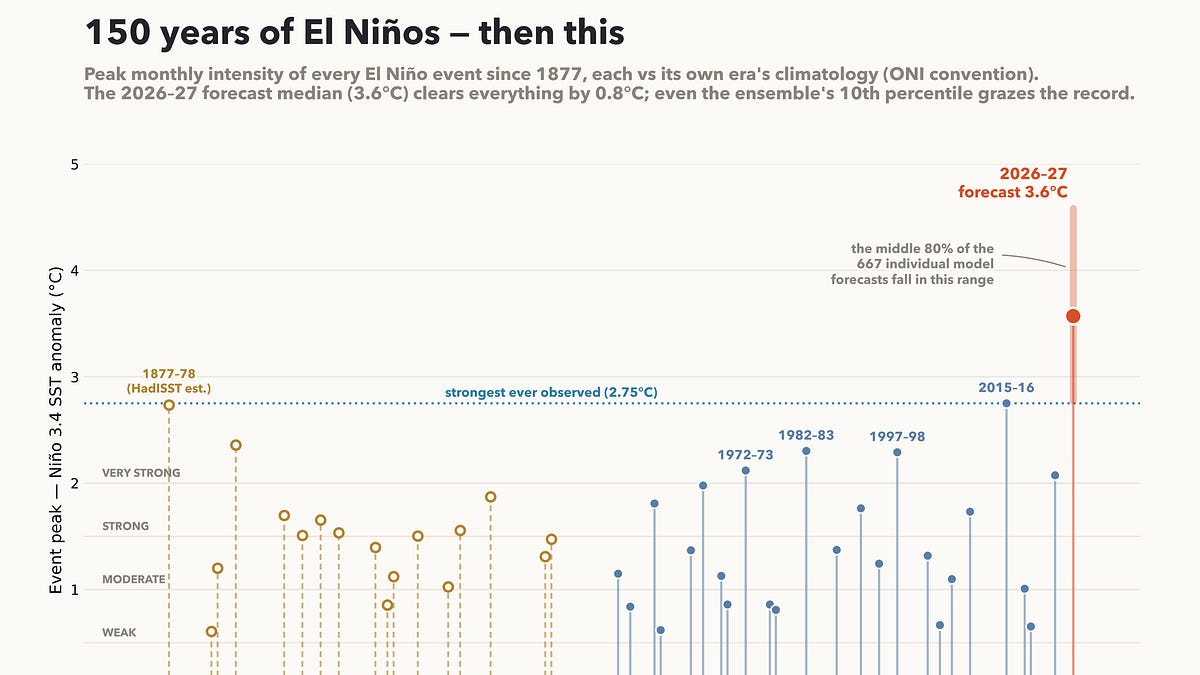
- I've seen dozens of videos and articles about this strongest ever event. And I still have no clue if the next year I should evacuate from Paris for the summer because heatwaves may be even crazier than this year, or prolonged heavy rains are more likely and can make the city more livable.by buybackoff
- I wrote to Alan Kay over 8 years ago about my fears of global warming and how tech seems to dismiss it as a concern on the whole.
A little known fact about Alan Kay is 17 years ago he was part of a group of "systems people" who published for the NFS about various systems including the climate. He helped write "Transitions and Tipping Points in Complex Environmental Systems" (https://nsf-gov-resources.nsf.gov/2022-12/Transitions-and-ti...). He wrote to me that "This, along with many other warnings from many other sources over many years, fell on deaf or disbelieving ears."
He agreed with my concern saying "And, yes, you are right that things will likely be really bad if the climate is allowed to crash past the tipping point."
But what he said following that shook me to my core. Kay said "If you think of a system as an upside-down coca cola bottle, it is easy to see that a little nudge can topple it, whereas considerably more energy is then required to put it back.".
What this means is to get CO2 back down to 350 ppm (we are at 428 ppm), we would need to expend more energy than we did getting it to 450 ppm. That means, we would have to expend more energy than humans have produced IN ALL OF HUMAN HISTORY in the next 10-20 years (30,000-45,000 EJ range) just to put the system back to where it's safe.
Ask yourself, where are we spending our energy right now as a species? On putting the system to a safe level or something else?
Do we even have the capability to do it? As we continue to expand our industrial capacity, we also use non-renewable resources like oil and metals we can't recycle. As we exploit them, we degrade our industrial capacity for the future. For a deeper analysis read Limits to Growth and work related to it.
by mempko - What's interesting to me is that almost all models underestimated the ocean temperature.
We are entering uncharted waters and I fear that at some point we will get an extreme extreme weather event and the worse thing is that we won't see it coming.
by gonzalohm - The buried lede:
What does all this mean for global temperatures? Because global temperature lags ENSO by around three to five months, most of this event’s warming will land in 2027, which is now shaping up to be a genuinely alarming year and the warmest on record by a sizable margin
I’m certainly no climate scientist, but if I lived in Europe, I would absolutely be looking into how to get a solar energy system set up and at least one window air-conditioning unit if not a heat pump before next summer