Join the discussion

Write your take first — we'll ask for email only when you're ready to publish.

  • Hacker News
  • Fantastic infographics!
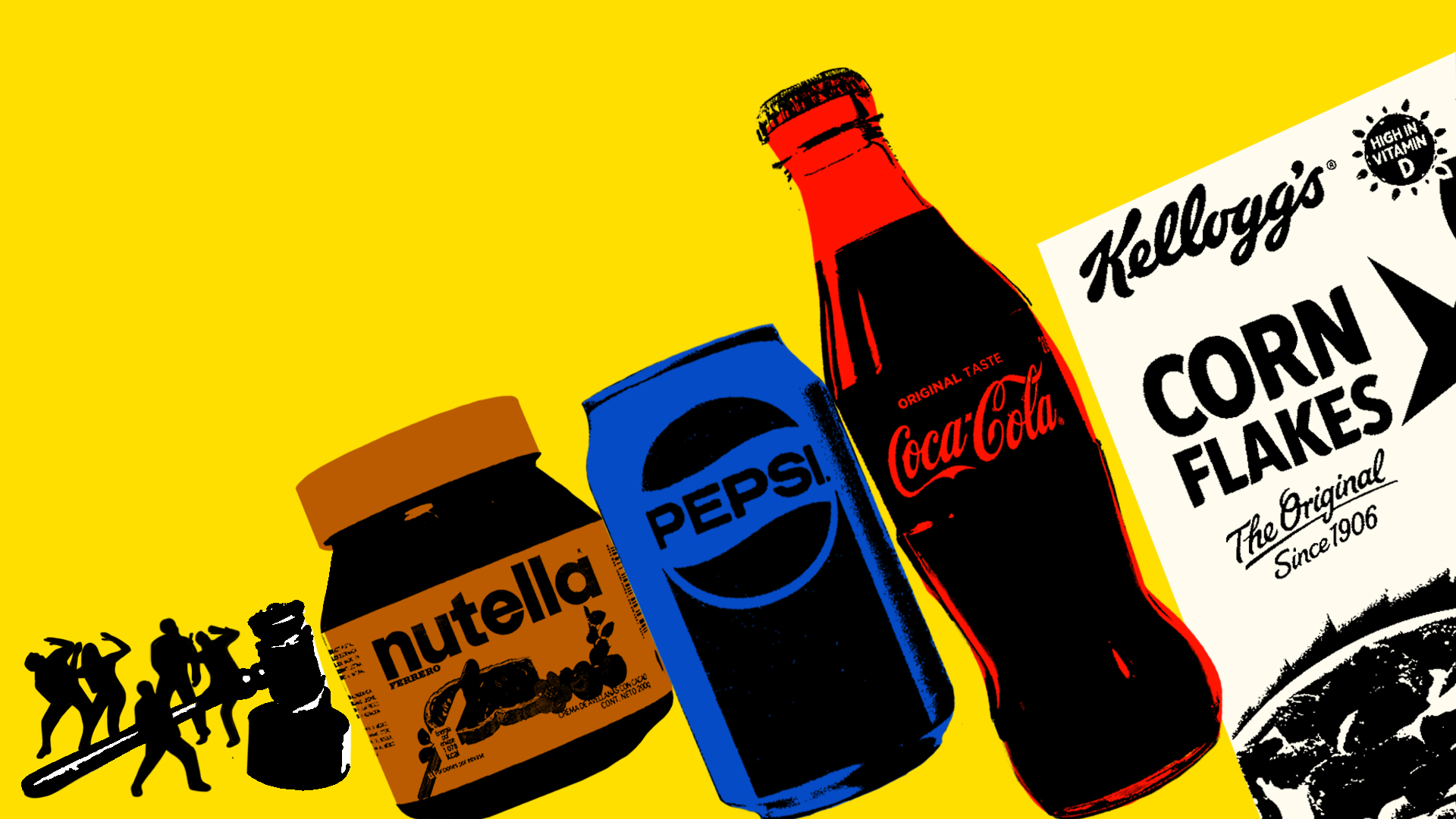
  • Came here to see if anyone was discussing the infographics, but oddly enough because I found them incredibly distracting and in that zone of "pretty to look at but taking too long to comprehend well, if at all". To each their own!
  • I'm okay with complaining and proposing solutions, but saying "blue" and "red" in colors for product designs is manipulating children is odd.
  • Support your local farmers and get a weekly CSA (community supported agriculture) box, delicious!
    by bix6
  • 595 cumulative year of litigation is probably most important statistic here => even when governments eventually win the process itself can be delay policy for years
  • by wxw
  • "But behind closed doors, they have taken governments to court" -- uh, I guess courtrooms technically have doors??
  • yes, closed ones.
  • The measures related to lawsuits are misleading and terrible, because of the way class-action lawsuits have incentivized lawyers to pursue dubious cases against large companies.
  • Don't they still need to win to get paid?
  • Ahem this is about the companies suing the government to stop what the author thinks are regulations that would "save lives".
  • This report is about something completely different
  • > incentivized lawyers to pursue dubious cases

    I don't see it:

    Class-action suits require the law firm owners (partners) to pay teams of attorneys, as well as experts, and others for years. I saw one firm rent an office and hire dozens of attorneys just to review the tens of millions of pages of documents, looking for evidence. The firm earns nothing unless and until a positive resolution. Some firms require financing to cover the cost.

    Who is going to put all that on the line - not to mention their career and reputation - for a dubious case?

    When the resolution comes - usually a settlement - they might not profit or not much for their years of investment and effort. If they pursue a 'dubious' case, they could lose everything - courts can even sanction them.

    Targets of class action suits don't like them, of course, and try to denigrate the attorneys. What else will deter and get justice for some of the brazen fraud? The SEC? FTC? They don't have the resources or, depending on the administration, the mandate to enforce things across the entire country. Will you sue a corporation for even $10K? Try it.

  • I'm not in love with the system, but it does seem like a last resort for imposing discipline on corporations. The dilemma is whether the tort system is preferable to an approach involving more regulation and enforcement.
  • "Senators don't have the luxury that a research scientist has of waiting for evidence." - 1977

    https://www.youtube.com/watch?v=xbFQc2kxm9c

    FYI

    obesity 1977 ~14% 2026 40%+

    T2 Diabetes 1977 ~3% 2026 ~12%

  • US had a whole agency that worked with politicians to understand technology until the 90's and Newt got rid of it.
  • I would say the idea aged poorly in the USA. Older generation of politicians were more welcoming to experts in their fields.

    Now they reject the experts. Either to a please their voter base or for personal profit. Big grocery has more money for political donations / legal bribery.

    USA Supreme Court conservative judges have ruled that expertise has no value in a ruling against protecting the environment from toxic chemicals.

  • McGovern is not someone to hold up, but that's not the quote.

    It was: "I would only argue that senators don't have the luxury that a research scientist does awaiting until every last shred of evidence is in"

  • I'm about as hippie with my food as you can get, but this "article" is badly written propaganda that conceals more than it reveals. Half way down the article you learn that ~80% (193 out of 239) of the lawsuits are in Mexico and

    > many of them were against the country’s labelling regulation. Quinto Elemento Lab reveals the companies’ arguments: that the laws were a violation of their constitutional rights

    But the article doesn't say what those rights are, which makes me think the lawsuits were just

  • Maybe Mexico got it’s shit together and started doing something about the obesity crisis and the food industry is desperately trying to keep the status quo ?

    Or maybe, to paraphrase the famous tweet, this is actually a plucky band of Mexican fizzy drinks manufacturers who are determined to expose the lies of 97% of the worlds health scientists.

  • >But the article doesn't say what those rights are, which makes me think the lawsuits were just

    That they lost about 80% of their lawsuits throws doubt on that.

  • When the Mexican government signed up for NSO’s spyware, who did they target? A woman who was working to pass a sugar sweetened beverage tax. And her children.
  • Mexico is serious about junk food.

    The cereal boxes in the stores don't have cute cartoon characters on them, and I tried to send somebody a box of chocolates and it got seized by customs.

    Candy is labeled like cigarettes.

  • Adversarial advocacy is core to most (western?) societies. Weird to call out the NGO here while ignoring the opposing industry groups on the other side. It's exhausting that _everything_ is litigated. But I still prefer it to authoritarianism.
  • Right at the top of the article, after the first picture:

    > 239 lawsuits were filed between 2010 and 2025 across Mexico, Colombia, Brazil, the US, the UK, and India against public health policies targeting food and beverages such as front of pack labelling, regulating advertising junk food to children, soda taxes, and taxes on ultra processed foods.

    So the rights would be not to put health labeling on the front of their products, advertise unhealthy food to children, and be untaxed for the health externalities their products create.

    Maybe the rest of the article when I read it will give me the same experience but starting to read it after reading your comment, this stuck out like a sore thumb.

    [edit: nope, it's a straightforward report on cross border behaviors of food companies]

  • I don’t know that the lack of information should lead you to assume that the Mexico lawsuits are justified. From what I’ve read, they’re contesting (among other things) the mandated black octagon on the front of packaging that says “exceso calorías” or “exceso azucáres” (excessive calories and sugar) and also bans on advertising to children. The cases that have already been decided have overwhelmingly been in favor of the government.

    I realize “just” is very subjective, but I think that mandatory “excessive sugar” markers is a proportional response to the obesity and diabetes epidemic. Ultimately society has to bear the externalities of this stuff. And I think advertising any products to kids is a bit of a moral hazard.

  • People have to learn to recognize the patterns.

    In this case, lighthouse reports is an international NGO which receives on the order of ~1MM in income per year (an extremely common pattern for these NGOs), which was directly given to them by (unspecified) government grants and (unnamed) private donors (can see all this in their openly published annual reports). In exchange for the funding (80.38% of which they paid out to themselves as wages/compensation), they put together and release "reports", "studies", etc., that push the messaging the NGO was created to push.