Join the discussion
Write your take first — we'll ask for email only when you're ready to publish.
- Hacker News
- I've been thinking of making a service which automatically sends deletion requests for all my service companies every month. Like, I currently keep a bunch of spyware features in my car turned of, but I have to keep location turned on to use the built in navigation which keeps track of range for me. Would be nice to have a ceiling on that data's retention.
Long term, if compliance with data deletion requests becomes a pain, maybe companies will finally give us an opt out of surveillance capitalism? Or maybe they'll just lock me out of my own car (I guess it's their car since I don't have root on it, lol)
by igor47 - Does this apply to Google, car companies, etc, or did they bribe in exceptions for themselves (like California grocery stores did for the Do Not Sell My Personal Information law)?
Also, who gets the $200/day? If I issue a drop request, wait 145 days, then buy my data from brokers, do they have to pay me $20,000 per record they return?
by hedora - Some previous Delete / Drop Act discussion:
The Delete Act
https://news.ycombinator.com/item?id=46449694
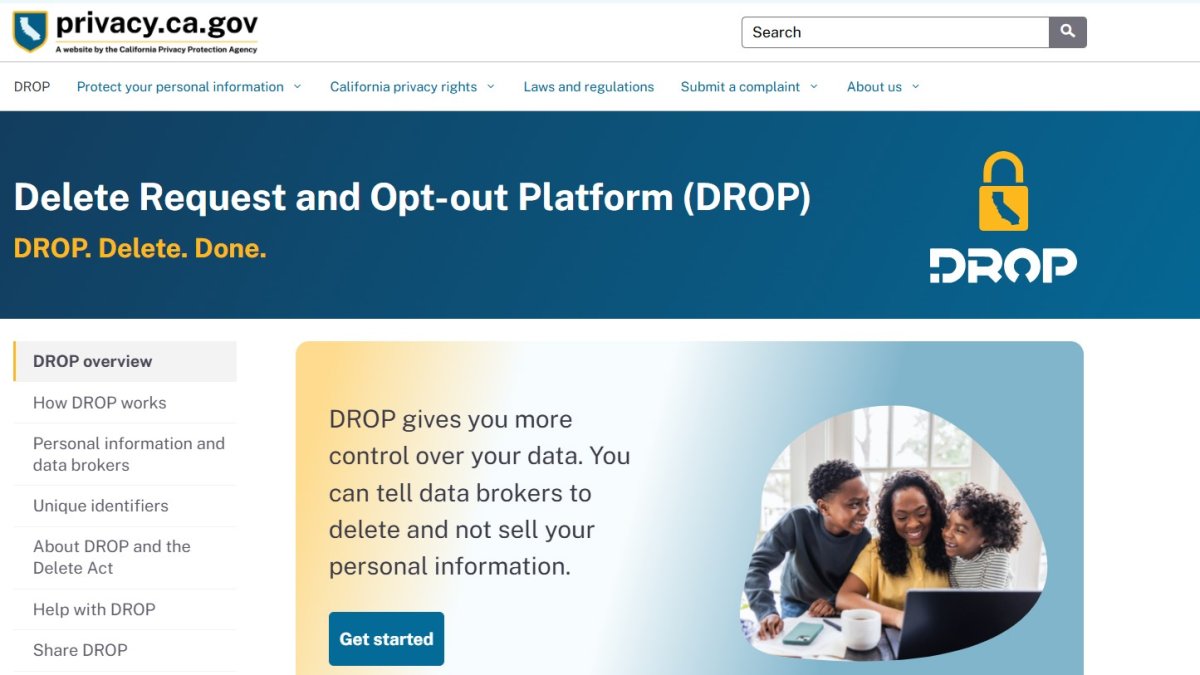
California residents can now request all data brokers delete personal info
- I wonder if there will be any funny data issues that happen because companies keep track of such requests in a table named "drop"by bdcravens
- Out of curiosity, does anyone know how this is enforceable for a company not based in California? Can CA fine a data broker that is based in another state but that is selling CA residents' information?by MrZander
- I've been building the infra for data brokers to connect to DROP (easy), actually effect deletions (hard), and make sure the data stays deleted (harder): forgetmenaut.com
DROP is pretty significant considering that it's the first compliance system meant to have an immediate effect (delete the data), backward-looking effect (forward a legally-binding deletion request to everyone that data was sold to or shared with), and a forward-looking effect (never let that record re-enter your system, in perpetuity). This is significantly more tracking and auditing infrastructure than anyone in the industry has ever normally run, not to mention that the request volume is 100-10000x what most of these brokers would process in previous years.
We'll see how well companies actually managed to comply when audits are performed for every registered broker in 24 months. I also think the impending prosecutions (and likely bankruptcies) of several unregistered data brokers will encourage the others to take it more seriously.
by jboggan - I hope other states adopt this. One of the biggest mistakes I have made is giving my real phone number to Dun & Bradstreet. Now the spam calls and messages (from people they sold my info to) won't stop. I don't want to change my phone number.by petilon
- As good intentioned as it is, I don't like the wording used around this law. "Request" and "Ask" and "please delete my information." Notice that regular users have to "ask nicely" but when it's something like the DMCA, which benefits corporations, they use "takedown notices" and "demand letters."
I don't want to ask data brokers, pretty please with sugar on top. I want to be able to demand they do it, and require them to immediately do it and provide proof that they did, under penalty of perjury.
by ryandrake