Join the discussion

Write your take first — we'll ask for email only when you're ready to publish.

  • Hacker News
  • There is one rule of thumb that I’ve noticed: if you are a reasonable person and integrate you will be treated as one of their own. Otherwise not.

    Your article mirrors my own experience 1:1, it’s like I’ve written it myself. Apart from the citizenship process. Even though it was also 14 months long (eerie lol), I had to do a lot of noise about it, because they are processing applications out of order (some people got theirs in two weeks, some in two years, no rhyme or reason) - press, meetings with local politicians etc. Which helped my personal case but didn’t fix the problem at all.

  • > if you are a reasonable person and integrate you will be treated as one of their own.

    You won't, even if you were born and raised here - 3rd generation Turks get treated worse after 60 years than Ukranians after 4, let alone someone with an arab name, all else being equal[1]. This is natural in almost all nations for its humans in all of them, but the rampant arrogance and hypocrisy is exceptional and one does no good reinforcing it.

    [1] https://www.tagesschau.de/inland/ausbildung-migrationshinter...

  • A nice read,

    Immigration has many pulls and with that comes all sorts of immigrants whether great, average and terrible.

    Unfortunately Western countries and bureaucracies seem to have committed the usual sin of developing processes that:

    - make it incredibly hard for good immigrants to migrate, contribute and naturalise themselves legally.

    - at the same time leaving lots of gaping holes of exploitation for criminals and other immigrants who are just looking for a meal ticket or to enter illegally and abuse our high trust societies.

    Couple this with a news and media setup that optimises for covering news of bad migrants whilst hardly broadcasting news about good migrants.

  • > People seem to think a German passport is handed out easily now. It isn't. You have to prove you paid into the social system for at least five years. You have to pass the citizenship test. You need German at B1 level. You need a sustainable livelihood while your application is running. And most importantly, you have to accept the democratic values of this country.

    That is still relatively easy. 5 years is not a long time – various other European countries are longer.

    The citizenship test is multiple-choice and has a pass rate of 52%. B1 should be easily achievable after 5 years in Germany. And B1 is lower-middle (A1, A2, B1, B2, C1, C2), and is not fluency.

    I'm not sure why paying taxes and having a job is highlighted as making it "not easy" - that should be the bare minimum.

    And then he goes onto describe how painless the application process was. All digital. No bureaucratic games trying to trip him up. Seemed very easy

    edit: Oh and ~700-800 EUR in total for all the fees? [0] Bargain!

    [0] https://reddit.com/r/GermanCitizenship/comments/1q5ij2w/what...

  • pass score of 52%*
  • This is a lower requirement than permanent residence in Switzerland for comparison.
  • Note that you need a B1 certificate, so it’s really better to take actual courses to be sure you know the actual grammar and vocabulary (including all the irregular verbs, uhrg…) you will face during the exam. The exam isn’t too hard but you need to be prepared, it covers reading, speaking, writing, and grammar exercises
  • On the topic of rules:

    > [Rules mean that] someone, or a group of people, sat down and thought about that specific thing and decided on a standard for everyone. When you have to do something, you don't feel lost, because you can just look it up. You don't have to find someone who knows.

    I mildly disagree with this stance for two reasons.

    First, "you can just look it up" it's like arguing that it's okay if the Linux kernel is badly documented because you can inspect the source code anytime. Try and figure out the rules for opening a GmbH by yourself (and the advantages over a Ug) and let me know if you feel comfortable in doing it without "finding someone who knows".

    Second, the problem with inflexible rules is that you can't do anything when someone else breaks them. The case that everybody knows: if you need to renew your residence permit before a specific date you cannot book more than X weeks in advance (rule 1), you have a right to an appointment (rule 2), and the online system is the one and only way to get one (rule 3). So what happens when there are no appointments? Well, you panic, because suddenly your timeframe is very tight (thanks to rule 1) and you cannot reach anyone (rule 3) despite you having a right (rule 2). What happens if you respectfully but firmly demand that which is your legal right? Based on my experience, someone will call security to escort you out. And while I never thought my first time suing someone would be the German government, that was the only way to get them to give me my citizenship after literal years of delays.

    Rules are fine, but only when everyone follows them. Once the government starts ignoring them while demanding that everyone else follows them, every rule becomes a potential headache.

  • > Once the government starts ignoring them while demanding that everyone else follows them, every rule becomes a potential headache.

    There is a reason why hardly any German person speaks of "unsere (Bundes-)Regierung" [our (federal) government], but nearly always about "die (Bundes-)Regierung" [the (federal) government] [1]. Indeed, the federal government is something that many Germans rather think of something like a catastrophic natural force than something where you have any sense of belonging. To further prove my point: what US-American jokes are about lawyers are jokes about politicians in Germany.

    [1] That the German article "die" is a quite different verb in English makes this even nicer: if you know a little bit of English, you immediately think of "die, (federal) government", when you talk in German of "die Bundesregierung".

  • Sorry you had that experience.

    I supervised a PhD who had come to Germany and through her indirectly experienced the immigration office.

    When your residence permit runs out, and your application is still being processed, you automatically get a temporary permit for the time until your application is done.

    But the temporary permit arrives only a few days before the deadline. Quite a few people don’t understand that part or don’t trust the process - and get into a real panic.

    For the GmbH: It’s quite easy. Google for “Musterprotokoll”. That’s a one-page document with all the statutes a company needs and a fast-track process if you want to not deviate from it. Or you get a template from the IHK homepage and adjust it.

    I did it - no problemo.

    by jpfr
  • Sounds like the rule system worked in your example. What other better solution do you imagine?

    > Try and figure out the rules for opening a GmbH by yourself (and the advantages over a Ug) and let me know if you feel comfortable in doing it without "finding someone who knows".

    It's possible from the laws, but it's a complex topic. If you do not have the time to understand complex topics you get help...

    > Rules are fine, but only when everyone follows them. Once the government starts ignoring them while demanding that everyone else follows them, every rule becomes a potential headache.

    Nobody should ignore the rules including the government. But you could sue them successfully because there were rules in place for how a government can operate.

  • On rules - they certainly create clarity and also have the potential to enable NPC like behaviour which is all too common. Since you mentioned Traffic Light Coalition, the chancellor Olaf Scholz (who is a lawyer and was also the ex-mayor of Hamburg) recently said in an interview “Germany was known to be a country of engineers, we are now a country of lawyers”.

    Hamburg along side with Munich is what Germany should look like. So I think Hamburg has played a role in your perception too.

  • Scholz was also involved in cumex https://en.wikipedia.org/wiki/CumEx-Files
  • UK and Australia are also very rule-loving and have their own problems, but not the same disease you’re describing here.
  • Munich is what Germany should look like? May I ask where you are from/if you live in Germany/Munich? Munich feels absolutely dead and is culturally pretty dead compared to other big cities due to Munich's vast rich immigrant (most would call them "expats) population. Munich has no soul is a rich landlord's watering hole by now.
  • > rules[...] have the potential to enable NPC like behaviour which is all too common

    Would you mind explaining this? What is NPC-like behaviour?

  • This resonates with me a lot, and reading it gave me some positive emotions about Germany which I unfortunately have less and less with each passing day.

    This country gave me a lot. Moving here from a third world country, the jump in my quality of life was immeasurable. All the rules everywhere were for me a blessing, coming originally from a chaotic city.

    Despite never taking any German courses, I had reached C1 level after only three years, and thanks to the (now reverted) law by the traffic-light-government you mentioned, I could get the citizenship in a record 3 years only.

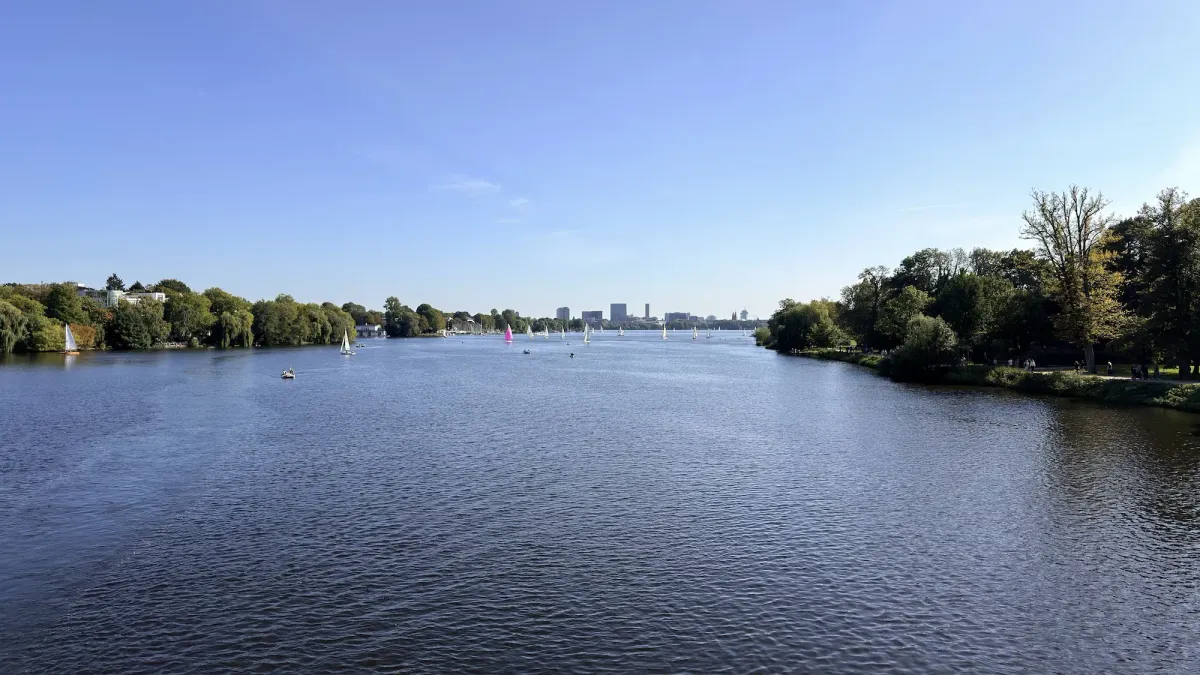
    I have never felt at home anywhere in my life like in Hamburg. It is such a stunning city, with the perfect mix of anything. The city's own marketing campaign "why go to country X when you have it inside Hamburg" is so true.

    Compared to the rest of Germany, Hamburgers are extremely open and friendly. But the bar is so.damn.low. That is one of the few big problems I have here. I integrated in an excellent way IMO: speak C1 German without an accent, have a German wife, have a stable job, yet feel unwelcome by an ever increasing percentage of Germans.

    As much as I adore Hamburg, I do not want to imagine getting old here. Just like a huge amount of Germans, I see my happiness in moving further north.

  • There’s something I find very distasteful about the idea of abandoning a country that provided you opportunity exclusively in the name of your own happiness. I think it’s the kind of attitude from immigrants that is greatly increasing anti immigrant sentiment. Become part of an old world people takes generations. Even in America, the branches of my family came here four generations ago and I view myself as American and would be accepted as such, but I still hold a high amount of gratitude for the original founders of the country.
  • > As much as I adore Hamburg, I can't imagine growing old here.

    Why not?

    > Like many Germans, I see my future somewhere further north.

    Is it similar to people moving from Berlin to Brandenburg...

    What's driving that trend? And how do people who already live in those regions generally feel about the migration from big cities into more "rural" areas?

    From their perspective, it probably isn't entirely positive. It can put pressure on housing prices, schools, traffic, and healthcare. There may also be political and cultural tensions as the population changes.

  • This seems like the right place to put https://youtu.be/KfWyo2mqXnw?si=EeYGdpA2BJ_xOzLi
  • You'll find that Scandinavian countries are not readily welcoming foreigners into their social circles either.
  • > Most people complain about the rules in Germany, but I like them. It means someone, or a group of people, sat down and thought about that specific thing and decided on a standard for everyone. When you have to do something, you don't feel lost, because you can just look it up. You don't have to find someone who knows.

    Somewhere in the afterlife, Max Weber proudly sheds a tear of happiness while whispering "this guy gets it", hahaha (of course his whole philosophy depends on the rules being as fair as possible, and also that they are enforced uniformly and fairly, but let's not get too lost in the weeds here).

    Anyway, lovely article and congrats on finding a place where you feel home!

  • As a German I am super happy to hear that you are having such a good time in my, or now our, country. So often the news focus only on the bad things which sometimes blinds me on how nice people can be to each other and help each other out as one big community.
  • I also enjoy reading about how the colleagues and him genuinely like each other. So often on US forums I read a sentiment along the lines of "shut up and just do your work", but since I spend 8 hours with these people each day I prefer us to be as close to friends as possible.
  • What a nice and heartwarming read! I'm german, and really hope we can pivot away from the rise of the far right. How that can be done, I don't know. I just hope we can do so before we start scaring away people like him who would otherwise come here, decide they like it, become germans, and end up making it a better place for everyone.

    (Part of it is I think we should make it easier and more incentivized to learn the language early so not just people in english-dominated tech jobs can have a positive experience. Cold start problem. It shouldn't be too hard for the gov to commission a RosettaStone like german learning app ((suboptimal, i know)) that works somewhat well and give it out for free, right?)

    But a struggling economy, questionable planning for many years now, the "educated middle class" he mentioned in the post shrinking don't bode well for it. It's a prime breeding ground for scapegoat politics. It's probably one of the cognitive "exploits" in the human mind, that finding a scapegoat (the foreigners) to blame for everything being such an effective tool to rally people with grievances behind yourself and slowly turning them into hateful monsters.

  • When I discussed voting with Germans (looking forward to my first), the reaction has mostly been about not voting for the party that they are unhappy with. I even have an immigrant friend telling me he will vote for the AfD and could not answer me why he's voting for the party that will kick him out of the country. His reason was more because he's unhappy with how the current situation is and wants changes and doesn't really think what change will help.
  • >But a struggling economy, questionable planning for many years now, the "educated middle class" he mentioned in the post shrinking don't bode well for it. It's a prime breeding ground for scapegoat politics.

    I think one of the issues is that for the past 2 decades over here in Belgium as I think in Germany and other places there has been no middle ground left for people who didn't want this to the current extent. I feel that way even tho i meet lots of people like the blog writer and I meet lots of people who aren't like him too. I've met the average religious ultraconservative erdogan voting turk in w-europe, the quick money wanabe hoodlum who mostly hangs out with maghrebis but who can be quite friendly if you get to know him well, the Turk who feels integrated but to me always feels like an americanised cosmopolitan. I don't even blame some of them on that front. It's incredibly easy to not surround yourself with locals and local food, experiences, etc.

    You have conservative parties who pay lip service but don't really make any effective change on the migration front and other parties who....act like there's no harm at all. Even the leftist framing where most migration leads to some wage supression is starkly absent. There is no option to say 'you either do it well or do a lot less of it' without getting pushed to the far right.

    In the meantime i can go and visit mannheim and feel like i'm in a bad facsimile of germany. It's easier to find turkish food than german food. That one street with all the gathered Turkish wedding shops starkly reminds me of a similar central spot in Istanbul.

    In Brussels where my grandparents lived and my dad was born I am routinely the only local at parties. When I walk the streets I routinely feel like a foreigner. Numbers that were called fear mongering a decade or 2 ago are just reality. My grandmother cried seeing the changes done to the listed buildings she lived in and alongside. The migrants and people left there don't see the significance. She doesn't go to a specialist anymore because old people get targeted by pickpockets.

    And it expands, it can no longer be stopped. Our politics are fragmented, migrants and descendants off don't vote similarly to the local ethnicities and with our fragmented politics the anti migration vote is a lost cause. Since it's a lot smaller than germany's my culture is waiting to die, when you notice it suddenly you start noticing it everywhere and for those that care about it it becomes something that draws single issue voting because all the other important things can be undone with some work but even their single issue voting will be drowned out eventually by the change set in motion.

  • When people came from Algeria, Jamaica and Suriname to Europe they were not foreigners they had French, British and Dutch passports.

    Germany's lack of such a colonial empire kept the country from transitioning into a true multicultural society. It explains Germans special branch of racism.

  • > But a struggling economy, questionable planning for many years now, the "educated middle class" he mentioned in the post shrinking don't bode well for it.

    Indeed. I left the country recently for this and many other reasons. I don't even think the problem is with party politics. The people are too comfortable with the promises that have been made to them and who don't want anything to change. The situation is even worse in France especially with regard to pensions. Any change that is necessary will be fought against with tooth and nail.

    The last government to do long-term reforms was under Gerhard Schröder. His party, the SPD, paid a heavy price. The far left wing of the party split off into the WASG, which in the meantime has become Die Linke. The voters don't reward but instead punish long-term reforms.

    So now the divided party politics have learned their lesson and just deliver what the divided people are demanding. Best of luck.

  • > It's a prime breeding ground for scapegoat politics. It's probably one of the cognitive "exploits" in the human mind, that finding a scapegoat (the foreigners) to blame for everything being such an effective tool to rally people with grievances behind yourself and slowly turning them into hateful monsters.

    The Rene Girard special