Join the discussion

Write your take first — we'll ask for email only when you're ready to publish.

  • Hacker News
  • I’d be more interested in the ingredients. I would guess the 91 version has a lot less weird stuff in it?
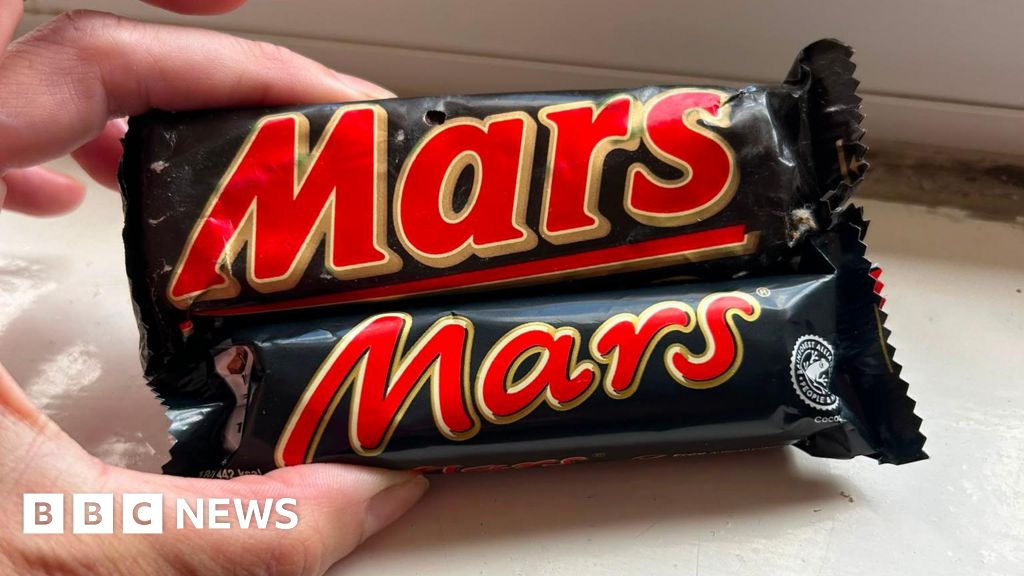
  • I'm also surprised it's bigger by 20g, since obesity and being overweight wasn't quite as much common at the start of the 90s...
  • Might have been more. There were a lot of food additives in use in the early 90s which the EU subsequently banned.
  • I forget when it was required to list ingredients. But I'd also imagine the regulations were more relaxed, you could list "Milk chocolate product" and have it pass.
    by bena
  • These are the current ingredients:

    > INGREDIENTS: SUGAR, GLUCOSE SYRUP, COCOA BUTTER, FULL CREAM MILK POWDER, COCOA MASS, SUNFLOWER OIL, SKIMMED MILK POWDER, LACTOSE, WHEY POWDER (FROM MILK), FAT REDUCED COCOA, MILK FAT, BARLEY MALT EXTRACT, SALT, EMULSIFIER (SOYA LECITHIN), EGG WHITE POWDER, PALM FAT,

    There's nothing particularly weird in it. Soy lecithin is probably the weird one, but it's in a lot of plain chocolate bars, and is pretty benign.

  • I’d assume the opposite. People are much more conscious of that stuff nowadays.
  • The 90s were not that innocent
  • Since we are commenting in a tech website about chocolate bars, I'll say this. I bought one or more every day for years during my childhood from about 7 years old to 12 years old. Must have walked and rode my bike enough to stay fit. I also filled my lent box when I gave them up (Church donation, put the money you would spend on your daily fun into a box instead of spending it)
  • Basically any "brand name" product which isn't either family owned or privately run by an extremely idealistic founder/CEO ends up getting predictably worse over time. Once some private equity fund buys you out and determines you are not on the quality/price Pareto frontier and can manage to lose only .8% of your revenue making your product .9% cheaper, the die is already cast.
  • PE is the final form of capitalism, but this seems true with widely-held public companies as well with some notable exceptions like Apple.
  • "20g" (actually 22.5g) hides the fact that it's 56% bigger than today's Mars bar...
  • Reducing the portion size for junk food is probably a good thing. This is a rare case where shrinkflation may actually be beneficial to all parties.
    by drtz
  • Only if we acknowledge that this is due to greed not health consciousness.

    Always remember: if McDonalds could legally and without risk of negative PR: _double_ the average customer spend at the cost of _halving_ their life expectancy - this would bring the same revenue in half the time which would be a great corporate decision.

    These people see a normal healthy person as an underutilised resource. The fact that a person could be a healthy weight means they have not consumed enough product. These people are pure scum and the only worse parasites on earth are in private equity on Wall Street.

  • You can just eat two.
  • Just my personal anecdata, it took my a while to put a finger on it, but it seemed like something started to change in products in the 90s. Bag of chips started to fill up with more air and less chips, candy bars got smaller, airlines started reducing seat sizes. Super huge discount? retail stores opened, that you usually needed a membership card. Walmart started offering the cheapest sourced product from around the world that was often just slightly inferior to what you use to be able to get, or the price on the higher quality item went up while the slightly lower quality item price went down. Washing machines started using all these cheap plastic parts that more easily wear down or break. Electronics started to get added to everything whether it is needed or not, usually for switches where the electronic part is cheaper than the mechanical equivalent.

    And I realized, this is what people want, in the sense of this is what they will pay for, this is how they vote with their wallet. What I want is not this, but it is what society wants.

  • This is what they discovered through the equivalent of A/B testing. People are disappointed in a 5% increase in price, especially if it crosses a magical threshold, but they will accept a smaller product. They will favor the smaller product over the larger one if it is given in the right container, such as a rounded carton of ice cream over a larger brick. They see the rounded container as evidence of higher quality. And on and on.

    Needing a app to turn on a light, though, that's just weird.

  • Bag of chips started to fill up with more air and less chips, candy bars got smaller, airlines started reducing seat sizes.

    The phrase you're looking for is "value engineering."

    There are also other factors.

    Part of the reason that Pringles cans are mostly air is so that the soap company that makes them can sell fewer chips, but retain the same amount of visual space on the store shelf. The product is the billboard. Some brands pay for that space on the shelf, so they're going to use every bit of it.

  • > Just my personal anecdata, it took my a while to put a finger on it, but it seemed like something started to change in products in the 90s.

    The electronic spreadsheet.

  • > And I realized, this is what people want, in the sense of this is what they will pay for, this is how they vote with their wallet. What I want is not this, but it is what society wants.

    I don't think you can really say they want it, because in many instances they are manipulated or have no other choice.

  • I believe the change you're observing is the result of the widespread adoption of computers. This is what a data-driven society looks like. Corporations have the ability to finetune the margins of exactly how much anti-consumerism they can get away with before upsetting enough people that a given anti-consumer decision isn't more profitable than not doing it.

    In a sense, it is the people's fault for their current level of tolerance, but at the same time, a data-driven society will converge on an equilibrium just within the razor-thin margin of what people will tolerate, in the name of 'efficiency'.

  • I disagree that it is what people want. Nobody wants a smaller chocolate bar for the same amount of money, more cramped seats, washing machines that break and need constant replacement, etc.

    Massive corporate consolidation means that when you're looking at the rack of chocolate bars there's a good chance that just 2 companies made all of them. You have the illusion of choice.

    None of this happened over-night. It's a slow steady financial optimization in all industries all at the same time. It's very hard to vote with your wallet when there's very little difference.

  • What a world we live in, that someone finding a 35 year old candy bar while cleaning out a hoarder's house gets its own tier 1 news article.
  • More newsworthy than most of the garbage Fox News is slopping out ¯\_(ツ)_/¯
  • It'd be better as an ashens video.
  • It’s not tier 1 it’s under local news
  • I guess you're not aware of the story about a guy that found a fly in his coffee at Tim Horton's
  • https://en.wikipedia.org/wiki/Silly_season

    (posted below, too -- I'll stop now.)

  • Food reporting is often framed like this, as if the smaller size was a bad thing, or the price / gram, pound or ounce is the relevant criteria. Esp in the case of candy, you would think smaller sizes would satisfy the other framing for food items, esp in America, that over-sized food leads to obesity. It is a lose-lose framing, with nutritional value completely ignored. Instead, the reporting is always how people are being ripped off or making an unhealthy choice.
  • the common denominator is that most "news" is pure entertainment and outrage porn sells. there is no further substance
    by nubg