Join the discussion

Write your take first — we'll ask for email only when you're ready to publish.

  • Hacker News
  • Sadly, this being Hacker News, it won't catch much attention and will be quickly flagged by people who have too much karma.

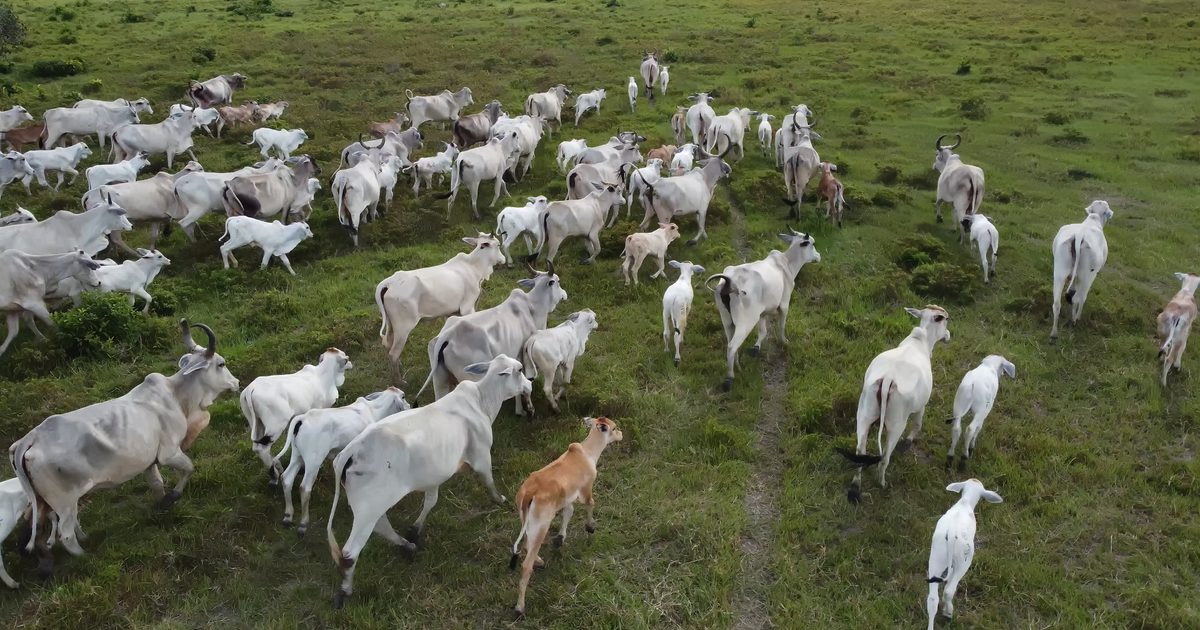
    But I think we are making progress, slowly, sadly too slowly, with the current summer we are having in Europe, of the impact of our past actions in the weather. And make no mistake, eating so much meat and drinking so much milk, is a huge impact we are inflicting on our planet.

    Please do not comment with "I do X" or "In our house, we avoid doing Y" - it is not about you and me, it is about society. I am convinced, you are convinced, we need everyone to be convinced.

  • I would much rather have Europe install ACs instead. Stopping meat, not installing ACs, degrowth all look like masochistic ways to show that we are repenting.
  • It will be flagged because of the manipulative headline.
  • Beef specifically. If everybody switched to pork, chicken and fish that would mitigate most of this and it's a much more realistic ask.
  • FWIW, no matter the issue, this kind of tone makes me close up for any rational arguments. I wish I could look past it, but I just can't.
  • Okay lets get this straight, animals do not contribute to global warming. The co2 they emit has been taken from the atmosphere from plants.

    Methane breaks down to Co2 in the atmosphere on average in 9.6 years.

    Animal rearing does not permanently affect the climate.

    Increasing stock sizes does increase the methane level equilibrium but there are mitigations to this, there are additives to feed that can reduce methane emissions to 1%. Last I checked a few years ago, there were pilot programs to determine effects on animal welfare and product quality.

    The problem we should be focusing on is fossil fuels.

  • Everyone apart from a few stragglers agree the climate is changing. Most people agree the world won’t change its behaviour on its own to stop that.

    So we can thus incentivise change (things like renewables being far cheaper than fossil fuel) globally, and adapt to reality.

    There are a vocal minority whining about how we need to stop eating beef or milk annd stop using energy and there are those who make beef and milk more sustainable and make generating energy sustainable. I have time for the latter. The former can go hand out with the coal rollers.

  • Thing is, will be anything left after we destroy the planet with war, data centers, rare earth minerals mines, nuclear and battery waste?
  • But it's also not like we can just stop eating steak and milk.
  • You can eat bugs
  • Theres a billion or so Indians that might suggest otherwise
  • Genuine question, can you explain why we can't?
  • Yes we can ... but most of us (including me) don't want to. (At least not completely)
  • you can, but you can also just reduce it, you can eat say half the meat/milk. Eat more vegetables and grains. Not only massively reduces the impact but pretty good for your body too
  • I am not vegan, but I found dropping beef and lamb to be literally the easiest modification to my life possible. Dropping dairy is much harder, but as I am now discovering still incredibly easy to reduce.
  • Even on a site like HN, where rational and logical thinking is held in high esteem, and where few could be suspected of climate change denialism, a factual statement such as this one from the article:

    "On average, animal-sourced foods are associated with eight times more carbon loss and 14 times more biodiversity loss per calorie than plant-sourced foods."

    is very likely to be countered by listing personal preferences, anecdata, concern for vegans' health or mockery of that lifestyle choice, and generally nitpicking.

    Honest admissions like 'I am part of the problem and will maybe try doing something about it' are very rare.

  • Food needs to provide more than calories. Do the same comparison per gram of protein.
  • Indeed, that's the same answer when topics like public surveillance or dependency-inducing media are debated. It's difficult to criticize a problem, when you're a part of the problem, respectively paid to be the problem.
    by soco
  • The rational and logical is mostly an aesthetic preference, not lived value.

    HN leans strongly reactionary and just likes to dress it up a bit so as to appear more respectable.

  • > Even on a site like HN, where rational and logical thinking is held in high esteem

    That is until people are faced with stuff like this :D. Then emotions take over.

  • Does this mean we should be advocating for more intensive cattle rearing? Stockyards and special breeds may not be the worst way to meet demand and reduce environmental impact (measured by CO2/methane emissions as well as biodiversity loss, for instance).
  • Stockyards are the worst offenders. This is due to how the dung is processed, which releases a lot of methane. Grass-fed cattle have much lower net emissions of greenhouse gasses.
    by pcrh
  • I despair. Is it that hard for us to imagine eating less meat?
  • Managed grazing along with other regenerative techniques can sequester carbon in the soil. Factory farms have the problem of concentrated dung disposal which usually leads to letting it sit in methane producing conditions and also feed for intensive operations usually comes from non-regenerative crop farming which uses more fossil-fuel fertilizer and depletes the soil.
  • It's far easier do avoid producing so much meat. A vegetarian diet is perfectly healthy.
  • One of the biggest biodiversity-related threats - as in able to trigger cataclysmic-level event - is IMO commercial honey production.

    Farm honeybees are essentially one breed, which is in itself a huge problem as a single pathogen/parasite can quickly wipe them out globally. On top of that, honey farmers move their hives all over the place, effectively displacing any wild pollinators present in vast areas.

    Commercial honey is farmed in the most ecologically risky way.

  • That's a drop in the bucket

    Total insect mass dropped by 70% in Europe in 30 years, no insects = no pollination, no pollination = no flower = real mass scale extinction of pretty much everything that lives on earth since 80%+ of plants need pollinators.

  • Unfortunately, the priority is increasing efficiency and ROI, rather than sustainability. This leads to centralization and operations at a scale which are not sustainable, without external input or causing damage to existing nature. De-centralization and sustainable practices are the only way forward, as it has been for centuries before us on this earth. Maybe space is the place for these kinds of centralised and intensive practices, like being planned for data centers.
  • "Efficiency and ROI" can be applied to financial but also to environmental impact. Producing more with less [land use/fertilizer/water use] is also a form of efficiency, and it's good, but it requires vast capital that mom & pop farms don't have + strong government incentives. De-scaling is only an agrarian nostalgia fantasy, it's incompatible with reaching climate goals.