
Join the discussion
Write your take first — we'll ask for email only when you're ready to publish.
- Hacker News
- So I've been thinking about this. It's more general than social media and sardines.
There are now areas of the world with overtourism. Santorini, arguably Venice, Machu Pichu and maybe even Barcelona have more tourists than they can support. It's becoming a huge problem. Why is this the case? It's in part because people have disposable income to visit these places but I think there's a larger issue of why people want to visit these places. I think there's a FOMO element and the idea is pushed by social media in particular and media in general.
As another example, I blame at least in part the crazy NYC rent situation on Sex and the City, particularly on rents in the West Village. If you've lived in NYC you know there's so many SATC girlies living out their NYC dreams and not all of them have trust funds. You see this reflected in rents too. One side of 14th Street is Chelsea. The other side is the West Village. Rents on the Chelsea side are significantly lower than the other side because people want to be able to say they live in the West Village.
On a smaller scale you see this where people seem to view themselves as the main character in a movie or TV show and they're living out these scenes in their heads, typically to video and post online. They can be really inconsiderate about it too. Like just today I saw a video that someone in a public beach "dared" go in the water while someone was trying to get a photo of themselves and that other person got in frame. It really is main character syndrome [1].
I think what made a lot of things good in the past was lack of information (and the resultant FOMO). You've seen this in food trends too when Omega-3 became big and fish stocks suffered or when palm oil became big and that's a big problem.
Interestingly, China has a system to try and prevent everyone flocking to one or two cities ("hukou") and it's hard not to see the argument for this.
I have several triggers when I'm doomscrolling. One of the worst is when someone says "I'm trying the viral (restaurant, dish, bakery, bar, whatever)..." I've always hated this because whatever it is is never worth it. But the psychology of people wanting to show off this way is fascinating. It really feels like people's lives are that empty that they just want that external validation.
[1]: https://health.clevelandclinic.org/what-to-know-about-main-c...
by jmyeet - > As another example, I blame at least in part the crazy NYC rent situation on Sex and the City, particularly on rents in the West Village. If you've lived in NYC you know there's so many SATC girlies living out their NYC dreams and not all of them have trust funds.
Highly relevant: <https://www.thecut.com/article/nyc-west-village-neighborhood...>
by TMWNN - The thing about NYC and viralness that I myself noticed is how people line up for hours to try that new food thing at this particular restaurant/food truck that everyone raves about. Or a new bar/club. Or anything, really. The FOMO is quite literally tangible in this city if you're inquisitive enough to spot it.by cromka
- 99% percent of times „I‘m trying the vital X“ is said it‘s an influencer getting paid to advertise X. Most of the times without saying it’s an ad. And this language accesses the most important good in today’s world: people’s attention.
- It is conspicuous leisure and a game of status in a time-poor world.
Or, as we used to call it, 'keeping up with the Joneses'. The odd thing is that most people that go to the overly-touristy places have very little to say. Sure there are the pictures for social media, however, these are of what the food is like and what the beverages are like and these could be taken anywhere.
There is no adventure involved in tourism, and adventure satisfies in ways that tourism never will. With adventure there is no knowing what to expect, there are logistics problems to solve and there is purpose, namely to get from A to B, preferably in one piece, which is not a given.
With tourism there are no such problems, people have 'slaves' wait on them for the duration of the trip. There is no need to interact with the actual natives, just the hospitality workers, as in the 'slaves'.
In the past, a lot of work went into getting time off for the working man, with local-ish tourism to take people out of the smog filled cities and to the seaside (in the UK and elsewhere). A few generations on and this has been baked in, nobody takes their time to enjoy the house they pay to live in, there is this default action of going on some type of package holiday.
The typical package holiday is for the time poor, with so many big sights that have to be packed in, always the same tourism trail. For example, Brits visiting the USA might imagine this road trip, to hire a car in LA, to drive to Vegas, on to spend 20 minutes at the rim of the Grand Canyon and then on to Flagstaff, as if there is anything to see there.
They get back having seen nothing except car parks and the Interstate. The mad dashing around means they get the required photos but there is no adventure. So they have to go on another trip. How about Machu Pichu, next time round?
So, off they go. They come back to their normal life and have nothing to say, apart from what the hotel, flight and food was like.
It is an industry made possible by cheap flights and cheap rental cars, with none of them being that cheap if externalities are to be included. Given where the world is going regarding the 'war for oil', this tourism is going to vanish quite quickly.
by Theodores - Not to say that climate change isn't affecting this in some way, but the Pacific Ocean is known to oscillate between Sardine and Anchovy regimes [0][1].
[0] https://www.mbari.org/news/from-sardines-to-anchovies-and-ba...
by alexk307 - I'm sad for King Arthur[1] who genuinely loves his tinned fish and wants to share his passion with the world. He is a good boi and not part of this trend.
I don't really like fish. I watch his videos more for the vibes. I did buy a can or two to give it a chance but I still just can't stand it.
- I still find it wild that Tinned Fish Reviews, the parent channel of King Arthur can get 240k subscribers on YouTube - https://www.youtube.com/channel/UCnM8PMUe_Kmp4-Ohq4V7Vdw
I must admit though I agree with you - the videos are kinda amusing !
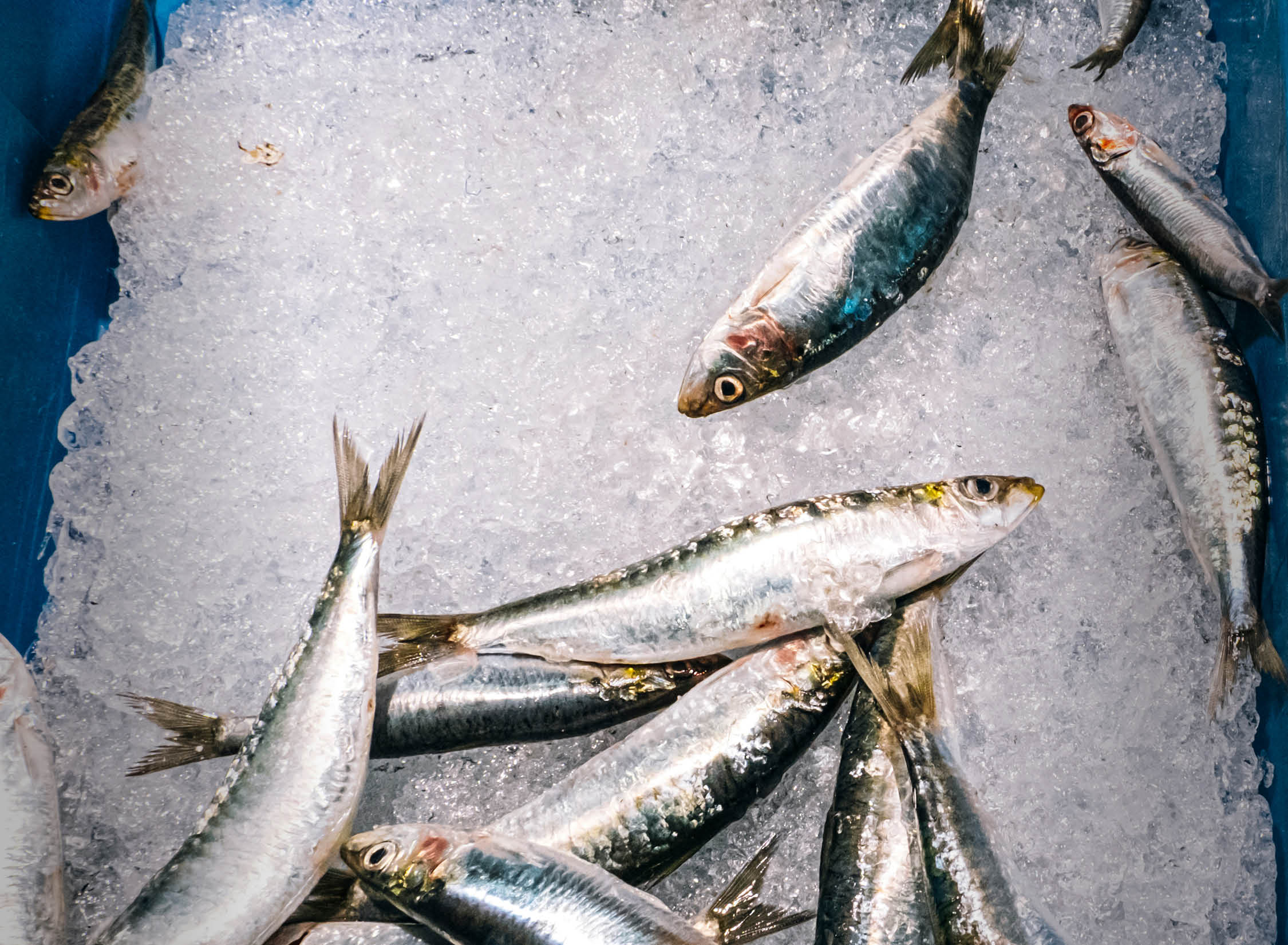
by 3guk - Darn, originally from northern Europe, I have always enjoyed sardines. I was wondering why they are suddenly harder to get.
I can't believe a weight-loss fad is going to take "my" sardines from the shelves.
Also, why only sardines? Any fatty fish will serve the same purpose. I guess a fad is a fad.
by linuxhansl - Sardines specifically, because they are small, and therefore have amassed less mercury than the other commonly eaten fatty fish.
Plus because they're eaten whole, you also get bonus stuff like calcium and phosphorus from the bones.
by Aramgutang - Canned sardines have been a staple of my diet since I was in the womb. I can’t wait for this trend to die off, it has been so difficult to find them lately. I mean I understand all of the reasons for it, and I can at least appreciate that sardines are the most sustainable form of fishery we have, but goddamn it is super frustrating.by darksaints
- Which type do you buy? In olive oil? Any specific brand?by CrimsonRain
- I haven’t noticed this at my local Costco in Northern California (plenty in stock this week) but maybe I will next week with this making the news. I usually wait to stock up when it goes on sale but I only eat two cans a week.by stevenwoo
- Destroying ecosystems beyond a tipping point. And the politicians just care about being re-elected. Focusing on short term gain.
” The decision taken by the Council of Ministers earlier this week on the 2024 fishing quotas in the Baltic Sea is in many ways unique. It shows a remarkable historical short-sightedness, ignorance of the fish and fishing in the inland sea, inability to understand the scientific advice of the International Council for the Exploration of the Sea (ICES) and - perhaps most of all: the ministers are bending the laws that regulate fishing, ecosystems and the marine environment to the limit.”
https://balticwaters.org/en/baltic-sea-brief-60-the-final-he...
- This isn't on the politicians. If you look at it from the perspective of a politician, if you enact a strict fishing quota, you've personally decimated jobs in the industry. You've saved the industry, but said industry will never forgive you and will always hold the job loss against you. If overfishing causes job losses, that's on the fishermen, they're the ones to blame.by imtringued
- > And the politicians just care about being re-elected. Focusing on short term gain.
It's really convenient to blame the politicians instead of the people that vote for them.
If people had a long term vision, politicians would too.
by parineum - Fishermen are weirdly powerful in the EU for an industry that employs few people and doesn't make a lot of money. I'm not clear how that works, I'm guessing because it's a job the public understand and has macho overtones. Fishing was a major part of the advocacy for Brexit despite being a smaller source of revenue than Warhammer.by pjc50
- I once saw a fascinating TV program about fishing quatos that were first introduced for the North Sea in the 1970s. It led to a war between Dutch government inspectors and fishermen.
Thirty years later everyone involved agreed that it had saved the industry.
by expedition32 - Nobody is going to be elected telling people the harsh truth: that we consume far too much than the planet can sustain.
Farmers and fishers on top of that will always get cross partizan sympathy.
People just don't want to hear that the way they eat impacts and stresses the planet beyond its limits and that the producers of food get in any way penalized.
Truth is that we desperately need carbon taxes asap, to at least slow down the planet destruction. But it will never be popular.
by epolanski - The world reached peak fish catch in the mid-90s. [1] And we now eat more grown fish than caught fish. The problem is that with increased acidity in the oceans, as part of the ocean absorbing mor CO2, we get less algae and eventually less fish. [2] But, yeah, let’s keep fishing until the stocks collapse. [3] They take a very very long time to recover.
[1] https://ourworldindata.org/grapher/capture-fisheries-vs-aqua...
[2] https://www.ioc.unesco.org/en/articles/ocean-acidification-t...
[3] https://en.wikipedia.org/wiki/Collapse_of_the_Atlantic_north...
- What a sad world we live in :( Social medias have such a significant impact all over the planet, from overcrowded tourist spots dedicated to taking instagram pictures, to canned sardines diets. Why do people fall for this kind of thing ? I still can't understand it. Is it all just an ego war ? That worries meby thomasben
- Back in the day, adverts used to be obviously just adverts. Nowadays it's very difficult to determine what actually is an advert/influencer, or someone with some genuine facts.by Steve16384
- I think we should first ask what proportion of people actually does fall for this. It doesn't take a large percentage of the world population to crowd a few popular spots or buy out what was previously a low-volume market.by account42
- It has always existed (that we do what others say or do), the difference now is that it is at a much larger scale. It's global and spread to millions and millions in seconds. Earlier it was a news paper or magazine or a TV show. It was national or regional and local. And it was slower. It took days and weeks to spread using magazines and TV and word of mouth. Today with social media it is global and it takes seconds.by flakeoil
- I'm not positive anybody is "falling for" anything, just a younger generation is discovering that tinned fish isn't just a snack that their grandfather likes and is actually an incredibly healthy, delicious, and inexpensive thing to keep in the pantry. Given the increasing cost of living, it makes sense that something like tinned fish would catch on. Sucks that some places are having difficulty stocking them, they're still abundant and cheap in my neck of the woods.by Hugsbox
- Where can't you find them?
All of my local supermarkets in the US have a million cans of sardines from a dozen different brands each, ranging from like $1.50/can for e.g. Goya in soybean oil[0] to like $7/can for very fancy ones, with the average around $4.50/can for ones in olive oil. They're not gone, just more expensive than last year for nice ones.
[0] - sardines come packed in your choice of water, soybean oil, olive oil, extra virgin olive oil, tomato sauce, or louisiana-style hot sauce with additional selection choices of containing herbs or hot peppers or olives, and olive oil ones always cost more than water or soybean oil ones for obvious reasons
- Same here in slovenia, from fancy one to cheap store brand ones. No fads hereby ajsnigrutin
- In US I haven't seen them for months at Trader Joe's. Usually they stock 3 different kinds.by carabiner
- Which makes me wonder how geographically uneven this "shortage" actually isby BrtByte
- Canned fish are tiny now compared to 5 years ago. They shrank to bait size.by hackshack