Join the discussion

Write your take first — we'll ask for email only when you're ready to publish.

  • Hacker News
  • It's only natural that countries with an abundance of sunlight will switch over to solar and batteries, especially if the price of the latter comes down.

    In the not so distant future, LFP and sodium batteries will become very cheap, no more than a $200 or so for a day's storage of daily electricity usage. That means that in the majority of nations people will essentially have free electricity for their homes and maybe even their cars.

  • This works best in areas where cloud cover is consistently low, so solar power doesn't vary much from day to day. That's most of Australia. Two days of dark overcast and the load on non-solar sources goes way up. How much battery do you need before there's no demand for peaking plants? In some places, a day. In others, months?

    I looked at cloud coverage maps. There are monthly and annual average maps, and raw data from satellites. Building a map of run length of overcast days would be useful.

  •     > This works best in areas where cloud cover is consistently low, so solar power doesn't vary much from day to day. That's most of Australia.
    
    I just want to point out that where the majority of people live in Australia definitely has great variance in solar power day to day. For example, Melbourne is a running joke amoung Australians about how wildly unpredictable its weather is.
  • Use EVs as energy storage. Millions of EVs form an energy reservoir. 20% of solar is curtailed now and q lot more in future, instead charge EVs. Pay the EV owners because they are creating a storage layer with their capital and power prices go negative hundreds of millions of times every year. No need of home batteries.
  • The issue here is that EVs tend to be charged when the sun is down. When sun is up you tend to be at work or driving. The surplus power is coming from solar.
  • Volkswagen will limit your car to 100kWh of charging your home. That's not a whole lot.
  • Agreed. V2G is actually one of the best DER strats out there. The EVs are already purchased, the batteries and PCS are already configured for bidirectional flow in most brands. Coordination/visibility problem remains at Dx level, but actually worth the investment.
  • When I looked into it it didn't make sense to use an EV as a solar battery, the chemistry isn't made for high cycle counts compared to regular home/solar batteries.
  • 1. A couple orders of magnitude more people own homes than EVs; 2. EVs already are used as energy storage, but the thing about EVs is people want to use that energy to yknow, drive them.
  • In Australia people do both. We don't have V2G yet, but EVs plugged in at home overnight with L1 charging can get charged by the home battery that was charged up during the day by the PV on the roof.

    The solar PV and now storage rollouts in Australia have been one of the best government investments in public infrastructure in my lifetime here.

    The more we electrify, the less reliant we are on the crude -> foreign refineries -> imported/distributed fuel risk.

    Harvesting solar power is an awesome thing to do both at home and utility level.

    PV and wind utility installations are being built with storage co-located, there are companies building synthetic condensers to maintain the grid stability and the job of frequency support is now done mostly by batteries, not gas.

    We need to make electricity basically "too cheap to meter" and electrify our primary industries, mining and agriculture.

  • Australia is now ready for vertical solar, add a few more hours of production in the morning and evening. Panels are dirt cheap anyway, use them as fences, put them on high rise buildings. Change the building to require structural elements to hold the panels and build new homes with vertical + rooftop. The electric code should be updated to allow v2g.

    With BESS (home, grid) and EVs (always plugged in, parked 95% of the time), there may be enough storage to start replacing baseload. This will take decades, but can be done. We gotta start somewhere.

  • It requires large solar overcapacity to compensate for seasonal intermittency. Dedicated seasonal energy storage might be better economically.
  • Given the durability of panels, it'd be fascinating to see roof redesigns, and some changes in panel packaging, that standard large rectangles become the basic components of a 30 year roof. Or as siding. I've seen them used vertically on the Southern walls of commercial buildings in Alaska, and they looked great.
  • I found the challenge with our own was just matching the peak of the panels to the peak voltage accepted by our inverter (including a safe margin for cold+snowy days where peak voltage is the highest), otherwise I totally would’ve loved to overpanel like crazy. George Costanza voice, I would drape my house in panels, if it were socially acceptable.
  • > The government has moved to make use of this surplus solar energy, including by offering free power in the early afternoon to homeowners in Queensland, New South Wales, and South Australia, regardless of whether they have solar panels on their roof or not. The goal is to spur more consumers to run appliances or charge electric vehicles during this window.

    Taking the term "1st world problems" to new heights!

  • cause they have massive operational issues induced by effectively must-run oversupply that has increased costs for both ratepayers (and sometimes shifted to the taxpayer to hide costs).

    And then try to fix those problems with populist TOU rate magic (they won't be fixed), and bills continue to rise!! But hey, LMPs are down LOLOLOLOL

  • The electricity is "free" because the energy generation is highest at noon (sun is at its zenith), and the population is at the work (low demand for residential electricity). So there is an oversupply of energy at that point. Just like there is an under supply of (solar) electricity at night time when people are using lights, watching tv and eating dinner but the sun isn't shining.
  • Some of that will be electricity usage that otherwise wouldn't happen, but a lot of it will be shifting load from times where electricity is carbon-intensive to produce to times where there is a surplus that would otherwise go to waste
  • You pay a higher daily supply charge and more per kWh outside this window so it's more like free (conditions apply)

    The supply charge is 6% higher for the Solar Sharer plan, while the peak rate is 92% higher. Solar Sharer’s peak rate is almost double the flat rate. The off-peak rate is 17% lower than the flat rate.

    https://www.solarquotes.com.au/blog/solar-sharer-plans-compa...

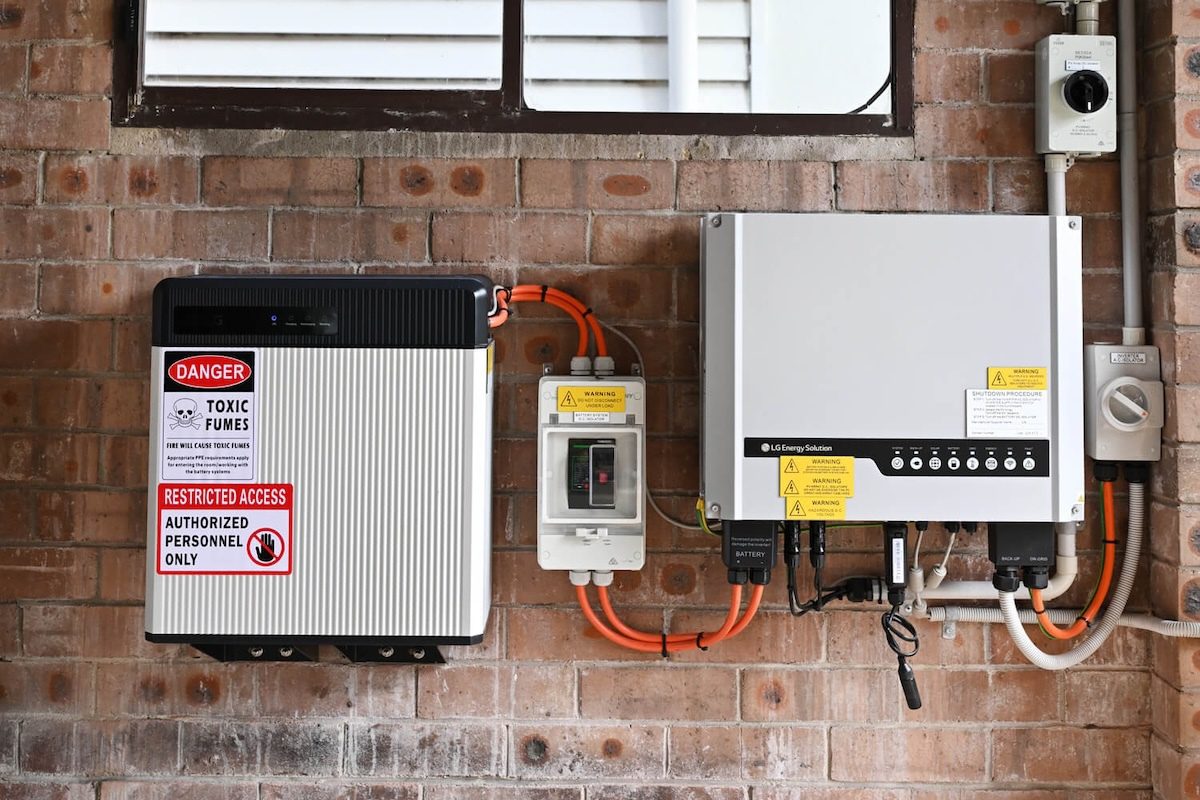
  • I put 7.3kw of panels on our roof for $0 of our money thanks to a $5k rebate and $8k interest free loan. It makes 7.2Mwh of power a calendar year, which would cost $1000 if we had to pay for it.

    So for 8 years we pay the loan instead of for the power, then we get -25 years of $1000 a year in our pockets. The price of power is also pre approved to increase a minimum of 5% a year every year here, so the savings will be more than that.

    Right now we get a 1:1 credit for anything we put into the grid. If and when that changes I’ll get a battery.

    The kicker? We’re in Canada in a tight valley where it snows a ton. If it works here…

  • I think it would be less click-baity to re-write your first sentence as:

    "I put 7.3kw of panels on our roof for a $8k interest free loan and a $5k rebate."

        > The price of power is also pre approved to increase a minimum of 5% a year every year here, so the savings will be more than that.
    
    That 5% growth rate sounds economically unsustainable. Power prices in rich, highly-developed countries in the last 50 years surely have grown much slower than 5% per year.
  • As ever, Volts did a really good episode on this:

    https://www.volts.wtf/p/how-to-make-rooftop-solar-power-as

    Worth a listen, both to learn about how ridiculous the US situation is, and just how good the "news" of abundant solar is.

  • David Roberts does not have an EE degree and misunderstands anything related to power system operations. Great for positive vibes and LCOE parading tho.
  • The subsidy was closer to 70%, and in my case I was paid the equivalent of about 10 years of free electricity for a battery with a 10-year warranty. In total somewhere around 5-7 billion AUD was paid out (not yet public) - the wholesale market for comparison is around $16B AUD annually. Personally, I would have preferred it was used to build grid scale storage instead of funneling tax money to the relatively wealthy (myself included). Given the extreme volatility of power prices, a figure such as '47% decline' should be taken with a grain of salt - but power prices are certainly a bit lower than last year.
  • I suspect in practice putting the money into grid scale storage would have taken a lot longer and been more of a PITA.

    For a grid scale battery you have to organise financing, deal with local government and NIMBYs putting obstacles in the way, comply with all the red tape etc. On the other hand anyone that owns a home can finance their own mini solar power plant and battery and skip all that. It's kind of genius even if it's not in theory the most efficient way to do it.

  • > Personally, I would have preferred it was used to build grid scale storage instead of funneling tax money to the relatively wealthy (myself included).

    I am generally sympathetic to this POV but I think for solar and batteries actually I end up leaning the other way. Solar PV scales appropriately for home owners unlike wind or indeed any conventional generation and both solar and batteries change how their owners feel about this so that you end up with people who have "skin in the game" in a way they didn't have when it was a BESS install six miles away they saw on TV once and have never thought about since.

  • I've long thought that any country should buy solar panels from any other country that's crazy enough to sell them to you at a subsidized price. It's not like buying oil; once you have the panels, that energy independence belongs to you.
  • How many solar panels did you buy?
  • Grid and energy producers will have nothing of that nonsense. If enough people do that, they will see their business crumble and because they are an "strategic sector" they have enough sway on most countries to pass laws that prevent that.
  • In the end you have to replace those panels and nobody in your country now produces them or has the incentive to start producing them unless they not only drop the subsidies but sell well over market value.