Join the discussion

Write your take first — we'll ask for email only when you're ready to publish.

  • Hacker News
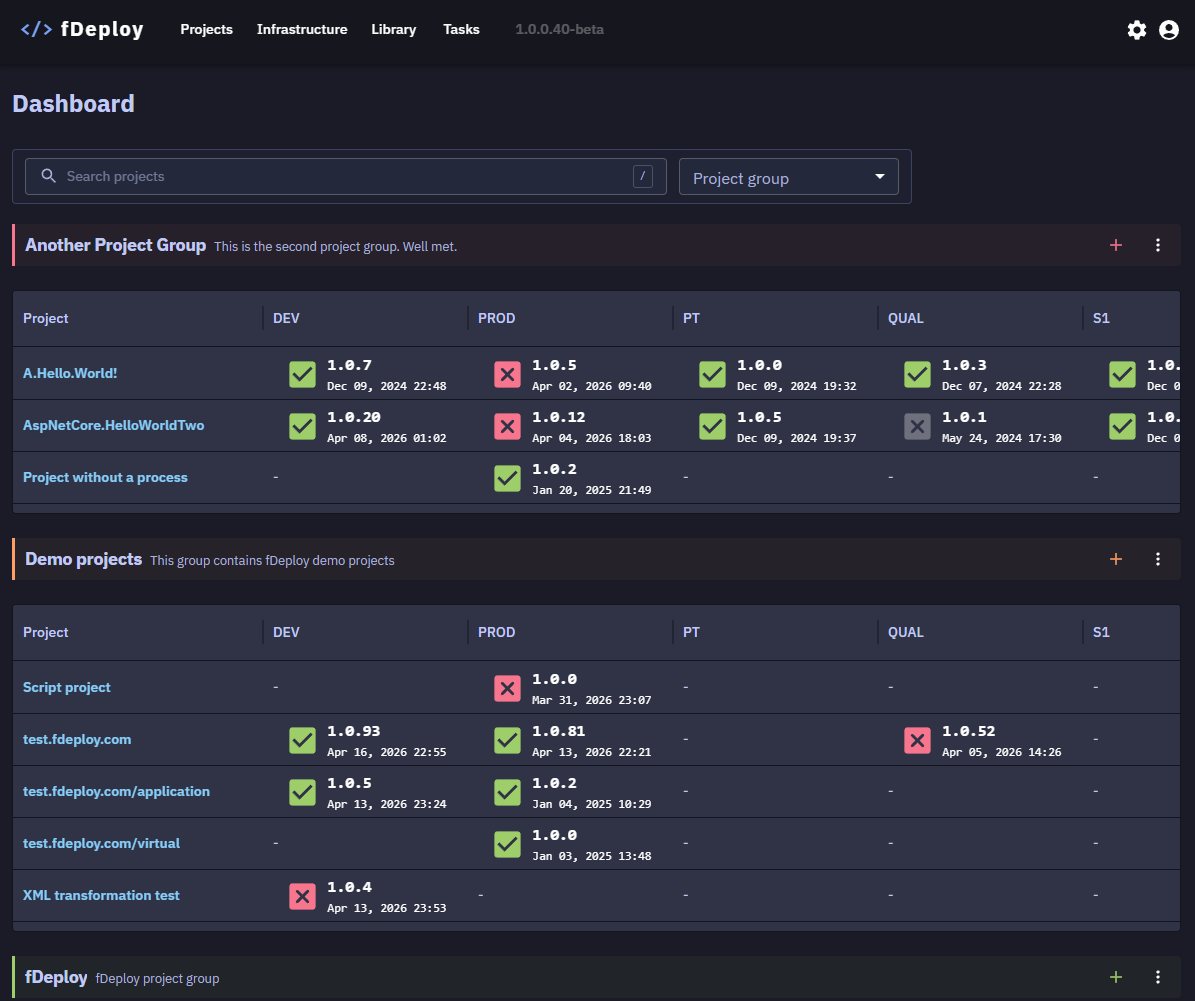
  • I'm kind of having a hard time understanding what problem this is trying to solve? I can't even tell what this is actually doing from the site. There is barely any information.

    I mean Visual Studio automatically has a way of deploying directly to IIS for years now. Also as others have added, IIS isn't even used anymore with the rise of caddy and nginx.

    The pricing itself seems really steep as well $3K a year?!? I don't exactly know who this is targeting.

  • There is still plenty of Window Server using enterprises churning out .Net Framework code that must run on IIS. It's shrinking market for sure but it's still a market.

    If they are willing to spend money on Windows Server, 3k a year to make it not less painful is probably worth it. Remember, any company using Windows Server is not hiring skilled DevOps/SRE/Ops, it's probably average at best, low paid workers. It's the type of people who have probably never heard of HackerNews either so it makes advertising here an interesting choice.

  • Like the sibling comment mentioned, there's still lots of .net framework apps that target IIS. I haven't used IIS in about 15 years, but this looks like it provides a similar feature set to what Octopus Deploy had back then (Octopus seems to have changed a lot since then). i.e. more than what VS deployment can do.
  • No one connects to prod directly from VS in corporate setup. You do it via pipelines.

    It is for when you want to have accountability of deployments and at least what we had in Octopus deploy I could promote versions from test/acc to prod based on triggers or manual click of a button.

    So you can have build pipelines separate from actual deploy pipelines and manage artefacts built by the build pipeline. It is required in some environments, but totally useless and waste of time in smaller environments.

    by ozim
  • Does Microsoft still maintain IIS? I thought it hadn't been meaningfully updated in about 8 years.
  • It has newest TLS stuff like TLS 1.3, it has HTTP2/HTTP3 and QUICK implemented. I do think those are meaningful updates, well http2 was 11 years ago but QUICK is more like 3 years ago with HTTP3.
    by ozim
  • Do any web servers have meaningful updates? It’s pretty standard stuff. IIS can do quite a bit of the same things. It’s common in my industry. We set up URL rewrites, reverse proxys, asp.net, even node.js or python (flask) based apps using WSGI. Separate app pools for everything all on the same server sometimes. It’s never been a bottleneck because it’s pretty streamlined code. Haven't had any security issues with the web server ever. It’s nice there is a GUI but when you start looking at the configuration (xml based) a lot of the directives are familiar if you’re used to nginx.conf or httpd and with htaccess (web.config) in site directories.
  • Do they still maintain it as in, it gets bug fixes and security patches? Technically yes, bug fixes and security patches are still produced for Windows Server. I wouldn't call it a good level of effort but it exists. They are happy to take your money for such a mediocre level of effort though.

    Is it Microsoft happy path? No. Microsoft STRONGLY recommends that if you are running .Net (Core), you run under Kestrel on Linux in a container. Performance under Linux is much better than Windows.

  • Sharepoint, Exchange webmail, and other stuff uses it... that is why it's officially NOT depricated... but man imagine having to keep up an ASP codebase today, it's not unheard of, it's just rough.
  • Having gotten my start on Windows and IIS, two things:

    1. well done.

    2. I don’t tell you my troubles.

  • The deployment process is edited in the dashboard rather than defined in source control.

    There probably are businesses doing clickops who'd spend $2900 on a tool, but that market is rapidly shrinking. AI can write pretty decent terraform.

  • It can also write good kubernetes GitOps files, although that doesnt necessarily make terraform or ansible unnecessary (especially if you have to set up a diverse set of resources at a cloud provider)