Join the discussion
Write your take first — we'll ask for email only when you're ready to publish.
- Hacker News
- > Rather than buy off the Groningers, the cabinet decided to give in to them
This doesn't seem to have been tried. We have similar conversations about e.g. pylons for renewable infrastructure and, at even more heightened levels, data centers. It doesn't seem that bribing people to shut up - sorry, sharing the widespread economic benefits of a decision with those most affected - is on the table at all.
by pjc50 - > Destroying the wells does not change the likelihood of additional earthquakes.
Well, it does, because it reduces the chance of additional gas extraction in those areas—which was the goal of filling them with cement.
by lukeify - "It would be good for the current Dutch government to prioritize the interests of the Netherlands and Europe over that of Groningen"
I mean, what the actual f*ck. I LIVE in Groningen and see the results of endless money grabbing of selling the gas of the past decades every day (Shell & the government). People stressed out, thousands of homes that are unsafe, people living in temporary housing for years.
He compares italian earthquakes with ours (we had one last week). This comparison is so wrong on so many levels. First: these ones here a man induced, which is a different category. Second: the soil here is so much different than in Italy, a earthquake with the same force (richter) has a whole different outcome.
My house has (minor) damage as well, I'm compensated for fixing it and I'm happy with the way the government handled it. But this piece of a BS blog and the conclusion are infuriating.
Did the writer even try to speak to anyone living in this region? Or did he just draw some conclusions based behind his desk that's (safely) located in the US?
- It's not just earthquakes, the area is literally sinking below sea level.
https://piahs.copernicus.org/articles/372/367/2015/piahs-372...
by skylurk - > The remaining reserves, some 500 billion cubic metres, are worth around €200 billion at current wholesale prices – enough to pay every single resident of the province €150,000 as compensation and still have 110 billion euros.
So... not enough to buy them homes in Amsterdam and move their factories/schools/jobs? Good thing the citizens fought this. The activity is not economical without seriously endangering your home. I'd bet that if you were willing to give them a good enough deal, most/many people will take it. But there is no good deal here. It's just a collection of wealth (gas) at the expense of the Groningeniens.
by csomar - As a Dutch person I can confirm this article is: 1) Roughly correct chronologically. 2) COMPLETELY devoid of the actual political reasons behind this being done.by apexalpha
- This was done for mostly ideological reasons, "green transition" and such. The Dutch economy was dependent on natural gas sales for funding parts of the welfare state. They became a net importer of natural gas and then Ukraine and Iran made the gas prices spike. So the Dutch government is now struggling to fill the natural gas store for household heating and cooking applications for the coming winter season, while also incurring these high costs. The impact hasn't fully played out or understood.by mahrain
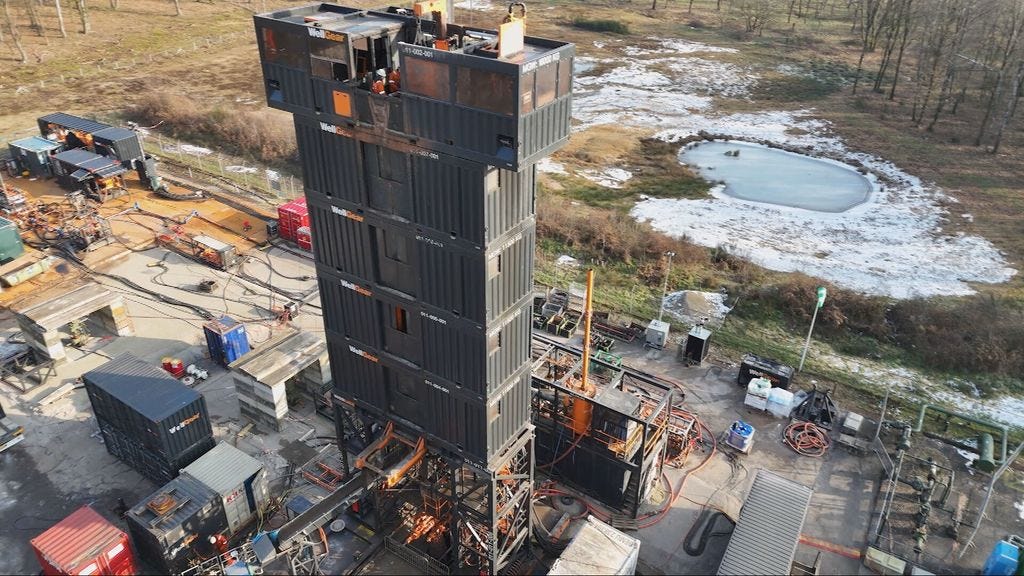
- "The government is demolishing the wells to prevent a future government from reconsidering its decision to stop producing gas."
As well they should. This country should be electrifying much, much faster. A place literally below sea level is more invested in stopping climate breakdown than most. Sadly the way they're going about it is really a bad hack, and encourages prolonged gas dependency by subsidizing "hybrid" heat pumps (that still require a gas boiler).
I installed heat pumps last spring and it is frustrating that they didn't qualify for any subsidy because they also happen to be air conditioning. And while I might have been able to get a subsidy for an induction hob, there wasn't much point because the one I got for <€200 has been great, and plugged in to a normal outlet. The only trade off is that I can't run all the burners on max power at the same time, and boiling water is _slightly_ slower then when I had a 6kw one.
Hot water is still an issue though. Heat Pump water heaters seem almost unheard of, and I also worry that if I rip out the radiators and the legacy CV Ketel (which I both hate) then it would affect insurability and resale.
by CalRobert