Join the discussion

Write your take first — we'll ask for email only when you're ready to publish.

  • Hacker News
  • Could these mosquitoes lead to malaria becoming endemic in Germany?
  • Malaria was endemic to the Deep South in the States up until the 1950s, at which point it was declared eradicated thanks to a miracle chemical called DDT. They should put that on everything (/s).

    It is unlikely that malaria will establish itself, given that it gets cold and inhospitable to malaria-carrying mosquitos in Northern Europe. However, it is one of many things that could potentially be frog-boiled into existence in northern latitudes as a result of climate change.

    I live in an area where mosquitos were unbearable this year. You couldn’t do outdoor activities without a mosquito net. It’s bad enough but I don’t want to imagine what it would be like if the threat of mosquito-borne illness was layered on.

  • No, most probably the mosquitoes will not survive the winter. Besides, given enough effort, Malaria can be eradicated and even a poor tropical country like Sri Lanka has has done that where mosquitoes are quite common throughout the year
  • Only a few species of mosquitos can carry the parasite. None of them live in that part of Europe. The swamps around the city of Rome were historically infested with those skeeters which is why we use the Italian word for the disease (which means "bad air").
  • No. They only survive in tropical/subtropical regions.

    A concerted effort to treat cases and reduce habitat can prevent it, too. The US wiped it out in the 50s; new cases largely come from travel.

  • Coincidentally just watched the fascinating history of the deadliest thing ever: https://www.youtube.com/watch?v=BJYfSfh7eWs
  • I can not say anything about this incident, but what I have noticed in the last some years is that mosquitos have become much more annoying even in larger cities of mediate temperature. That has not been the case say 30 years up to 10 years ago or so, give or take. The range of mosquito attacks has definitely increased in every axis. Kind of almost miniature mosquitos too - really small, like barely 0.5 cm at max in length or perhaps 0.6 cm, but annoying to no ends and very hungry for blood. One can speculate but I think the increased temperature range induced this for the most part.
  • I've experienced the opposite so YMMV.
  • I'm pretty sure mosquito populations in India have been evolving in response to those electrified tennis rackets. Mosquitos now are much faster, smaller, and have more evasive flying patterns.
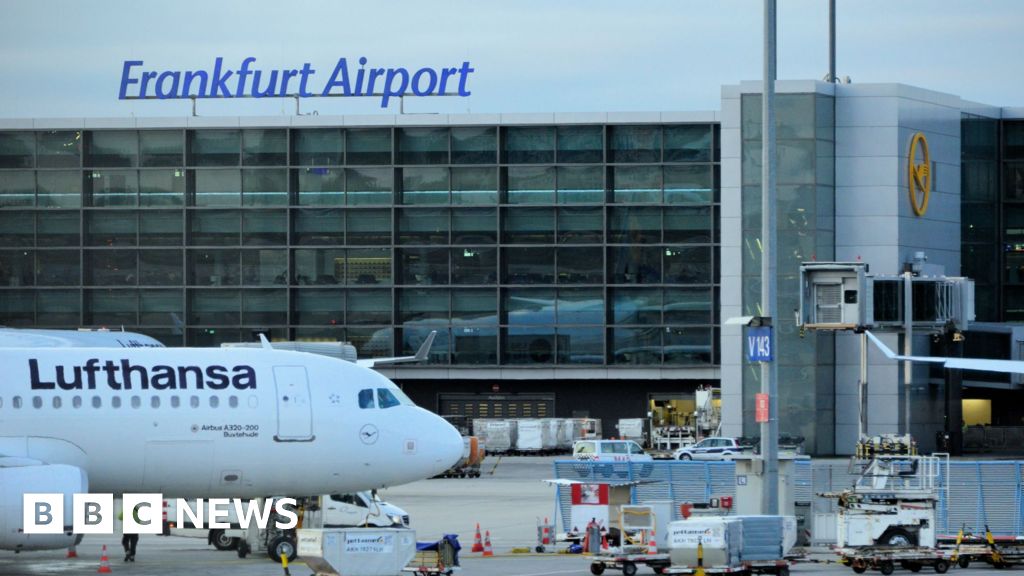
  • Two months passed between the two deaths. This already happened once in Frankfurt in 2023, fortunately without fatalities.

    https://www.n-tv.de/panorama/Zwei-Tote-durch-Flughafen-Malar...

  • They didn’t mention the strain. My understanding is that there are 5 strains. P. malariae is common and not particularly deadly while. When i visited Africa, all of the locals had had malaria multiple times. P. falciparum is extremely nasty and can kill quickly.
  • I had dengue once. Fever was something else! Since then I've been scared shitless that there are 3 other major variants remaining and if the next time is one of those 3 I am most probably cooked. There are no vaccines here yet either.
  • It's the Malaria tropica according to [0]:

    > Im Zusammenhang mit den bereits bekannten sechs Fällen von Malaria tropica bei Personen, die am Flughafen Frankfurt am Main tätig sind, sind zwei Erkrankte verstorben

    And a quick search says that this is the most dangerous one. Of course it had to be...

    [0]:https://frankfurt.de/de-de/aktuelle-meldung/meldungen/gesund...

    by mk89
  • Kinda wild. I spent most of my childhood a couple hours drive from a malaria region and never heard of anyone getting sick locally that hadn’t travelled that way. So multiple people in Germany seems surprising.
  • I guess this can still happen, depends for each person. Some people have higher immunity for certain bugs.
  • Cases are infrequent, but not extremely unlikely. There's even a term for it, airport malaria:

    https://www.eurosurveillance.org/content/10.2807/1560-7917.E...

  • I live in a mosquito ladden region and some mosquitoe individuals ingest blood until they can no longer fly (they die) Many mosquitoe individuals feed until full, not necessarily from only one human.

    Now, some people are more resistant to some diseases than others. Sickle cell anemia heterozygote humans can live with plasmodium alright.

    What surprises me is that someone around an airport in Germany (urban area) actually died of malaria. Malaria causes intervals of very high fever which lead to hospitalization and treatment.

  • I got malaria twice in Africa. First time bad, second time REAL bad. I thought about death a little.

    There was a good story of a Dutchman living in Mali who got malaria a few times (everyone does). It’s manageable with the meds.

    Anyway he flies home, then develops symptoms. Goes to hospital and they freak. Full hazmat suits, isolation, doctors visiting from all over because they’d never seen it. Guy ends up dying because they wouldn’t give him the meds, because they didn’t know if it was safe, or what the right thing to do was.

    Moral of the story is that for anyone spending time in malaria zones, take the meds home with you. If you get symptomatic, take the meds and maybe not go to hospital in the developed world. Meds I took was “coartem” and an injectable.

  • This is one of the reasons why diverse medical teams and having nurses/doctors/pharmacists etc from other countries is a great idea.
  • Similar story from an academic that developed symptoms upon return to the US. First hospital brushed him off. Second one, got the right infectious disease doctor/professor to diagnose and treat it. Professor had as many med students/residents as he could come by to see what someone with malaria looks like. "See this man? He has malaria, don't miss it" was burned into his mind by the end.
  • The author of the book Mother Nature is Trying to Kill You had a story like that; he managed to pick up a parasitic fly infection while abroad and had to convince health care workers to cut out the larvae from under his skin.
  • I saw the same thing happen in Leeds. A friend came back to her public health program after Christmas in Zimbabwe. The NHS was dragging their feet, like, "oh, we need to get a specialists opinion before we can even draw blood, then it has to be sent to the school of tropical medicine, that will be a few days, etc". Her African friends (and a European friend that worked in Africa for MSF) had to explain malaria to the hospital and beg them to just get her started on an artemsin compound while they were wasting time wondering how to test for it.
  • How could two people die from it in Germany with modern medicine? Is malaria randomly fatal despite treatment, or did they not understand what the infection was or not seek treatment or something?
  • Kind of similar to rabies. If you get bit by a rabid animal in an area with lots of rabies, the doctors know what to do and you get meds immediately for cheap.

    In the US it's a few thousand dollars for the treatment.

    by fma
  • I have a feeling this is exactly what happened in Frankfurt. It very glaringly points to some failure in the healthcare system.

    Healthy working adults with access to healthcare don't just die of malaria. Two deaths means it's not some unique susceptibility in one individual either.

    The more interesting investigation would be how the system let two people die of malaria, not how malaria got there.

  • I still remember they used disinsect the aircraft cabin, before you land in Indian airports with an aerosol spray https://www.transportation.gov/airconsumer/spray

    https://www.epa.gov/mosquitocontrol/aircraft-disinsection

  • It used to happen in NZ too. I don't know if it still does.
  • They do but chances are it's not 100% effective.
  • They did that on our take off from Naples just a month ago, they said it's against insects.
  • They still do this when you land in Australia
    by mmsc