Join the discussion
Write your take first — we'll ask for email only when you're ready to publish.
- Hacker News
- These Intel chips are getting out of handby vatsachak
- I thought this was going to be an Intel cpu security issueby raffraffraff
- That absolute worst combination of factors that could combine in this disaster did indeed combine.by chakintosh
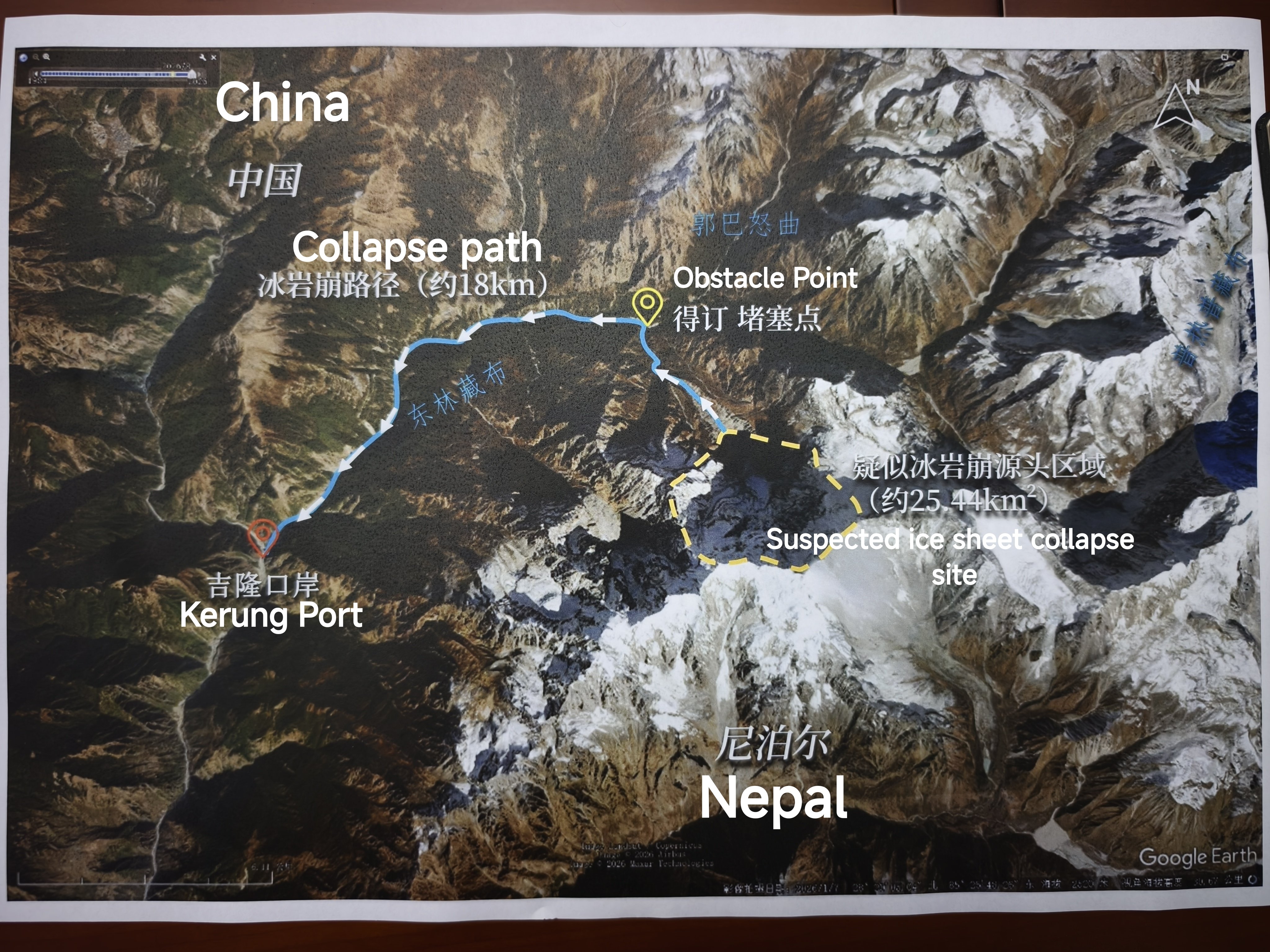
- This lake is currently halting any further rescue operations in the area, because the collapse of it threatens to unleash yet another very devastating flood.
As these natural glacial reservoirs have no usual natural outlet, when they go, that's thousands of years of stored water and energy released. Anything that catches it now has those forces to contend with, and freshly-created lakes tend to not hold up very well to being constantly filled while attempting to settle into a stable configuration.
That unfortunately means we have to give up on the people caught in the first flood, as the potential for a second one catching the rescue workers is too great.
Horrible incident. The best we can hope for from this is a greater understanding of the risks associated with living in such an area, and hopefully better geological warning systems will be created out of this.
EDIT: For perspective, the energy released in this event, capable of causing a 5.2 magnitude seismic event to register, would have been equivalent to roughly 30 of the nukes we dropped on Hiroshima and Nagasaki.
by lightedman - For a bit of context, Juneau Alaska deals with a smaller scale version of this most years. There's a bowl off of the Mendenhall Glacier named Suicide Basin. Each summer that basin gets filled with meltwater, which forms a lake because the glacier blocks the water from leaving the basin. At some point the lake fills with enough water that part of the blockage gives way and the lake suddenly releases.
In Juneau, this is a well-defined basin with well-established dynamics. The city still wrestles with how best to handle this. Recent years have seen higher river levels when the basin releases, and the downstream banks of the Mendenhall River have eroded much faster than people were expecting. The city and individual homeowners are engaged in multiple projects to manage the annual flooding.
In the Nepal case the scale is much larger, and the variables are less known and less stable. This is absolutely devastating to see.
https://www.adn.com/alaska-news/2026/08/12/juneau-officials-...
by japhyr