Join the discussion

Write your take first — we'll ask for email only when you're ready to publish.

  • Hacker News
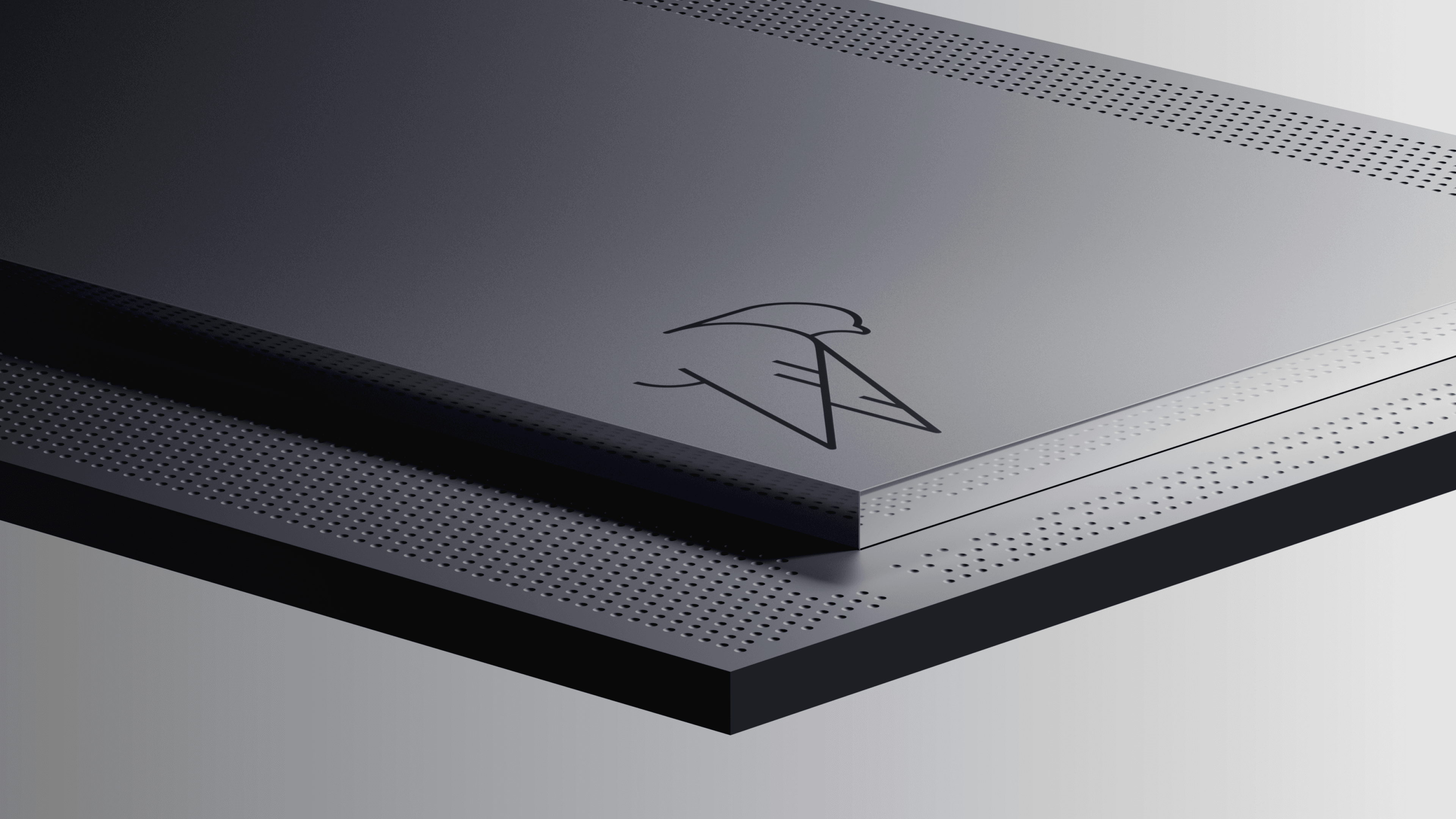
  • they made the pic look like it can be installed on an intel motherboard.
  • From IBM: "The Quantum Nighthawk Ultimate Extreme Subatomic Interstellar Whizbang Mark II"

    Also from IBM: "Bob"

  • Tangential question: do quantum researchers benefit from LLMs in any way?
  • Quantum software engineer here - yes! I use Claude quite extensively with quantum SDKs like Qiskit and Pennylane. It tends to be very good at scaffolding and architecture, but can spiral or be outright incorrect when it comes to implementing certain algorithms like QAOA.

    The real benefit comes from real-world integration - if I'm exploring e.g. a logistics application, it can source real-world data and models very quickly, and suggest quantum appropriate-formulations. Nevertheless, a lot of hand-holding is required.

  • But can you run:

    IBM Bob

    On:

    IBM Quantum Nighthawk R2

    ?

  • Their cloud offering lists this with some specific calibration data:

    https://quantum.cloud.ibm.com/computers?system=ibm_phoenix

    Does this mean they literally have a single one? (Or at least a single one they offer publicly)

  • What's the largest semiprime it can factor?
  • Currently the two qubit gate error rate is listed as ~2.7e-3 (see https://quantum.cloud.ibm.com/computers?system=ibm_phoenix but note it will vary from day to day). That implies you can expect ~400 entangling gates before experiencing an error. A zero-shenanigans factoring of 21 takes ~2000 entangling gates. So it's not good enough to factor 21 in any meaningful sense.

    Really what matters about this chip is that it is better suited for error correction. They have a square grid connectivity (previous IBM chips incurred fatal overheads from their heavy hex connectivity), they can actually reset their qubits now (previous IBM chips couldn't scale to long running computations because once leakage arose nothing could remove it except waiting a long time), and they have tunable couplers instead of fixed frequency ones (previous IBM chips were just doomed whenever some problem happened to land on their operating area in frequency space).

    Most interesting quantum computations take millions or billions of gates. Factoring classically intractable numbers takes tens of billions of gates. No one is going to do that many quantum gates without error correction. Whenever a quantum computing company says anything other than "it made error correction better" or "it will make error correction better", you can ignore that. It's just some side quest. Maybe it's interesting in and of itself, but it's not what matters for progress.

  • They are currently targeting more material science, such as quantum chemistry for drugs discovery or new material discovery. They can’t and do not aim to do prime factorization on those.
  • FWIW, Scott Aaronson has likened the question on factorization of concrete instances to what happened during the Manhattan Project:

    > Joe #11: Then you’ll be waiting a long time, because that’s a stupid metric. (Or rather: anyone willing to use that metric today, is probably someone you shouldn’t trust.) It’s almost exactly analogous to judging the Manhattan Project in 1942, 1943, 1944 by the metric “how big an explosion can you make, today?” I.e., it’s something that’s going to be basically flat for a long time and then undergo a step change, under the assumption that everything is progressing as it should—because you need a critical mass in the one case and to exceed the fault-tolerance threshold in the other.

    https://scottaaronson.blog/?p=4121#comment-1804101

  • You can attempt 15 yourself if you want:

    https://towardsdatascience.com/where-are-we-with-shors-algor...

    If you run it over and over again you will eventually get 3 or 5...

  • I don’t understand who the target audience of these ads is. For most people, including myself, this is like seeing an ad for “New and Improved Time Machine! (Untested)” or “Magic Beans - Indica”.
  • Investors
  • Everyone who is curious? I mean did you know that you can run something on a real quantum computer for free? Go try out something new, or are we only getting excited about the newest AI slop machine release these days?
  • I agree that they should be doing a press release and a separate technical deep dive.

    Here they mix both and don’t get the public. It has always been IBM problem to correctly target the product to the audience.

    We see it here again

  • These ads are aimed at the board members of IBM's customers. IBM has been doing this for ages. I might think IBM is a high margin body shop with a veneer of innovative-ish projects like Watson that are almost comically out of step with the rest of the tech industry. But that's not the golf course discourse.

    The purpose is to make it safe to remain an IBM customer.

  • These machines do not provide any computational speedup, we have plenty of papers coming from academic physicists clearly showing this. Why these people insist with their narrative is beyond my comprehension at this stage (maybe, artificially increase the value of their market shares?)..

    P.S. I was involved in semiconductor physics and quantum computing way before it became a buzz word.

  • I too am convinced that RSA-4096 will remain secure for the foreseeable future. Why everyone's mental about quantum-safe encryption is beyond me.
  • Yes but if you’re involved in physics you know that physics papers are rich in discourse with correct and incorrect ideas alike.

    With Phoenix IBM has a system with over 100 qubits close to 99.9 2Q Fidelity and though that does not sound like much it’s already enough to run operations that can’t be computed classically. The system is so well built that most of these qubits can perform well without crosstalk errors hindering execution, and with phoenix they solved mid circuit reset which didn’t work well before, blocking experiments for meaningful runtime error correction.

    There’s an open scoreboard ibm runs open to all to submit problems demonstrating algorithmic breakthroughs https://quantum-advantage-tracker.github.io/

IBM Quantum Nighthawk R2 · Birbla