Join the discussion
Write your take first — we'll ask for email only when you're ready to publish.
- Hacker News
- I object to this mis-use of the word "ocean". If I can't sail there then it's not an ocean. Luckily, Titan still has an ocean. But all the others have iceans.
- I was born in a water moon.by 3eb7988a1663
- Great read, other than Europa I wasn't aware of these other candidate ocean moons.by exhilaration
- TIL
> The radiation environment around Europa is punishing; an astronaut standing on the surface would get a fatal dose in about a day
by miohtama - Beautifully designed article. Very cool images and diagrams.
> We want rocks in contact with water,
But there is ice compressed between the water column and the xenoceanic bottom, ok. I see the problem.
What about rocks in the surface of the water?. Some volcanic rocks can float.
by pvaldes - > This remarkable transformation in our understanding is the result of just three missions: Voyager, Galileo, and Cassini—along with some computer modeling and hard staring by the Hubble and Webb space telescopes.
Seems odd to neglect to mention New Horizons immediately after mentioning the probable existence of liquid oceans under Pluto's surface, a finding made possible thanks primarily to New Horizons.
by yellowapple - Lovely article. Although:
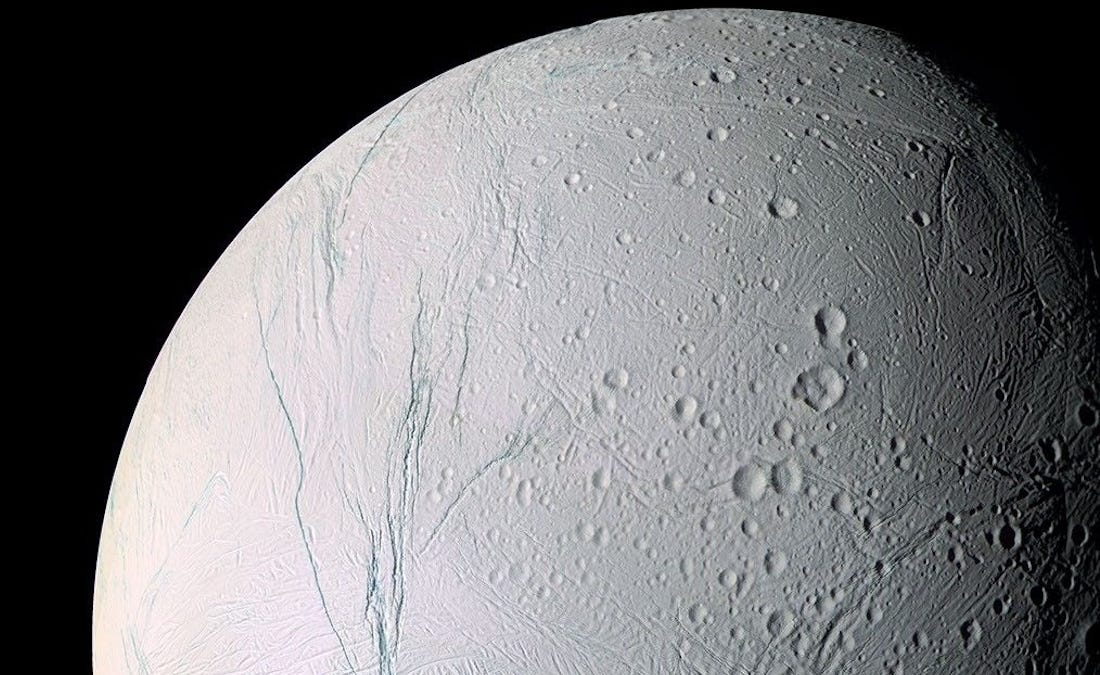
> Enceladus is far smaller than the Jovian ocean worlds, roughly the size of Ohio
Why not just say 'has a diameter of about 500 km'? The propensity of astronomers to compare diameters of a small spherical object to a surface patch of a much larger spherical object is intriguing. Similar things happen with 'the Great Red Spot is about two Earths wide'.
- Set your calendars:
Europa Clipper, launched 2024, starts Europa flybys on March 2031
Dragonfly, hopefully launching July 2028, arriving on Titan 2034
by merek