
Join the discussion
Write your take first — we'll ask for email only when you're ready to publish.
- Hacker News
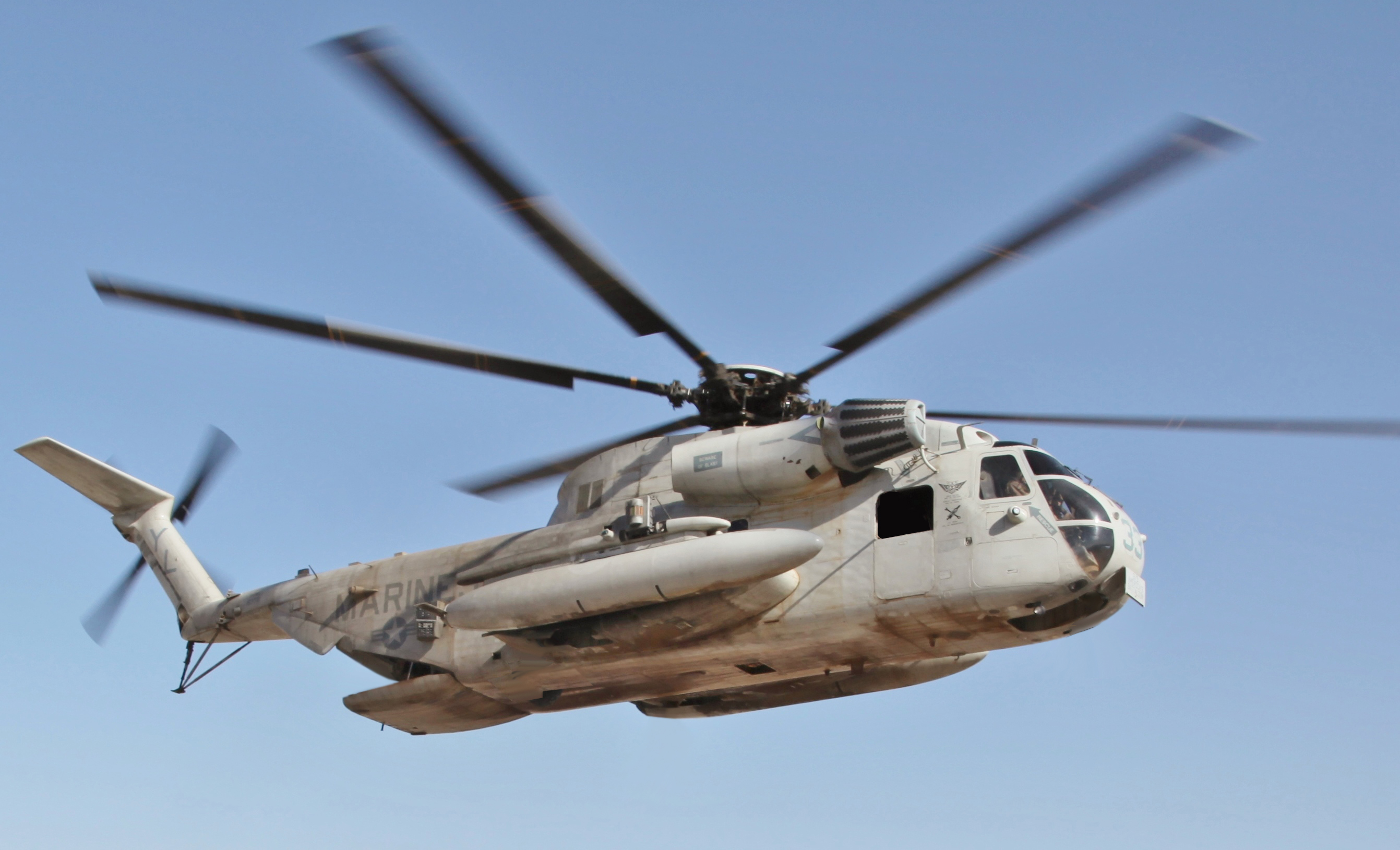
We're flying. In the air, and there is a rotating strontium spreader above us. How we're not going to breathe it in?Safe for humans as long as they do not breathe it.by p0w3n3d- Some really hyperbolic comments on there:
JohnU says: "It’s all fun and games until helicopter crashes and what should be a minor incident turns into a nuclear emergency where you have to call very specialized decontamination units to remove radioactive material from the site."
Alan Reid says: "unless they shoot ’em down on your own territory
then you don’t have a helicopter but you have mini-hiroshima to clean up."
How much Strontium-90 do they think these things are carrying?
Do they have smoke detectors at home (I hope so...)?
- You must not hang out on there. Those are some pretty standard grade Hackaday comments. I love the site, read every day, but the comments section can be... rough.by alnwlsn
- See too the Porsche 917[0].by bch
- When I read the title I thought it would be about depleted uranium, which other aircraft have used as weight: https://en.wikipedia.org/wiki/Depleted_uranium#Trim_weights_...by userbinator
- This definitely come from the same category as F-16 potentially releasing hydrazine when it crashes, as it is used to power its auxiliary power unit in an emergency:
https://en.wikipedia.org/wiki/Hydrazine#Gas_producers_and_pr...
https://pmc.ncbi.nlm.nih.gov/articles/PMC12542269/
https://aviation.stackexchange.com/questions/23417/why-is-hy...
First you usually go "WTF, why would they do that ?" but on a second look it usually makes perfect sense & is quite an elegant, if unorthodox engineering solution.
by m4rtink - What if the helicopter would have to operate in a contaminated area? Wouldn't it cause false positives?
> The CH-53 Sea Stallion first entered service in 1966
1966 is Cold War era, so, I think, an idea that a military helicopter would have to fly in an area that has been recently nuked wasn't totally inconceivable...
by vova_hn2 - Exposure to a nuclear blast doesn't necessarily make things radioactive. Hiroshima and Nagasaki are not radioactive wastelands. Even in Chernobyl, the other reactors continued to operate for a time after the accident, and nature is thriving.
But, the radiation detector is on the upper surface of the rear fuselage. Hypothetical Beta particles from the ground will strike the underside of the aircraft and not the detector.
by stackghost - Strontium-90 is a beta emitter, apparently, so you could just measure Alpha, Beta, and Gamma and detect false positives due to elevated background radiation that way. If you're in the air you're probably much closer to your Beta source as well so you could detect it above background due to distance. Gamma is essentially light so it falls off with the square of distance. But Alpha and Beta are probably much worse than Gamma in that respect, so I'm guessing this is fine most of the time and then they rule out false positives by looking at the total background in each type of radiation.
- I imagine that if you're flying through an active nuclear war, false positives from the blade crack detector are pretty far down your list of things to worry about.by wat10000
- Assuming only one rotor cracks, then the radiation is from one rotor IBIS and the detector electronics could detect radiation levels that ripple synchronously with the rotor speed.
The Strontium-90 is a beta radiation emitter.
The external radiation level of the IBIS [is] 75 mR/hr at 12 inches in the failure (extended) mode.by robocat - Heh...I actually knew about this.
A friend's cousin was a CH-53 pilot out of MCAS Miramar. One day, he was telling us, someone didn't properly secure one of the (chairs? racks? don't know the rotorcraft term...)in the cargo hold. The doors were open, and they were flying above the desert at a few thousand feet when...one of the aluminum & webbing chairs got sucked out the window and hit a rotor.
The number & intensity of the warning lights in the cockpit, and the accompanying alarms when that happens is pretty spectacular. The pilot knows right away.
by linksnapzz - I can just imagine the conversation when they came up with that:
Boss: we need to transmit 1 bit of information indicating pressure loss from a spinning rotor blade to the main body of the helicopter. The blade spins too fast for electronics to work properly.
Engineer: What if we make the blades radioactive when they depressurize, then point a Geiger counter at them to detect if that happens.
Boss: ... where did you say you got your degree from?
by simonbw - Often in software development I encounter code that seems overly complex. It's not always obvious at first glance whether that complexity is because it's solving a really difficult problem, or because the developers made it more complex than it needed to be.
Having no domain knowledge of the problems of detecting cracks in blades, this sounds like either a genius solution to a super hard problem, or unnecessary complexity.
by patwolf - Chesterton's Fenceby lordnacho
- I though it sounded pretty clever. Now, that can be good or bad depending on context. I mean it in a good way. It seems simple conceptually (I have no idea if it adds a lot of complexity to the manufacturing) and rather foolproof. I guess the radiation shield could jam and not move when it should.by SoftTalker
- Given the forces involved, the need to avoid wireless communication, the complexity of any bearing with associated electrical contact, and so on this seems like the least complicated solution. You can rely on radioactive elements to emit radioactivity above background, you can build a pretty reliable pressure indicator, and you can fill a cavity in the blades with gas pretty reliably. You sidestep all of the complicated mechanical linkages in favor of a solution that's not in the rotor hub at all.
- I don’t have a good intuition for the aerodynamic environment around a helicopter blade in flight. It feels like it ought to be very blustery. Presumably there’s a huge amount of pressure on the underside and a drop in pressure on the top side, maybe even below atmospheric pressure?
The blades are a foot wide and 30’ long, so five of them carrying 25,000lbs is about 1psi of pressure. 3x that for a laden Stallion. I guess I expected it to be a lot more because, from the perspective of the rotor blade, it is in a very windy regime.
The other major open question for me is with the cracks. The system implies there is a non instantaneous progression from unbroken, to having a small crack on the surface, to having a crack large enough for nitrogen to escape, to having a crack so large that the rotor blade fails. I’d love to know what sort of timeframes sit between each of these phases.
by gorgoiler - The article is very vague on how the radioactivity allows detection of leaking gas.
The video at the bottom explains from 7:50 in. Gas pressure pressing on a spring holds a radiation shield in place. If the gas leaks the shield moves and the radiation can be detected.
by 46Bit - Radioactivity has nothing to do with it.
Was solved in Mi-6/Mi-8/Mi-26 blades without it.
by lstodd - The titanium spar is filled with gas. If there was a crack in the spar the gas would escape, therefore tripping the pressure sensitive radiation shield. Releasing radiation that can be detected inside the helicopter.
Wireless systems aren’t used for opsec reasons.
by tomasphan - There's a good comment:
https://assets.verticalmag.com/wp-content/uploads/2017/01/MH...MH-53E maintainer here. The system is IBIS (Inflight Blade Inspection System) and the little pods are BIM (blade inspection monitors). The box is pretty obvious sitting just behind the main rotor on the deck above the center engine. I found a random picture on the web:And:
From https://public-inspection.federalregister.gov/2019-08531.pdf...The IBIS devices provide in-flight warning of blade failure on various models of helicopters. One device is located on the root of each blade attached to the rotor. The IBIS detects a decrease in pressure in the blades of a CH-53 model helicopter. Any cracks in the blades will result in a decrease in air pressure in the blade. Such cracks could result in structural failure in the blade, thereby resulting in a potentially dangerous operational situation for the helicopter, such as a hard landing and/or injury to the craft and/or personnel up to, and including, death. Each device contains approximately 500 microcuries (18.5 MBq) of strontium-90 (Sr-90) in the form of a rolled metal foil, encased in a small stainless steel protective cylinder about the size of the press button on a ballpoint pen. The external radiation level of the IBIS is 0.8 mR/hr at 3 inches in the normal (shielded) mode, and 75 mR/hr at 12 inches in the failure (extended) mode.by robocat