Join the discussion
Write your take first — we'll ask for email only when you're ready to publish.
- Hacker News
- This must be the origin of the saying, “People who start stone rows shouldn’t build glass houses”.
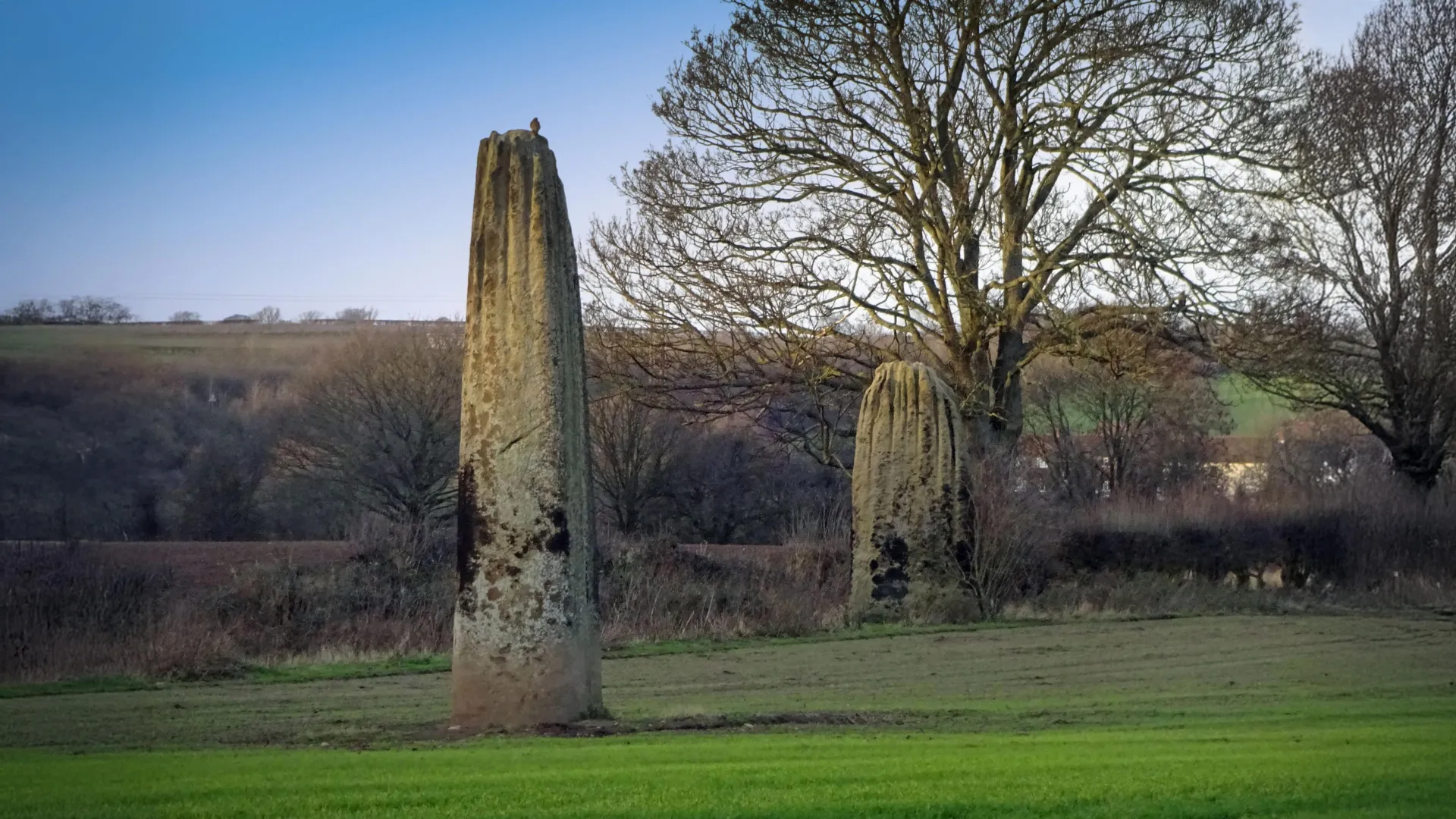
- Strange they don't mention how many stones. Image shows two. There are three today and four, maybe five, originally.by spikels
- I’m beginning to conclude that about 47% of all ancient activities in England consisted solely of either moving comically huge rocks around, or attempting to convince the remaining 53% to do their fair share.by tomcam
- Imperial is confusing at the best of times, but couldn't they have said 24.5 tons instead of 55,000 lbs?by ChrisRR
- Ken Follett (of "Pillars of the Earth" fame) wrote a terrific semi-historical* novel called "Circle of Days" that portrays a vivid picture of the people and circumstances that could've led to the creation of Stonehenge.
*"semi" qualifier bc there's so little known for sure -- but it's at least plausible, and his extensive research doesn't contradict things that can be verified.
by chrisweekly - The word for this structure is apparently a menhir: https://en.wikipedia.org/wiki/Menhir. The article calls it the tallest in the UK but its Wikipedia page calls it the second-tallest. This is the actual tallest, interestingly also in Yorkshire: https://en.wikipedia.org/wiki/Rudston_Monolith.by hashim
- 25-tonne stones for 18km in case you wonderedby dmichulke
- Also, Stonehenge was built (partially) from parts of other stone circles, from as far away as Wales: https://www.bbc.co.uk/news/uk-wales-56029203by cjs_ac