Join the discussion
Write your take first — we'll ask for email only when you're ready to publish.
- Hacker News
- Well first on the things you can do right now till apple figures it out, you should have control center disabled while the phone is locked, you can find it under “Allow Access When Locked” in face id and passcode settings, while -per the article- this won’t stop them, it sure will make it harder as by the time they try to gain access the 72h might have passed and a reboot happens. Second, they definitely fake the internal clock through the port, and because connected phone will keep correcting it through the NTP, hence it’s crucial to them to isolate the phone, so your job is to make that harder on them or delay it enough till it reboots itself. I think some of the quick counter measures apple can do now is allowing custom reboot periods, remote reboots through icloud, and disabling the possibility of manipulating the time through the lightning/usbc port.by tamimio
- I wouldnt be surprised if they had a backdoor into the Qualcomm chip that Apple decided to oddly still include in most of their US iPhones vs the international versions that come with their own internal modemby Melatonic
- Offtopic:
>Even if that device doesn't have the ability to turn on Airplane Mode or to turn off the transmitters through the Control Center of iOS.
IIRC, the default on iOS is that anyone with your locked device can enable airplane mode which is concerning simply for thieves. But I suppose they have to use faraday bags anyway because of the Find My network.
by Cider9986 - > The idea behind this so-called “inactivity reboot” is to revert the phone to a state that makes it harder for police to break into the device, and thus extract sensitive data from it with forensics technology.
This is weird framing. The feature makes it harder for anyone to break into the device.
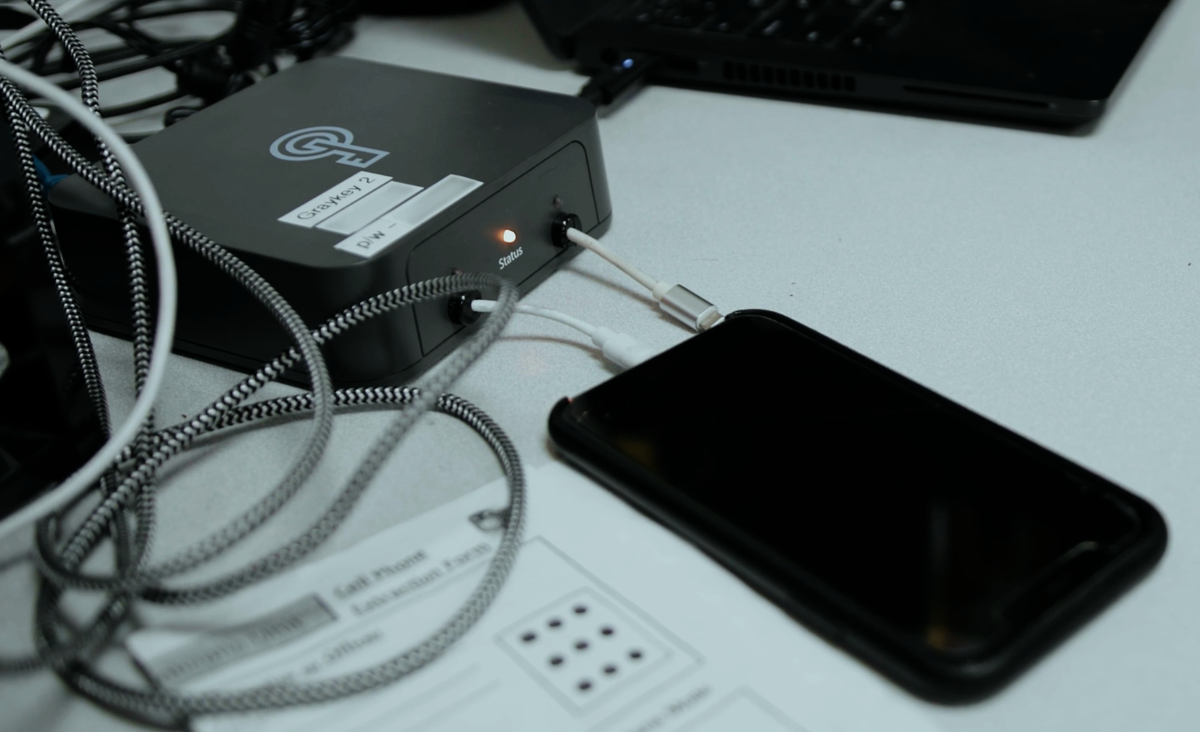
by ethagnawl - > “Even if that device does reboot for any number of reasons, memory maintenance or the power is lost or whatever, the AFU state is not lost. This is the true magic behind the GrayKey Preserve and the Evidence Preservation Mode function.”
Based on this, it seems more likely that this involves exploiting the device to retrieve the underlying keybags present in AFU mode and store them, rather than manipulating the actual feature of automatic reboots. Then the device can be exploited again in BFU mode but with the prior keybag to decrypt everything.
It sounds like this feature is being used to exploit and extract keys from devices without a warrant (or in advance of getting one), which seems dubious to me.
by iancarroll - I keep all of my most sensitive personal documents on my phone, as an emergency backup, but in an encrypted (Cryptomator) volume that requires a separate password. Given the routine news of such exploits this seems like due diligence.
As I understand it this encryption is a significant additional barrier to technical or legal access to those files. If someone knows otherwise, please let me know. Being wrong could cost me my home and life savings.
by delichon - These three quotes make me wonder if the police are effectively searching the phone before getting a warrant
> given that oftentimes they can’t immediately try to break into iPhones that have been seized. That could be because police are still waiting for a court authorization to do so
> GrayKey Preserve and Evidence Preservation Mode are also designed to combat another iPhone feature that automatically deletes certain data — such as cached locations, and recently deleted photos and iMessages — after a certain number of days. “We're gonna be able to preserve that data for an infinite amount of time.”
> “That AFU state is captured,” by GrayKey Preserve and Evidence Preservation Mode, the employee says. “Even if that device does reboot for any number of reasons, memory maintenance or the power is lost or whatever, the AFU state is not lost. This is the true magic behind the GrayKey Preserve and the Evidence Preservation Mode function.”
The power loss tolerance in particular looks iffy. The photo and iMessage bits are a bit more problematic in that light. I get that they claim the police aren't seeing the data but if they are extracting before a warrant that is effectivly the same as pre searching everyone and promising not to read it.
by int0x29 - For those who don't know, automatic reboot restarts your device if you haven't unlocked it in a set amount of time. Cellebrite and other digital forensics companies are able to get into AFU devices much more often. The automatic reboot feature was first introduced by GrapheneOS and was later added to iOS and stock Pixels.
GrapheneOS's default is 18 hours and it can be set to between 10 minutes and 72 hours. iPhones and Stock pixels have it non customizable at 72 hours.
On GrapheneOS, for privacy and convenience, it's best to use a long random passphrase [1] for your primary unlock and then a fingerprint with a second factor pin as the secondary unlock. You enter the passphrase every time the device restarts.
If you're encountering someone that's going to seize your phone, try to restart/shut it down yourself so you don't have to trust the AFU protections.
[1] https://strongphrase.net give memorable ones which is cool.
by Cider9986